

Navigate the complex world of ethical writing with confidence and integrity – your reputation and success as a freelance writer depend on it. In today’s interconnected market, where content crosses borders instantly, understanding and implementing ethical guidelines isn’t just good practice – it’s essential for building a sustainable writing career.
Ethical writing guides serve as your professional compass, helping you maintain high standards while working with clients worldwide. From respecting intellectual property rights to ensuring cultural sensitivity, these guidelines protect both you and your clients while opening doors to premium writing opportunities in the global marketplace.
Whether you’re crafting content for international businesses, working with multilingual teams, or developing materials for diverse audiences, strong ethical principles differentiate professional writers from casual content creators. They help you avoid common pitfalls, build trust with clients, and create content that resonates across cultural boundaries while maintaining its integrity.
The best part? Embracing ethical writing practices doesn’t limit your creativity – it enhances it by providing clear boundaries within which you can innovate and excel. As Canadian writers increasingly compete in the global marketplace, understanding and following ethical guides becomes your competitive advantage, helping you stand out in an crowded field.

Cultural Sensitivity in Global Writing
Cross-Cultural Communication Best Practices
When writing for a global audience, respecting cultural differences is essential for maintaining professionalism and building trust. Start by researching your target audience’s cultural context, including their communication styles, traditions, and sensitivities. Your cultural storytelling skills can make a significant difference in connecting with readers from diverse backgrounds.
Avoid idioms, slang, or culturally-specific references that might not translate well across different regions. Instead, use clear, straightforward language and provide context when discussing concepts that might be unfamiliar to some readers. Be mindful of cultural taboos and sensitive topics that could offend or alienate your audience.
When using examples or case studies, incorporate diverse perspectives and scenarios that represent various cultural backgrounds. Pay attention to visual elements, ensuring that images and symbols are culturally appropriate and inclusive. Consider having your content reviewed by someone from your target culture before publication, especially for important projects or sensitive topics.
Remember that cultural sensitivity isn’t about avoiding differences – it’s about acknowledging and respecting them while finding common ground to communicate effectively.
Avoiding Cultural Appropriation
When writing about different cultures, respect and authenticity should be your guiding principles. Start by thoroughly researching the culture you’re representing, going beyond surface-level information to understand its history, values, and traditions. Whenever possible, connect with people from that culture through interviews or consultations to gain firsthand insights and perspectives.
Avoid stereotypes and generalizations, even if they seem positive. Instead, focus on specific, accurate details that reflect the culture’s complexity and depth. Be mindful of sacred or sensitive cultural elements, and consider whether you’re the right person to tell certain stories.
Remember that appreciation differs from appropriation. If you’re writing about cultural practices, acknowledge their origins and significance. When using cultural terms or references, provide proper context and attribution. Consider working with sensitivity readers from the culture you’re writing about to ensure accuracy and respect.
Most importantly, approach cultural representation with humility. Be open to feedback, willing to make corrections, and ready to learn from any mistakes. Your goal should be to amplify authentic voices while contributing to meaningful cross-cultural understanding.
Legal Considerations for International Writers
Copyright Laws Around the Globe
Copyright laws can vary significantly across different countries, making it essential for freelance writers to understand and respect these international regulations. In Canada, copyright protection is automatic when you create original work, but other countries may have different requirements and durations of protection.
The Berne Convention, which most countries follow, provides basic international copyright standards. Under this agreement, your work is protected in other member countries just as it would be in your home country. However, it’s crucial to remember that specific rules and enforcement methods differ by region.
For instance, the European Union has strict copyright laws with specific requirements for digital content and fair use. The United States operates under the Digital Millennium Copyright Act (DMCA), which provides additional protections for online content. In contrast, some Asian countries may have more lenient enforcement or different interpretations of copyright law.
When working with international clients, always clarify copyright ownership in your contracts. Many Canadian writers choose to retain their moral rights while transferring economic rights to clients. It’s also wise to research local copyright regulations when targeting specific markets or working with overseas publications.
Remember that ignorance of copyright laws isn’t a valid defense. Consider consulting with legal professionals who specialize in international copyright law when dealing with complex projects or entering new markets. This investment can protect both your work and your reputation in the global writing community.
Content Liability and Protection
As a writer, protecting yourself legally while creating content is crucial for a sustainable career. Always ensure you have clear contracts that outline content ownership, usage rights, and liability responsibilities. When clients provide information for your writing, maintain documentation of your sources and get written confirmation of facts when possible.
Consider adding disclaimer statements to your work when appropriate, especially for topics involving health, finance, or legal matters. This helps protect both you and your readers by clarifying that your content is informational rather than professional advice.
Keep detailed records of your research sources, client communications, and content revisions. This documentation can be invaluable if questions arise about your work’s accuracy or originality. When using images or quotes, always obtain proper permissions and maintain proof of these authorizations.
Insurance options like professional liability coverage can provide additional protection. While not always necessary for every writer, it’s worth considering if you work with high-profile clients or in sensitive industries.
Remember to regularly update your knowledge about copyright laws and content regulations in your target markets. Canadian writers working with international clients should be particularly mindful of cross-border content requirements and jurisdiction-specific guidelines.
Stay proactive about protecting your work by registering copyrights when appropriate and using clear attribution statements. This professional approach not only protects you legally but also enhances your credibility with clients.
Ethical Writing Standards
Transparency and Disclosure
Being transparent with your readers isn’t just good ethics – it’s smart business practice in today’s interconnected writing world. As Canadian freelancers, we have a responsibility to maintain clear communication and honest disclosure in everything we write.
Start by clearly identifying sponsored content, affiliate relationships, and paid partnerships. When readers trust your transparency, they’re more likely to return to your work and recommend you to others. Make it a habit to disclose any potential conflicts of interest upfront, whether it’s a previous relationship with a company you’re writing about or personal experiences that might influence your perspective.
Research citations are another crucial area where transparency matters. Always credit your sources properly and make it clear when you’re drawing from others’ work. This becomes especially important when writing for international markets, where style guide adaptations may require different citation formats.
Consider creating a personal disclosure policy that outlines your standards for transparency. This can include:
– How you handle sponsored content
– Your policy on affiliate links
– Your approach to fact-checking
– Your commitment to declaring any relevant relationships
– Your process for correcting errors
Remember to update your readers if circumstances change. If you discover an error in your work, acknowledge it openly and correct it promptly. This level of honesty builds credibility and shows professional integrity that clients value.
When in doubt, err on the side of over-disclosure. It’s better to be unnecessarily transparent than to risk damaging your reputation by withholding important information from your readers.
Source Attribution and Fact-Checking
Giving credit where it’s due isn’t just good manners – it’s essential for maintaining your professional reputation and building trust with clients. Start by keeping detailed records of all your sources, including authors, publication dates, and URLs. When referencing statistics or specific claims, always link back to the original source rather than secondary mentions.
For fact-checking, develop a three-step verification process: First, verify information through multiple reputable sources. Second, cross-reference data points with industry-recognized databases or official publications. Third, when possible, reach out directly to experts or organizations for confirmation of complex or crucial information.
Canadian writers should pay special attention to citing Indigenous sources and knowledge appropriately, following cultural protocols and respecting traditional knowledge-sharing practices. When using government statistics, always cite the most recent data from official sources like Statistics Canada.
Create a personal source-tracking system that works for you – whether it’s a spreadsheet, a dedicated notebook, or a digital tool. Include publication dates, access dates for online sources, and any relevant permissions obtained. This helps you maintain accuracy and quickly address any questions about your sources.
Remember to fact-check even commonly accepted information – myths can perpetuate across the internet quickly. When in doubt, dig deeper or consult subject matter experts. Your reputation as a reliable writer depends on the accuracy of your work, and thorough source attribution demonstrates your professionalism to both clients and readers.
For ongoing projects, regularly review and update your sources to ensure the information remains current and accurate. This proactive approach helps maintain the integrity of your work while building long-term credibility in your field.
Practical Implementation Steps
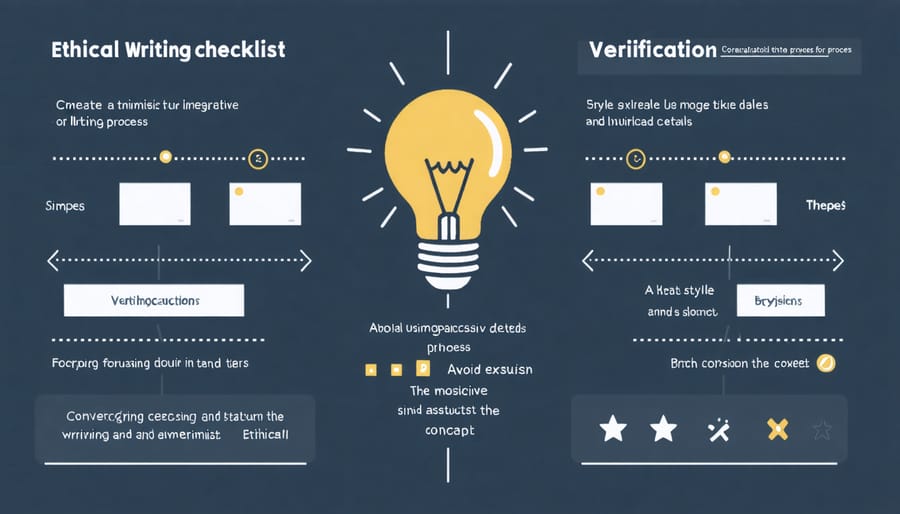
Implementing ethical guidelines in your freelance writing career doesn’t have to be complicated. Start by creating a personal code of conduct that aligns with international writing standards. This can be as simple as a checklist you review before submitting any work.
Begin with source verification – always double-check facts and maintain a list of reliable resources. When citing information, keep detailed records of where you found it and ensure you have permission to use it. Set up a simple spreadsheet to track your sources, making it easier to reference them later.
Develop a clear communication protocol with your clients. Create template emails for common situations, such as requesting clarification on potentially sensitive topics or explaining your ethical boundaries. This helps maintain professionalism while ensuring everyone’s on the same page.
Consider cultural sensitivity in your writing process. Before starting projects for international clients, research their cultural context. Create a quick reference guide for different markets you work with, noting important cultural considerations and taboos to avoid.
Implement a three-step review process: First, check for accuracy and ethical compliance; second, verify cultural appropriateness; and third, ensure proper attribution and citations. This systematic approach helps catch potential issues before they become problems.
Stay current with industry standards by joining professional writing associations and participating in online communities. These connections can provide valuable insights into evolving ethical considerations and help you adopt sustainable content practices that respect both your clients and your readers.
Finally, create a simple feedback loop with your clients. After each project, ask for specific feedback about how well your content aligned with their ethical guidelines and cultural expectations. Use this information to continuously refine your approach and improve your service quality.
In today’s global writing landscape, maintaining ethical standards isn’t just about following rules—it’s about building a sustainable and respected career. By embracing cultural sensitivity, respecting intellectual property, and prioritizing honesty in your work, you position yourself as a trusted professional in the international market. Remember that ethical writing practices not only protect you legally but also help you build lasting relationships with clients worldwide. As you move forward in your freelance journey, let these ethical guidelines be your compass, helping you navigate complex situations with confidence and integrity. Success in freelance writing comes from delivering quality work while upholding the highest professional standards. Stay true to these principles, and you’ll find yourself building a reputation that opens doors to exciting opportunities across the global writing marketplace.