
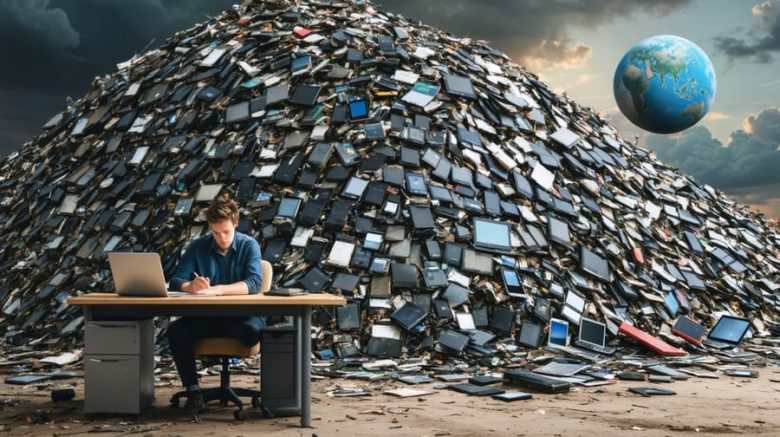
Behind every sleek smartphone and cutting-edge laptop lies a growing environmental crisis that threatens both human health and our planet’s future. Each year, over 50 million tons of electronic waste flood our landfills, leaching toxic chemicals like lead, mercury, and flame retardants into soil and groundwater. As Canadian writers increasingly rely on digital tools, our industry contributes to this mounting challenge – but we’re also uniquely positioned to drive change.
The hazards of e-waste extend far beyond local landfills. In developing countries, where much of North America’s electronic waste ends up, children and workers face dangerous exposure while extracting valuable metals from discarded devices. Meanwhile, precious resources are lost to inefficient disposal methods, driving further environmental degradation through increased mining and manufacturing.
Understanding these risks isn’t about guilt – it’s about empowerment. By making informed choices about our tech purchases, maintenance, and disposal, we can protect our environment while maintaining the digital tools essential to our craft. Let’s explore practical steps to minimize our e-waste footprint while maximizing our professional impact.
The Hidden Environmental Cost of Digital Writing
Your Digital Writing Arsenal
As a writer in today’s digital age, your toolkit likely includes several electronic devices. From your trusty laptop and tablet to smartphones and external hard drives, these tools are essential for crafting content and managing your freelance business. While these devices help us create amazing work and connect with eco-friendly digital platforms, they also contribute to our environmental footprint.
The average Canadian writer replaces their laptop every 3-5 years, their smartphone every 2-3 years, and accumulates various peripherals like keyboards, mice, and storage devices along the way. Each device contains valuable materials that can be recycled, including gold, silver, and copper, as well as potentially harmful components that require proper disposal.
Understanding the lifecycle of your digital writing tools is crucial. When purchasing new devices, consider models with longer lifespans and better repairability ratings. Regular maintenance, such as cleaning and software updates, can extend their usefulness. When it’s time to upgrade, ensure your old devices are properly recycled through certified e-waste facilities rather than letting them end up in landfills.
The Upgrade Trap
The rapid pace of technological advancement has created a challenging cycle for digital professionals. Device manufacturers regularly release new models with minor improvements, compelling users to upgrade their perfectly functional devices. This “upgrade culture” has become a significant contributor to our growing e-waste crisis.
Consider how often we’re encouraged to replace our smartphones, tablets, and laptops. The average lifespan of these devices has shortened dramatically, not because they stop working, but because newer versions promise slightly better features or performance. Writers and content creators often feel pressured to keep up with the latest technology, believing it will enhance their productivity.
However, this constant upgrading comes at a steep environmental cost. Each discarded device adds to the mounting pile of electronic waste, much of which contains toxic materials that harm our ecosystem. The marketing push for regular upgrades often overshadows the environmental impact of our disposal decisions.
By resisting the urge to upgrade unnecessarily and maximizing the lifespan of our current devices, we can help break this cycle while maintaining professional efficiency.
Health and Environmental Risks
Toxic Materials in Writing Devices
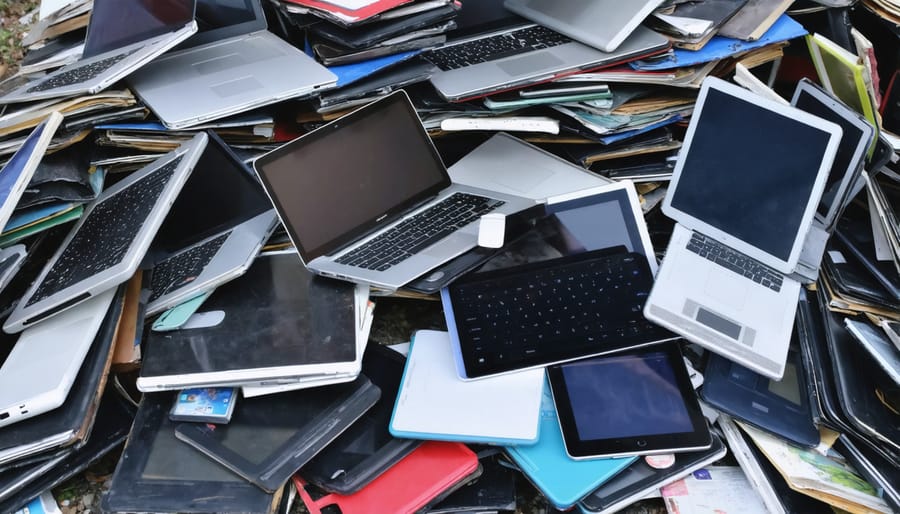
Many electronic writing devices contain hazardous materials that can harm both the environment and human health when improperly disposed of. Common laptops and tablets used by writers typically contain lead in their circuit boards, which can cause serious neurological problems if it leaches into soil or water. The batteries in these devices often contain lithium, cadmium, and mercury – toxic metals that can accumulate in living organisms.
LCD screens, found in most modern writing devices, contain liquid crystals and small amounts of mercury, which can release harmful vapors. The plastic casings often include flame retardants that, while protecting against fire hazards, can release harmful chemicals when broken down.
Keyboards and mice frequently contain plastics with brominated flame retardants (BFRs), which have been linked to various health concerns. Even seemingly harmless components like cables and wiring contain PVC and other materials that can release dangerous dioxins when burned or degraded.
For writers upgrading their equipment, it’s crucial to understand that these materials don’t pose immediate risks during normal use. However, responsible disposal through certified e-waste recycling centers ensures these toxins don’t end up in landfills where they can contaminate soil and water sources. Many manufacturers now offer take-back programs, making it easier for environmentally conscious writers to dispose of their old devices safely.
Global Impact
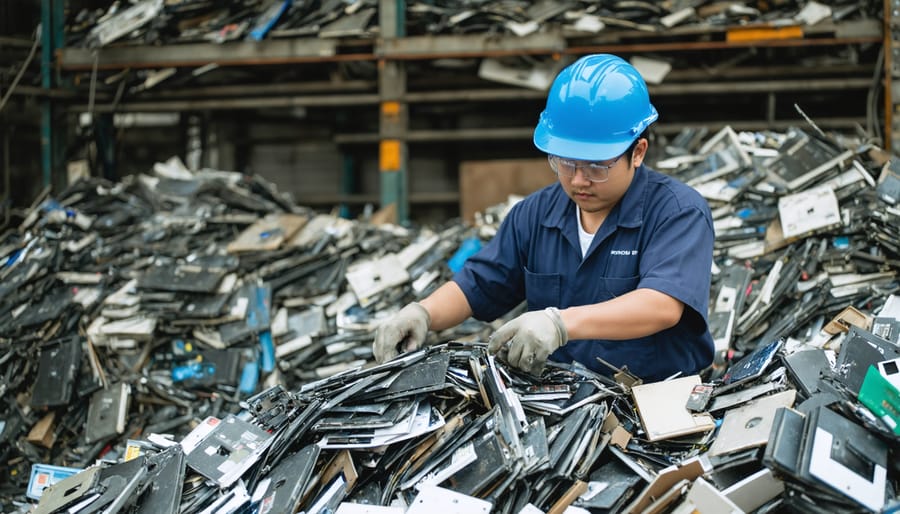
The global impact of e-waste extends far beyond local landfills, affecting communities worldwide in profound ways. Developing nations often bear the heaviest burden, as they become the final destination for electronic waste from more affluent countries. In places like Ghana’s Agbogbloshie and parts of India and China, entire communities have transformed into informal e-waste processing centers.
Workers in these areas, including children, frequently handle hazardous materials without proper protection, exposing themselves to toxic substances like lead, mercury, and flame retardants. These chemicals seep into soil and water systems, contaminating local food and water supplies. The World Health Organization reports that children in e-waste processing regions show significantly higher levels of heavy metals in their blood compared to children in non-processing areas.
The economic implications are equally concerning. While e-waste processing provides income for many families in developing nations, it comes at a devastating health and environmental cost. Local ecosystems suffer irreversible damage, and agricultural lands become unsuitable for farming. This creates a cycle of poverty and environmental degradation that affects generations.
However, some communities are finding innovative solutions. Responsible recycling initiatives are emerging, creating safer jobs while protecting the environment. These programs demonstrate how proper e-waste management can support both environmental sustainability and economic development.
Sustainable Writing Practices
Extending Device Life
Extending the life of your digital devices isn’t just wallet-friendly – it’s a powerful way to reduce e-waste and protect our environment. Start by keeping your devices clean and updated regularly. Dust can clog vents and cause overheating, while outdated software might slow down performance and tempt you to replace devices prematurely.
Consider using sustainable writing tools and protective cases to prevent damage from accidental drops or spills. When your laptop battery starts showing signs of wear, replace just the battery instead of the entire device. Many writers don’t realize that professional cleaning and maintenance can breathe new life into sluggish devices.
Create a regular backup system for your work and maintain organized files to prevent device overload. Remove unnecessary programs and files regularly to keep your device running smoothly. If your device starts showing signs of age, consider upgrading specific components rather than replacing the whole unit. For instance, adding more RAM or switching to a solid-state drive can significantly improve performance without contributing to e-waste.
Remember, every month you extend your device’s life means less electronic waste in our landfills.
Responsible Disposal
Responsible e-waste disposal starts with understanding your local recycling options. Most Canadian cities have dedicated e-waste collection centers where you can drop off old laptops, tablets, and other electronic devices. Many electronics retailers also offer take-back programs, accepting old devices when you purchase new ones.
Before disposing of any device, make sure to back up and completely wipe your data. Remove any batteries, as these often need separate handling. If your device is still working, consider donating it to local schools or charitable organizations that refurbish electronics for communities in need.
For freelance writers working from home offices, create a designated e-waste collection box for smaller items like old USB drives, keyboards, and chargers. When the box is full, make one trip to your local recycling center. This not only saves time but also reduces transportation emissions.
Remember that many components in electronic devices can be recycled and reused, including precious metals and plastics. By choosing certified recyclers, you ensure these materials re-enter the manufacturing cycle instead of ending up in landfills. Your responsible choices help create a more sustainable digital future while protecting our environment from harmful e-waste contamination.
Green Alternatives
As writers, we can make environmentally conscious choices without sacrificing productivity. Consider switching to refillable pens and recycled paper notebooks for brainstorming sessions. Many writers find that these eco-friendly tools actually enhance their creative process while reducing waste. Digital alternatives like tablet-based note-taking apps with stylus support offer another green solution, eliminating paper waste entirely.
Implementing zero-waste writing practices can be as simple as using energy-efficient lighting in your workspace, maintaining your electronic devices properly to extend their lifespan, and choosing sustainable office furniture made from renewable materials.
Consider joining local writer groups that organize equipment swap meets or setting up a community recycling program for writing supplies. Many Canadian cities now have dedicated e-waste collection points specifically for electronics and office equipment. When upgrading your tech, look for Energy Star certified devices and companies with strong environmental policies. Remember, small changes in our daily writing routines can lead to significant positive environmental impact over time.
As writers in today’s digital age, we have the power to make a significant impact on reducing e-waste through simple yet effective actions. Start by extending the life of your current devices through proper maintenance and regular updates. When upgrading is necessary, consider refurbished equipment or eco-friendly brands that prioritize sustainability.
Make the most of cloud storage solutions to reduce the need for external hard drives and physical storage devices. Embrace digital note-taking apps instead of multiple devices, and properly recycle any electronics you no longer need through certified e-waste recycling programs in your area.
Remember, even small changes in your daily routine can make a difference. Use power-saving settings on your devices, unplug chargers when not in use, and consider joining local writer communities that organize e-waste collection drives. By implementing these practices, you’re not just protecting the environment – you’re setting an example for other professionals in the writing industry.
Together, we can create a more sustainable future while maintaining our productivity and professional success. Let’s make responsible e-waste management an integral part of our writing careers.