

Master APA 7 annotated bibliographies by examining well-crafted examples that demonstrate proper formatting, annotation structure, and academic tone. Study models that include complete citation details followed by 150-200 word annotations combining summary, evaluation, and reflection. Pay attention to how successful examples use present tense for summaries, maintain objective language when evaluating source credibility, and connect each source to research questions or thesis statements.
Build your annotated bibliography skills by analyzing examples across different source types—journal articles, books, websites, and reports—since each requires unique citation formatting within APA 7 guidelines. Notice how professional examples indent annotations 0.5 inches from the left margin, maintain double-spacing throughout, and arrange entries alphabetically by author surname. These formatting details separate amateur work from publication-ready submissions.
Practice writing annotations that serve your actual research needs rather than simply fulfilling assignment requirements. Strong examples demonstrate critical thinking by explaining why each source matters to your project, identifying potential biases or limitations, and noting how the information compares to other sources in your bibliography. This approach transforms your annotated bibliography from a tedious exercise into a valuable research tool that strengthens your writing projects and builds your credibility as a thorough, detail-oriented professional. When you master these practices, you position yourself as a writer who delivers polished, academically sound work that clients and editors trust.
What Makes an Annotated Bibliography Ethical?
The Core Principles Every Writer Should Know
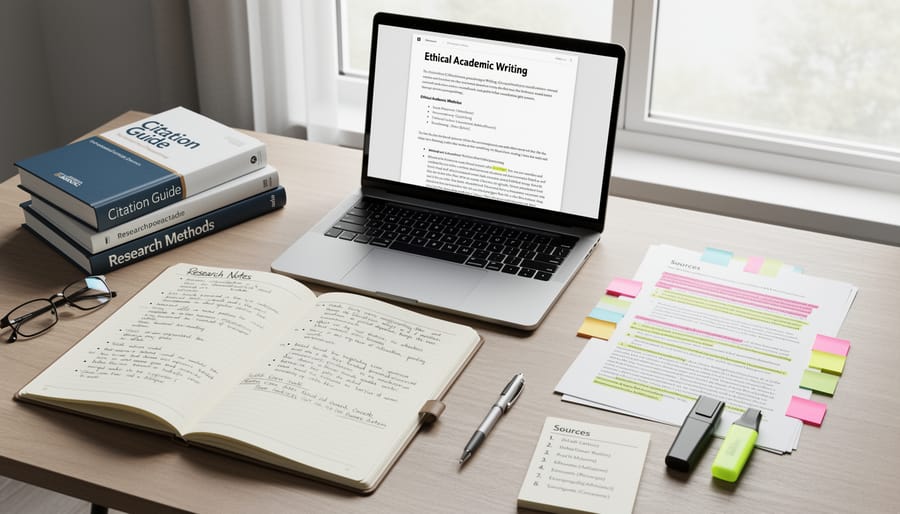
Creating an annotated bibliography isn’t just about following formatting rules—it’s about building trust with your readers and establishing yourself as a credible professional writer. Understanding the core ethical principles behind proper citation practices will set you apart in the competitive freelance writing market.
First and foremost, avoiding plagiarism protects both your reputation and your income potential. When you accurately cite sources in APA 7 format, you demonstrate respect for original creators while showcasing your research skills. Think of it as giving credit where it’s due—a practice that clients genuinely appreciate.
Accurate representation of sources means summarizing content fairly and honestly. Don’t twist an author’s words to support your argument if that wasn’t their intention. This integrity builds long-term client relationships and repeat business opportunities.
Honest evaluation requires you to assess sources critically in your annotations. Point out strengths, but also acknowledge limitations when they exist. Canadian freelance writer Sarah Mitchell shares her success story: “When I started including balanced evaluations in my annotated bibliographies, clients began trusting me with bigger research projects.”
Finally, transparency about limitations shows professional maturity. If a source has biases, limited scope, or outdated information, mention it. This honesty positions you as a thoughtful researcher rather than someone who simply compiles references. Remember, your annotated bibliography reflects your professional judgment and attention to detail—qualities that attract better-paying clients.
Why Ethics Matter for Your Freelance Career
When you consistently follow ethical practices in your freelance writing career, you’re building something far more valuable than completing individual projects—you’re creating a reputation that opens doors. Clients remember writers who demonstrate integrity, and in Canada’s tight-knit writing community, word travels fast about professionals who deliver honest, quality work.
Ethical practices directly impact your earning potential. Writers who properly cite sources, including creating accurate annotated bibliographies using APA 7 format, position themselves as trustworthy experts. This means clients feel confident assigning you higher-value projects and referring you to their networks. One Toronto-based freelancer shared how her commitment to proper citation practices led to a long-term contract with an academic publisher—a relationship that began with one well-executed annotated bibliography.
Beyond immediate projects, ethics ensure career sustainability. When you build your freelance business on honesty and professionalism, you create lasting client relationships rather than constantly searching for new work. You’ll sleep better knowing your reputation is solid, your work stands up to scrutiny, and you’re contributing positively to the writing profession. Think of ethical practices as your professional foundation—the stronger it is, the higher you can build your career.
Understanding APA 7 Format for Annotated Bibliographies
The Basic Structure You Need to Follow
Getting the structure right is your foundation for success with APA 7 annotated bibliographies. Think of it like building a house—you need a solid framework before adding the details.
Start with your reference citation at the left margin, following standard APA 7 format. This includes the author’s name, publication year, title, and source information. Use a hanging indent of 0.5 inches for any lines after the first line of your citation.
Here’s where it gets interesting: your annotation begins on the next line, directly below your citation. Indent the entire annotation 0.5 inches from the left margin, creating a clear visual separation from the citation itself. This hanging indent structure helps readers quickly distinguish between the source information and your analytical commentary.
Keep your spacing consistent throughout. Use double-spacing for both citations and annotations, with no extra space between the citation and annotation. This creates a clean, professional appearance that makes your bibliography easy to read.
Each annotation typically ranges from 150 to 200 words, though your instructor or client may specify different requirements. Write in paragraph form using complete sentences—this isn’t the place for bullet points or fragmented notes.
Many freelance writers find success by creating a template document with proper formatting already set up. This small time investment saves you effort on future projects and ensures consistency across all your work. Remember, mastering these structural basics builds your reputation as a detail-oriented professional who delivers polished, publication-ready documents.

Common Mistakes That Hurt Your Credibility
Even experienced writers sometimes make APA 7 mistakes that can damage their professional reputation. Understanding these common errors helps you avoid them and maintain credibility with clients and editors.
One frequent mistake is inconsistent formatting throughout the bibliography. When some entries use hanging indents while others don’t, or when spacing varies between entries, it signals a lack of attention to detail. Clients notice these inconsistencies and may question your overall work quality.
Another credibility killer is mixing citation styles. Perhaps you’re used to MLA or Chicago style—accidentally blending these formats with APA 7 shows carelessness. Take time to review APA 7 requirements before starting each project.
Missing or incorrect DOIs and URLs also raise red flags. These elements help readers locate your sources, and omitting them suggests incomplete research. Always verify that digital identifiers are current and properly formatted.
Outdated APA rules present another challenge. If you’re still using APA 6 conventions, like including retrieval dates for all online sources or location information for publishers, clients may wonder if you’re keeping current with industry standards. Following proper citation practices demonstrates your commitment to professional growth and accuracy, setting you apart in competitive freelance markets.

Five Ethical Examples of APA 7 Annotated Bibliographies
Example 1: Journal Article with Honest Evaluation
Let’s look at a practical example that demonstrates how to evaluate a journal article fairly and thoroughly. This format works beautifully for peer-reviewed sources.
Smith, J., & Martinez, R. (2023). Digital literacy and freelance success: A longitudinal study. Journal of Professional Writing, 45(2), 112-128. https://doi.org/10.xxxx/jpw.2023.045
This quantitative study examines the relationship between digital literacy skills and career longevity among 300 freelance writers over five years. The researchers use reliable survey methods and statistical analysis to demonstrate that writers with strong digital skills earn 35% more annually than those without. The article’s strength lies in its large sample size and clear methodology. However, the study focuses exclusively on North American writers, which may limit its applicability to international freelancers. Additionally, the research doesn’t account for writers who specialize in print-only publications. Despite these limitations, this source provides valuable evidence for freelance writers considering skill development investments. The practical recommendations section offers actionable steps that both beginners and experienced writers can implement immediately to enhance their digital competencies and market competitiveness.
Example 2: Book Source with Transparent Limitations
Sometimes you’ll encounter valuable sources that have clear limitations or biases. Being transparent about these gaps actually strengthens your credibility as a writer. Here’s how to handle this professionally:
Thompson, R. M. (2020). Social media marketing strategies for small businesses. Riverside Press.
This accessible guide offers practical frameworks for entrepreneurs entering digital marketing, with step-by-step templates and budget-conscious approaches that resonate with Canadian small business owners. Thompson’s conversational style makes complex concepts approachable for beginners. However, the author focuses exclusively on Instagram and Facebook, omitting emerging platforms like TikTok that have become crucial for younger demographics. Additionally, the book lacks peer-reviewed research citations, relying primarily on anecdotal case studies from the author’s consulting practice. Despite these limitations, the actionable checklists and cost-effective strategies provide genuine value for writers seeking foundational knowledge before exploring more specialized resources.
Notice how this annotation celebrates the book’s strengths while honestly addressing its scope limitations. This balanced approach shows potential clients you conduct thorough research and maintain ethical standards, qualities that set professional freelancers apart in a competitive marketplace.
Example 3: Website Source with Credibility Assessment
When citing websites, your credibility as a writer depends on evaluating sources carefully. This example shows how to assess and annotate an online resource ethically.
Imagine you’re researching content marketing trends. You find an article from the Content Marketing Institute, a recognized industry authority. Your reference entry would include the author’s name, publication date, article title, website name, and URL. The annotation demonstrates your critical thinking by explaining why this source is trustworthy.
Start by noting the author’s credentials. Is the writer an industry expert with proven experience? Next, verify the publication date to ensure the information remains current, especially important for technology and marketing topics. Your annotation should explain what makes this source authoritative compared to random blog posts or unverified content.
For freelance writers, this skill protects your reputation. Clients trust writers who cite credible sources and avoid questionable websites. Your annotation might read: “This article from a leading industry publication provides current data on content marketing ROI. The author’s ten years of experience and the organization’s established reputation make this a reliable source for professional writing projects.”
By documenting your evaluation process, you show clients and editors that you’re thorough, ethical, and committed to quality research.
Example 4: Government Report with Context
Government reports require special attention in your annotations because you need to establish both credibility and limitations. When citing official documents, always identify the issuing body clearly and explain their methodology.
Here’s a practical example:
Statistics Canada. (2022). Labour force characteristics by province, monthly, seasonally adjusted. https://www150.statcan.gc.ca/t1/tbl1/en/tv.action?pid=1410028703
This monthly report from Statistics Canada provides employment data across Canadian provinces using the Labour Force Survey methodology. The annotation explains that data collection occurs through household interviews with approximately 56,000 households monthly. The report acknowledges its margin of error and seasonal adjustment methods, making it valuable for freelance writers researching employment trends in the writing industry. The transparent methodology strengthens the source’s reliability, though writers should note the data represents broader employment categories rather than specific freelance positions. This source works well for articles discussing regional writing market conditions or supporting arguments about workplace flexibility trends.
As a freelancer building your portfolio, citing government sources demonstrates your commitment to accuracy. These annotations show potential clients that you understand how to evaluate official data critically while acknowledging its scope and limitations. This attention to detail builds your professional reputation and helps you stand out in competitive markets.
Example 5: Interview or Primary Source with Attribution
When you conduct interviews or work with primary sources like personal communications, APA 7 has specific guidelines that protect both you and your source. Here’s how to handle it professionally:
Personal interviews aren’t included in your reference list because they can’t be retrieved by readers. Instead, cite them in-text only, noting the interviewee’s name and the date. However, if you’re annotating published interviews or archived oral histories, those do appear in your bibliography.
For your annotation, explain why this source matters and how you obtained permission. For example, if you interviewed a successful freelance writer about their career journey, your annotation should mention that you received written consent and how their insights inform your research. This transparency builds trust with your readers and demonstrates ethical practice.
Always represent your source’s words accurately. If you’re paraphrasing their responses in your annotation, ensure you’re not distorting their meaning. When possible, verify quotes directly with your interviewee before publication. This attention to detail shows professionalism and respects your source’s contribution.
For freelance writers, developing these ethical habits early in your career sets you apart. Editors and clients notice when you handle sources with care, and this reputation opens doors to better opportunities. Taking the extra step to confirm permissions and verify accuracy isn’t just about following rules—it’s about building a sustainable, respected writing career.
How to Write Annotations That Meet Ethical Standards
Summarizing Without Distorting
When you’re creating annotations for your bibliography, summarizing without distorting the source material is essential for maintaining your professional credibility. Start by reading the entire source carefully before attempting to summarize. This prevents you from accidentally misrepresenting the author’s complete argument based on a single section.
Focus on identifying the author’s main thesis and supporting arguments rather than selecting only the points that support your own views. This means resisting the temptation to cherry-pick quotes or ideas that align with your perspective while ignoring contradictory evidence. If an author presents multiple viewpoints or acknowledges limitations in their research, include these nuances in your summary.
Take notes as you read, capturing key points in your own words. This practice helps you genuinely understand the material rather than simply copying phrases. When you write your annotation, aim for balance and accuracy. If you find yourself strongly agreeing or disagreeing with a source, that’s a signal to double-check that you’re representing it fairly.
Remember, Canadian freelance writers build lasting reputations through honest, accurate work. Your annotated bibliography demonstrates not just your research skills, but your integrity as a professional writer.
Evaluating Sources Fairly
When you’re creating annotations for your bibliography, aim to be fair and thorough in your assessment. Think of yourself as a trusted colleague offering an honest review rather than a harsh critic. Every source has value, even if it doesn’t perfectly fit your needs.
Start by identifying what the source does well. Does it offer unique data? Is the writing clear and accessible? Does it present a fresh perspective? Acknowledge these strengths genuinely. Then, consider limitations without being dismissive. Perhaps the study uses a small sample size, or the research is dated, or the scope is narrower than you initially hoped. These observations help your readers understand the source’s context and usefulness.
Here’s a practical tip from successful freelance writers: frame weaknesses as contextual observations rather than flaws. Instead of writing “This source is biased,” try “This source presents the corporate perspective, which should be balanced with worker narratives.” This approach shows professional maturity and critical thinking skills that clients value.
Remember, balanced critique demonstrates your analytical abilities to potential clients and collaborators. You’re not just listing sources; you’re showcasing your judgment and expertise. When you evaluate fairly, you build credibility as someone who can assess information objectively, a skill that opens doors in the freelance writing world.
Being Transparent About Your Perspective
Honesty strengthens your credibility as a writer. When preparing annotated bibliographies for clients or your portfolio, acknowledge when a source relates to your own work, previous projects, or areas where you hold strong opinions. For instance, if you’re annotating articles about freelance writing platforms and you’ve contributed to one of those platforms, mention it briefly. This transparency builds trust with readers and clients who value ethical practices.
You don’t need lengthy disclaimers, just a simple acknowledgment works well. A sentence like “As a contributor to this publication, I recognize my familiarity with their editorial standards may influence my assessment” demonstrates professional integrity. Remember, being upfront about your perspective doesn’t weaken your analysis. It actually shows you understand the importance of objectivity in research. This approach is especially valuable when building long-term client relationships, as it positions you as someone who prioritizes honesty over appearing perfectly neutral in every situation.
Red Flags That Signal Unethical Practices
Citations That Don’t Match the Content
Mismatched citations happen when the information in your annotation doesn’t actually reflect what’s in the source. This red flag can make clients question your credibility, whether it stems from rushing through research or something more serious. To avoid this pitfall, always verify that your summary accurately represents the source’s main arguments. If you mention specific data or findings, double-check they exist in the original work. A helpful tip: keep detailed notes while reading, marking page numbers for key points you might reference. This practice saves time during the writing process and ensures accuracy. When you’re working on multiple projects, it’s tempting to rely on memory or secondary sources, but taking that extra moment to confirm details protects your professional reputation. Remember, building trust with clients takes time, but one careless citation can damage relationships quickly. If you realize you’ve made an error after submission, address it proactively with your client. This honesty demonstrates professionalism and commitment to quality work, traits that help you stand out in the competitive freelance writing market.
Overly Positive or Negative Evaluations
A strong annotated bibliography demonstrates balanced, thoughtful analysis rather than extreme praise or harsh criticism. When your annotations lean too heavily in either direction, they signal a lack of critical thinking that can undermine your credibility as a writer.
Watch for annotations that read like glowing reviews, using phrases such as “absolutely perfect” or “groundbreaking masterpiece.” While enthusiasm shows engagement with sources, professional annotations acknowledge both strengths and limitations. Similarly, avoid overly negative assessments that dismiss sources entirely. Even sources with weaknesses often contain valuable insights worth noting.
Here’s a practical tip for Canadian freelance writers: approach each source as you would a peer’s work during a collaborative project. You’d offer constructive feedback highlighting what works well and what could be improved, right? Apply that same balanced perspective to your annotations.
Successful freelance writers understand that objectivity builds trust with clients and academic audiences alike. Your annotation should help readers understand what the source contributes to research conversations, not just whether you personally liked it. Include specific examples of the source’s methodology, arguments, or evidence rather than sweeping judgments.
Remember, developing this skill takes practice. Review your annotations and ask yourself: does this evaluation provide useful information, or just my opinion? This reflection strengthens your analytical abilities and positions you as a thoughtful, professional writer in the competitive freelance market.
Tools and Resources for Ethical Annotated Bibliographies
Citation Managers That Help You Stay Accurate
Staying accurate with your citations doesn’t have to be stressful when you have the right tools supporting you. Citation managers can save you hours of formatting time and help you avoid costly errors that might affect your credibility as a writer.
Zotero is a free, open-source option that’s incredibly popular among Canadian freelancers. It automatically pulls citation information from websites and creates properly formatted APA 7 references. You can also add your annotations directly within the program, keeping everything organized in one place.
Mendeley offers similar features with the added benefit of cloud storage, making it perfect for writers who work across multiple devices. The free version handles most needs for individual projects.
For those willing to invest in their professional toolkit, EndNote provides robust features including automatic PDF organization and advanced search capabilities. Many successful freelance writers consider it worth the investment once they’re regularly handling research-intensive projects.
Even simpler tools like Citation Machine or EasyBib can help beginners get comfortable with APA 7 format, though always double-check their output against official guidelines. Remember, these tools are assistants, not replacements for your careful review. Taking time to learn one citation manager well will boost your efficiency and give clients confidence in your attention to detail.
Fact-Checking and Verification Resources
Building trust with your readers starts with verifying your sources. As a freelance writer, your reputation depends on accuracy, and these accessible tools will help you fact-check efficiently.
Start with Snopes.com for debunking common myths and misinformation. FactCheck.org offers nonpartisan analysis of political claims, while PolitiFact provides similar verification services. For academic sources, Google Scholar helps you locate peer-reviewed research and assess citation counts.
The CRAAP Test (Currency, Relevance, Authority, Accuracy, Purpose) gives you a simple framework for evaluating any source. Check domain extensions too—.edu, .gov, and .org sites typically maintain higher standards than commercial sites, though always verify individually.
Media Bias/Fact Check helps you understand potential biases in news sources, allowing you to balance perspectives in your research. Meanwhile, the Internet Archive’s Wayback Machine lets you verify if sources have changed over time or if claims match original reporting.
Pro tip from successful freelancers: Create a personal checklist combining these resources. Spending 10-15 minutes verifying sources saves hours of potential corrections later and builds your credibility with clients. Your thoroughness becomes your competitive advantage in the freelance marketplace.
Building Your Reputation Through Ethical Writing Practices
How Ethics Lead to Better Client Relationships
When you consistently deliver properly formatted, ethically sound annotated bibliographies, something wonderful happens: clients start seeking you out specifically. Take Sarah, a Canadian freelance writer who made ethical citation practices her signature. After she submitted a meticulously formatted APA 7 annotated bibliography for an academic client, they not only hired her for three more projects but also recommended her to their entire research team. Why? Because she saved them from potential plagiarism issues and demonstrated reliability they could trust.
Quality clients value writers who understand that proper attribution isn’t just about following rules—it’s about protecting their reputation too. When you credit sources accurately and format bibliographies correctly, you’re showing clients that you care about their success as much as your own. This builds the kind of trust that turns one-time gigs into ongoing partnerships.
The ripple effect is real. Marcus, another freelancer, landed a long-term contract with a university simply because his sample annotated bibliography showcased impeccable ethics and attention to detail. His client later told him, “We knew if you were this thorough with citations, you’d be thorough with everything else.”
Remember, in the freelance writing world, your reputation travels fast. Ethical practices don’t just attract better clients—they create advocates who champion your work to others.

Making Ethics Your Competitive Advantage
In Canada’s competitive freelance writing market, ethical practices aren’t just about doing the right thing—they’re your secret weapon for standing out. When you consistently deliver properly cited annotated bibliographies using APA 7 format, you’re showing clients they can trust you with their academic reputation. This reliability becomes your brand.
Consider Sarah, a Toronto-based freelance writer who built her entire client base through word-of-mouth referrals. Her commitment to accurate citations and transparent research practices earned her a reputation that no marketing budget could buy. Clients knew that work bearing her name met the highest ethical standards.
By positioning yourself as someone who values academic integrity, you attract quality clients willing to pay fair rates. These clients understand that cutting corners costs more in the long run. Your ethical approach also protects you from risky projects that could damage your professional reputation. In an industry where trust is everything, your commitment to proper citation practices becomes the foundation of a sustainable, rewarding freelance career.
Creating ethical, well-crafted annotated bibliographies isn’t just about following rules—it’s about building a foundation for your writing career. When you consistently produce honest, accurate work that respects sources and adheres to APA 7 standards, you’re investing in your professional reputation. Think of it this way: every properly formatted annotation you write becomes part of your portfolio, demonstrating to potential clients that you’re detail-oriented, trustworthy, and committed to quality.
Many successful Canadian freelance writers credit their attention to ethical standards as a turning point in their careers. One writer shared how consistently delivering properly attributed research helped her secure a long-term contract with an academic publisher. Another discovered that clients who valued integrity became repeat customers, providing steady income and referrals.
Rather than viewing ethical guidelines as limitations, embrace them as tools that empower you. They protect you from legal issues, help you stand out in a competitive market, and allow you to work with confidence. When you understand the proper way to create annotated bibliographies, you’re not just completing assignments—you’re developing a skill that opens doors to academic writing, content creation, and research-based projects.
Start today by applying what you’ve learned about APA 7 formatting. Practice with real sources, double-check your citations, and take pride in producing work that reflects your commitment to excellence. Your dedication to ethical writing practices will pay dividends throughout your freelance career.