

Gamified storytelling merges narrative craft with interactive game elements, creating immersive experiences where readers become active participants in the story. This emerging format spans mobile apps, interactive fiction platforms, branded content campaigns, and educational programs—and it’s opening lucrative doors for Canadian writers ready to expand beyond traditional freelancing.
The opportunity is real: companies now hire writers to develop branching narratives, create character-driven quests, and script achievement systems that keep audiences engaged. Writers who master this niche command premium rates, often earning 30-50% more than standard content projects because they deliver measurable engagement metrics alongside compelling stories.
You don’t need coding skills to start. Platforms like Twine, Ink, and ChoiceScript let writers build interactive narratives using simple scripting languages learnable in days. Focus on understanding player motivation, decision architecture, and reward loops—skills that translate directly into paid projects for game studios, EdTech companies, and marketing agencies seeking immersive brand experiences.
Success in this field combines your existing storytelling strengths with game design thinking. Writers transitioning into gamified content report finding steady contract work within three to six months of building a portfolio piece and networking in game writing communities.
What Gamified Storytelling Really Means (And Why It Matters to Writers)
Gamified storytelling blends traditional narrative techniques with interactive elements borrowed from video games. Instead of readers passively consuming content, audiences actively participate in the story, making choices that influence outcomes, unlocking rewards, or exploring narratives across multiple platforms.
Think of it as writing that invites readers to play along. When you create a branching narrative where readers choose the protagonist’s next move, you’re gamifying the story. When you design a character-driven Instagram campaign where followers unlock story chapters through engagement, that’s gamified storytelling too. These interactive experiences share common features: reader agency, feedback loops, progression systems, and meaningful choices.
The key difference from conventional writing is participation. Readers become players. They might collect digital badges for completing story chapters, unlock exclusive content through engagement, or see their decisions reshape the narrative path. This approach connects naturally with transmedia narratives, where stories unfold across websites, social media, apps, and traditional formats.
For Canadian freelance writers, this represents a genuine growth opportunity. Brands increasingly want interactive content that captures attention in crowded digital spaces. Educational publishers need writers who can transform textbooks into engaging learning journeys. Entertainment companies seek creators who understand both compelling storytelling and user engagement mechanics.
The encouraging news is you already possess the foundation: strong storytelling skills. Gamified writing builds on what you know about character development, pacing, and emotional resonance. You’re simply adding layers of interactivity and reader choice.
This isn’t about becoming a programmer or game designer. Most gamified storytelling projects need writers who understand narrative structure, can map decision trees, and think creatively about audience participation. The technical implementation often falls to developers, while you focus on crafting compelling, responsive stories.
As content evolves beyond static articles, writers who embrace these interactive approaches position themselves ahead of the curve, opening doors to diverse projects and higher-paying opportunities.
Where Gamified Stories Live: Understanding the Platform Landscape
Mobile Apps and Interactive Fiction
Mobile storytelling apps represent an exciting frontier for Canadian writers looking to break into gamified narratives. Platforms like Episode, Choices, and Dorian have built massive audiences hungry for interactive stories across romance, mystery, fantasy, and drama genres. These apps allow readers to make choices that affect plot outcomes, creating deeply engaging experiences that keep users returning.
For writers, these platforms offer genuine earning potential. Episode’s Creator Program, for example, has paid out millions to its top writers, with some creators earning thousands monthly through reader engagement bonuses and gem purchases. The barrier to entry is refreshingly low—most platforms provide free creation tools and comprehensive tutorials to help you start building your first branching narrative.
Success in this space requires understanding choice architecture and pacing. Your story needs meaningful decision points that feel consequential to readers while remaining manageable to write. Many successful Episode creators recommend starting with shorter stories to learn the platform before tackling ambitious multi-chapter epics.
The beauty of mobile interactive fiction is its global reach. Canadian writer Jess Leigh built a following of over two million readers on Episode, eventually parlaying that success into traditional publishing deals. Whether you’re looking for supplemental income or a full-time writing career, these platforms deserve serious consideration.

Social Media and Transmedia Campaigns
Brands are transforming social media storytelling into interactive experiences that captivate audiences across Instagram, TikTok, and emerging platforms. These gamified campaigns invite followers to solve puzzles, unlock exclusive content, or participate in choose-your-own-adventure narratives that unfold through Stories, Reels, and posts.
For freelance writers, this trend opens exciting doors. Companies need creative professionals who can craft branching storylines, develop character arcs for brand mascots, and write compelling prompts that encourage audience participation. Think scavenger hunts across Instagram Stories or TikTok series where viewers vote on plot directions.
Recent success stories include writers landing contracts with fashion brands creating mystery campaigns and food companies developing recipe-unlocking adventures. These projects typically pay between $500 and $2,000 per campaign, depending on complexity.
To break into this niche, showcase your understanding of platform-specific features and engagement mechanics. Build a portfolio with sample interactive story concepts tailored to different brands. Many agencies now specifically seek writers who can blend traditional storytelling with game-like elements that drive follower participation and boost brand visibility across social channels.
Video Games and Educational Content
The gaming and education sectors offer exciting opportunities for writers who want to combine storytelling with interactive experiences. Game narrative design involves creating dialogue, character arcs, and branching storylines for video games of all sizes, from indie projects to major studio releases. Many Canadian writers have found consistent work crafting quest narratives, character backstories, and in-game text.
Educational gamification is another growing field where writers develop engaging learning content that feels more like play than study. Schools, online learning platforms, and educational app developers need writers who can transform curriculum material into compelling narratives and challenges. These projects often involve creating scenarios, feedback messages, and progress-tracking content that keeps learners motivated.
Corporate training modules increasingly use gamified elements to boost employee engagement. Companies hire writers to develop scenario-based learning experiences, interactive compliance training, and onboarding adventures. This sector values writers who understand both storytelling and instructional design principles. Entry points include freelance platforms, direct outreach to e-learning development companies, and networking within the instructional design community. The pay is competitive, and many assignments offer ongoing work as companies update their training libraries.
Real Writers Making Real Money: Success Stories from the Field
The transition into gamified storytelling has already changed the financial landscape for writers who saw the opportunity early. Their experiences prove this isn’t just a passing trend, but a genuine income stream worth exploring.
Maya Chen, a Vancouver-based freelance writer, added gamified content to her portfolio in 2022 after completing a brief online course in interactive narrative design. Within eight months, she landed a contract with an educational technology company creating branching storylines for their language learning app. The project paid $8,500 for approximately 30 hours of work, translating to roughly $283 per hour. Maya now dedicates about 40 percent of her client work to gamified projects, which has increased her annual income by nearly $35,000.
Toronto writer James Morrison took a different approach. After years writing traditional marketing copy, he pitched a gamified email campaign concept to an existing client in the fitness industry. The campaign used interactive decision points where subscribers chose their own fitness journey paths, leading to personalized product recommendations. The initial project earned him $4,200, and the client’s 47 percent increase in email engagement led to a six-month retainer worth $3,500 monthly.
Internationally, UK-based writer Sarah Williams specializes in gamified training materials for corporate clients. She creates scenario-based learning modules where employees navigate realistic workplace challenges. Individual projects range from $6,000 to $15,000, and she typically completes two to three per month while maintaining other freelance work.
Even writers just starting out are finding opportunities. Calgary resident Derek Patel, who began freelancing only 18 months ago, secured a $2,800 contract writing achievement descriptions and progress narratives for a wellness app. He had no prior game writing experience but emphasized his psychology background and understanding of motivation in his pitch.
These writers share one common thread: they identified the skill gap early and positioned themselves as solutions. Their success demonstrates that gamified storytelling offers real financial potential for writers willing to adapt and learn.
Skills You Already Have (And the Few You Need to Learn)
Your Transferable Writing Strengths
The good news? You already possess many of the core skills needed for gamified storytelling. Your experience crafting compelling narratives translates beautifully into this growing field.
Character development remains essential across all platforms. Whether you’re writing dialogue for a mobile game protagonist or creating backstories for educational app characters, your ability to build relatable, three-dimensional personalities gives you an immediate advantage. The same techniques you use in traditional writing—showing versus telling, creating authentic motivations, and developing character arcs—apply directly to interactive experiences.
Plot structure knowledge is equally valuable. Understanding story beats, pacing, and dramatic tension helps you design engaging quest lines and level progressions. Your instinct for where to place cliffhangers or revelations becomes crucial when players need motivation to continue.
World-building expertise transfers seamlessly too. Creating immersive settings with consistent rules and rich details works whether you’re writing a novel or designing a fantasy game universe. Your ability to establish atmosphere through descriptive writing enhances player immersion.
Even dialogue skills matter tremendously. Crafting authentic conversations, varying character voices, and writing concise, impactful exchanges are all critical when space is limited and player attention is precious.
Toronto-based writer Maria Chen discovered this firsthand when she adapted her young adult fiction skills to educational game writing, landing consistent contracts that now form thirty percent of her freelance income.
New Tricks Worth Learning
The good news? You already possess most of the storytelling fundamentals needed for gamified work. What you’ll add are a few technical layers that become second nature with practice.
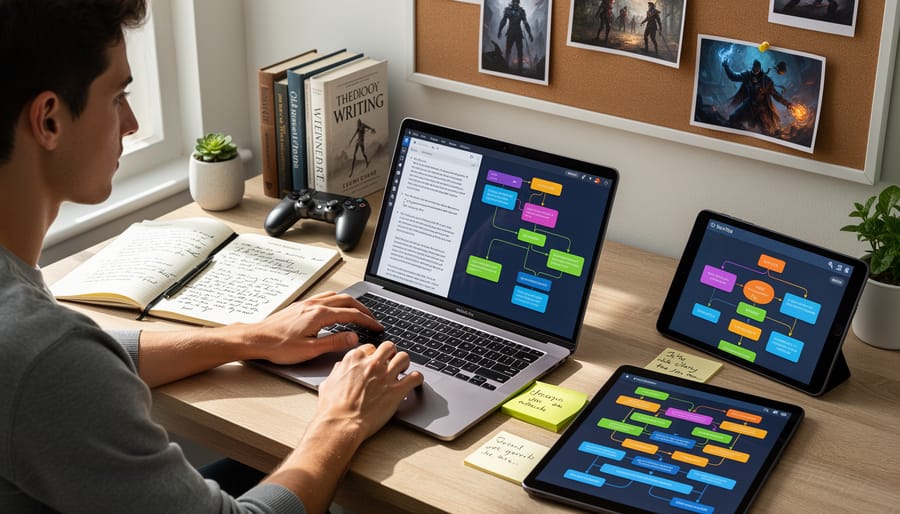
Branching logic is simply decision-tree thinking applied to narratives. If the player chooses option A, the story flows one direction; option B leads elsewhere. Toronto-based writer Maya Chen describes it as “writing multiple endings for the same story, then connecting the dots backwards.” Many platforms provide visual flowchart tools that make mapping these branches surprisingly intuitive, even if you’ve never coded a day in your life.
User experience basics matter more than you might expect. Consider readability on mobile screens, appropriate reading pace between choices, and clear navigation cues. These aren’t technical hurdles—they’re extensions of good writing practice. You’re already thinking about your reader’s journey; now you’re designing that journey with intentional touchpoints.
Platform-specific formatting varies but follows learnable patterns. Interactive fiction platforms like Twine use simple markup that resembles basic HTML. Educational game platforms often provide templates where you drop in narrative content. Most offer extensive tutorials and supportive creator communities.
The learning curve exists, but it’s gentle. Freelancer James Park spent just two weekends mastering Twine basics before landing his first paid project. Think of these skills as professional development investments that expand your service offerings without requiring a complete career pivot.
Finding Your First Gamified Storytelling Gig
Where to Look for These Writing Jobs
Finding legitimate gamified storytelling opportunities requires knowing where companies actually post these roles. Start with specialized platforms like Upwork and Fiverr, where game developers and educational technology companies frequently search for narrative designers and interactive content creators. Filter your searches using terms like “interactive storytelling,” “branching narratives,” or “educational game content.”
LinkedIn has become a goldmine for these positions. Follow companies in the edtech, mobile gaming, and corporate training sectors. Many post freelance opportunities directly or work with contractors for specific projects. Set up job alerts for “narrative designer,” “interactive content writer,” or “learning experience designer” to catch opportunities as they appear.
Several platforms specialize in creative gaming work. Gamedevjobs.io and RemoteGameJobs.com regularly feature narrative positions, while FlexJobs and We Work Remotely often list remote storytelling roles for apps and platforms. If you’re interested in traditional video game writing gigs, these sites bridge that gap beautifully.
Don’t overlook direct applications. Companies like Duolingo, Khan Academy, and corporate training firms such as Articulate regularly hire freelance writers for their gamified content. Check their careers pages under “Content,” “Learning Design,” or “Freelance” sections.
Canadian writers should also explore homegrown opportunities. Toronto and Vancouver have thriving game development communities with networking events where freelance relationships often begin. Your local connections can lead to consistent, well-paying work.
Pitching Your Cross-Platform Storytelling Services
Landing your first gamified storytelling gig starts with showcasing your versatility. Create a portfolio that demonstrates your ability to write compelling narratives across different formats. Include samples that show branching dialogue, character-driven content, and interactive scenarios, even if they’re self-created projects. Consider developing a mock choose-your-own-adventure story or creating sample dialogue trees to prove you understand non-linear storytelling.
When pitching to potential clients, emphasize your adaptability and willingness to learn new platforms. Many companies value enthusiasm and storytelling fundamentals over technical expertise, especially for entry-level positions. Highlight any experience with collaborative projects, as gamified content often requires working with designers, developers, and marketing teams.
Your pitch should focus on outcomes. Instead of simply listing skills, explain how your storytelling can increase user engagement, boost completion rates, or enhance brand loyalty. For example, you might say: “I specialize in creating narrative experiences that keep users coming back, with proven ability to craft compelling character arcs that resonate across mobile, web, and social platforms.”
Start small by reaching out to app developers, educational technology companies, and digital marketing agencies. Many beginners find success by offering to revamp existing content or create sample projects at reduced rates to build their portfolio. Remember, every major game writer and interactive storyteller started somewhere. Your unique voice and fresh perspective are valuable assets that can set you apart in this growing field.

Making Gamified Storytelling Work with Your Freelance Life
The good news? Gamified storytelling projects can slot beautifully into your existing freelance writing practice. Many of these gigs operate on contract or project basis, giving you the control to decide how much work you take on and when.
Start by treating gamified storytelling as a specialty you’re building, not a complete career overhaul. Toronto-based writer Marcus Chen began by dedicating just five hours weekly to learning interactive fiction tools while maintaining his regular content writing clients. Within six months, he landed his first mobile game narrative contract that paid comparably to his established work.
Project management becomes crucial when juggling traditional writing with interactive projects. Gamified storytelling often involves longer timelines with multiple revision rounds as your narrative gets tested with actual users. Budget extra time for collaboration with designers and developers, something you might not encounter in standard article writing.
The flexibility shines through remote work opportunities. Since many gaming and app development studios operate digitally, you can work with clients across Canada and internationally without relocating. This geographic freedom means more opportunities landing in your inbox.
Be realistic about the learning curve, though. Expect to invest 20-40 hours familiarizing yourself with branching narrative structures and perhaps basic tools like Twine or Ink before feeling confident pitching clients. Consider this an investment rather than lost time. Many successful freelancers report their gamified storytelling rates eventually exceeded their traditional per-word rates, making the initial learning period worthwhile.
The key is integration, not replacement. Keep your reliable income streams while gradually building gamified storytelling expertise. This approach reduces financial pressure and lets you explore this exciting niche at your own pace, maintaining the work-life balance that likely drew you to freelancing initially.
Gamified storytelling represents a genuine opportunity to expand your freelance writing career into an exciting, growing field. While it’s not a guaranteed goldmine, writers who take the time to understand game mechanics and interactive narratives are finding meaningful work with studios, educational companies, and brands looking to engage audiences in fresh ways. The best part? You already have the most important skill—the ability to craft compelling stories that resonate with readers. Everything else can be learned gradually as you explore projects and build your portfolio.
Start small by experimenting with free tools, studying games you enjoy, and reaching out to indie developers who often welcome talented writers. Your storytelling foundation gives you a competitive edge in an industry that desperately needs people who understand character development, pacing, and emotional impact. Whether gamified storytelling becomes your main focus or simply adds variety to your client roster, exploring this niche can open doors you didn’t know existed. Take that first step today—your next freelance adventure might be more interactive than you ever imagined.