
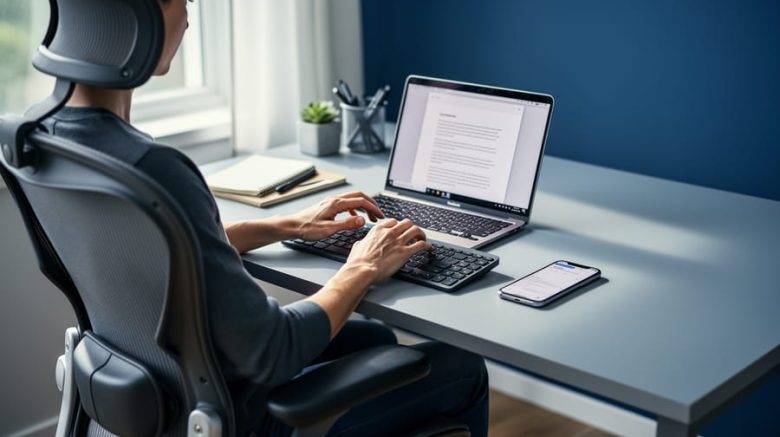
The three primary ergonomic risk factors threatening your health as a freelance writer are repetitive motion, awkward posture, and sustained static positions. These workplace hazards contribute to nearly 33% of all occupational injuries across Canada, and writers face each of them daily when typing, hunching over laptops, or sitting for hours without breaks.
Understanding these risk factors isn’t just about preventing discomfort. It’s about protecting your ability to earn a living. Every successful freelance writer knows that physical well-being directly impacts productivity, creativity, and career longevity. When neck pain makes it difficult to focus or wrist strain forces you to cut your workday short, your income suffers alongside your health.
Repetitive motion injuries develop gradually. Typing the same keystrokes thousands of times daily creates microscopic tears in tendons and muscles. Awkward posture, like craning your neck forward to read a screen or twisting to reach a mouse, places unnatural stress on your spine and joints. Static positions, even when your posture appears correct, reduce blood flow and create muscle fatigue that builds over time.
The encouraging news? Each of these ergonomic risk factors responds well to simple, practical interventions. Small adjustments to your workspace setup, deliberate breaks throughout your workday, and awareness of how you hold your body can dramatically reduce your injury risk. Many Canadian freelance writers have transformed their health and extended their careers by addressing these three factors systematically.
You don’t need expensive equipment or a complete office overhaul to start protecting yourself today.
Why These Three Risk Factors Matter for Writers
Occupational health researchers identify ergonomic risk factors by studying injury patterns across different professions and analyzing the physical demands of specific tasks. For workers who spend their days at computers, three risks emerge again and again in the data: repetitive strain from constant typing and clicking, poor posture from inadequate workspace setup, and static positioning from sitting in one place too long. These aren’t abstract workplace hazards, they’re the primary causes of the musculoskeletal disorders that plague desk workers.
Freelance writers face these risks more acutely than many office employees. Without an employer-provided ergonomic assessment or HR department reminding you to take breaks, you’re on your own. Your home office might be a kitchen table or a couch rather than a properly fitted desk. You set your own hours, which often means working through discomfort to meet deadlines. The flexibility that makes freelancing appealing can also make it easier to ignore early warning signs until a minor ache becomes a chronic problem.
Understanding these three specific factors gives you a practical starting point. Rather than drowning in generic wellness advice, you can target the actual mechanics of writing work: the movements you repeat thousands of times daily, the positions your body holds for hours, and the stillness that contradicts how your muscles and joints are designed to function. Each risk factor has clear prevention strategies, which means you can take meaningful action today.
1. Repetitive Strain: When the Same Movements Wear You Down
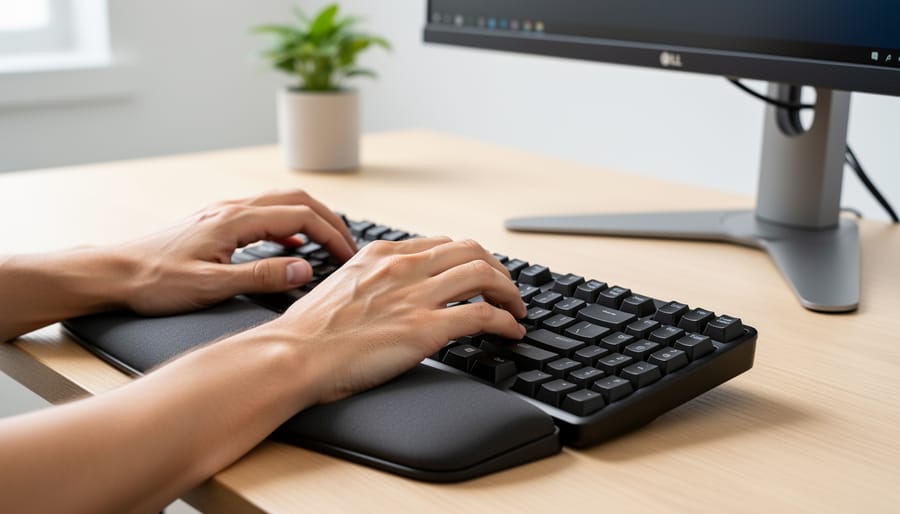
Your hands are your most important tools as a freelance writer, yet they’re also the most vulnerable to repetitive strain. This first ergonomic risk factor develops when you perform the same motions thousands of times each day, typing, clicking your mouse, scrolling through research, without adequate rest or variation. Each keystroke might seem harmless on its own, but multiply that by 40,000 to 50,000 keystrokes in a typical writing day, and you’re asking your tendons, muscles, and nerves to handle an enormous load.
Over weeks and months, this repetitive motion creates microscopic tears in the soft tissues of your hands, wrists, and forearms. The damage accumulates faster than your body can repair it, leading to painful conditions that can derail your writing career. Carpal tunnel syndrome is perhaps the most notorious outcome, where the median nerve running through your wrist becomes compressed, causing numbness, tingling, and weakness in your hand. Studies confirm that repetition is a CTS risk factor that writers face daily. Tendonitis is another common result, where the tendons connecting muscle to bone become inflamed and painful, making even simple tasks like gripping a pen excruciating.
Sarah, a content writer from Toronto, noticed a persistent ache in her right wrist after two years of full-time freelancing. Instead of ignoring it, she recognized the early warning signs and took action. She switched to an ergonomic split keyboard, started setting a timer for five-minute breaks every hour, and learned proper stretching techniques. Within three months, her pain disappeared, and she’s been writing comfortably ever since.
You can protect yourself from repetitive strain with these practical strategies:
- Use an ergonomic keyboard that keeps your wrists in a neutral position
- Take micro-breaks every 20-30 minutes to rest your hands and wrists
- Vary your tasks throughout the day to avoid continuous typing
- Perform simple hand and wrist stretches regularly
- Learn proper typing technique with relaxed fingers and minimal force
The key is consistency. Small adjustments made every day will preserve your ability to write for decades to come.
2. Poor Posture: The Silent Career Shortener
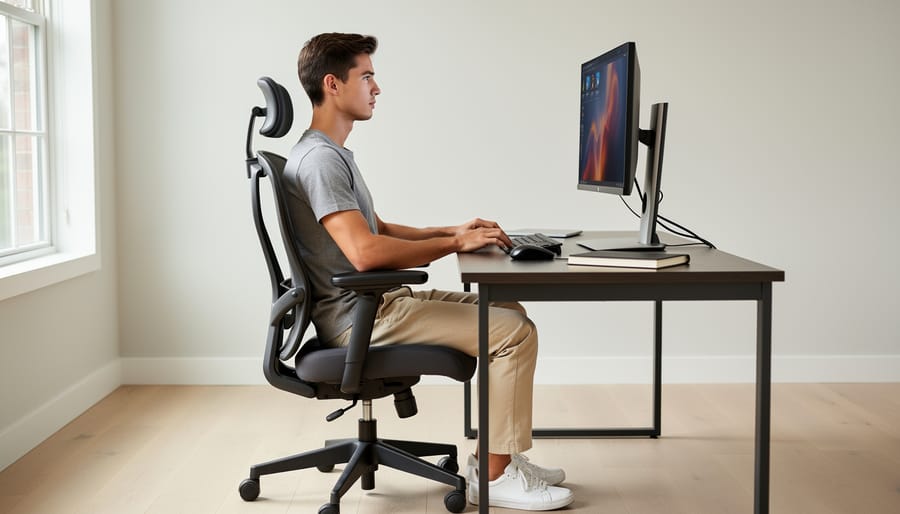
Poor posture sneaks up on you. When you’re racing to meet a deadline or deep in the flow of writing, you don’t notice yourself hunching forward or craning your neck toward the screen. But your body keeps score, and over time, these habits compound into chronic pain that can derail your freelancing career.
Freelance writers working from home face a unique challenge here. Without a corporate office setup, many of us write from kitchen tables, couches, or makeshift desks that weren’t designed for eight-hour workdays. You might start the morning sitting upright, but by afternoon you’re slouched with your laptop balanced on your knees. This sustained poor posture triggers a domino effect throughout your body. Research consistently links poor posture and neck pain and the problems rarely stop there.
The chain reaction starts at your neck. When you lean forward to see your screen, your head shifts out of alignment with your spine. Your neck muscles strain to support the weight, which can be 10 to 12 pounds in neutral position but increases dramatically with forward tilt. This tension radiates down into your shoulders, which round and tighten. Your upper back follows, curving into a hunch that compresses your chest and restricts breathing. Meanwhile, your lower back loses its natural curve, leading to disc pressure and persistent aching. Writers often describe this progression as feeling stiff at first, then sore, then dealing with sharp pain that makes it hard to concentrate.
The encouraging news is that small adjustments make an enormous difference. Raising your monitor with a stand or stack of books brings your eyes level with the top third of the screen, eliminating neck strain. A proper chair with lumbar support, or even a rolled towel tucked behind your lower back, maintains your spine’s natural curve. Positioning your keyboard so your forearms stay parallel to the floor keeps your shoulders relaxed. These aren’t expensive overhauls. Many freelancers see dramatic improvement just by reorganizing what they already own or adding a few affordable ergonomic tools to their workspace.
You don’t need to achieve perfect posture every second. Start by checking in with your body every hour. Are your shoulders creeping up toward your ears? Is your chin jutting forward? Simply resetting your position throughout the day retrains your habits and gives your muscles a break. Your neck, back, and shoulders will thank you, and you’ll write more comfortably for years to come.
3. Static Positioning: Staying Still Is Harder Than It Looks
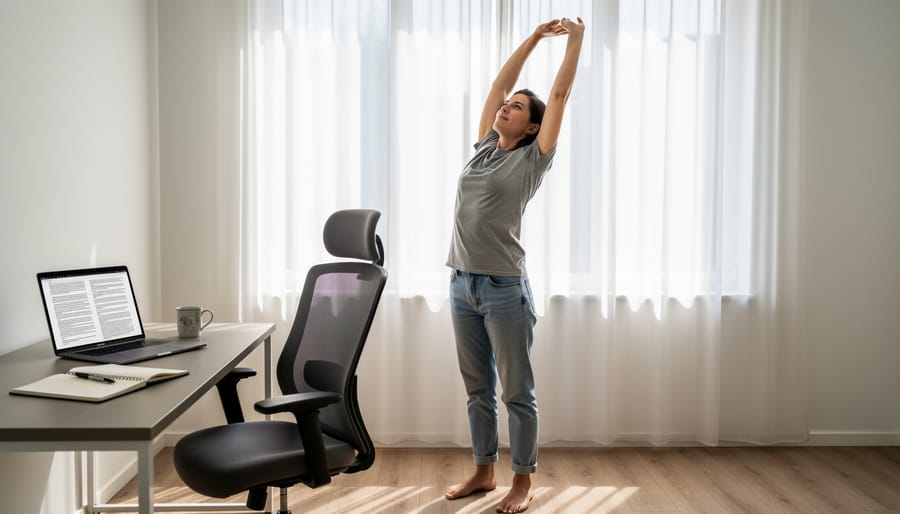
You might have nailed your desk height and mastered sitting up straight, but if you’re staying frozen in that position for three-hour writing sprints, you’re still at risk. Static positioning, holding your body in the same posture for extended periods, creates problems even when that posture looks textbook-perfect. Your muscles aren’t designed to hold any position indefinitely. They need movement to stay healthy, and your circulation depends on it too.
When you sit still for long stretches, blood flow to your legs and lower back slows down. Muscles that support your spine start to fatigue and stiffen. You might notice your feet feel numb, your lower back aches, or you’re inexplicably exhausted despite sitting all day. That’s your body asking for movement it’s not getting. Freelancers often push through deadline pressure without realizing that staying glued to the chair is compounding their physical strain far beyond what the actual typing demands.
The good news is that breaking up static positioning doesn’t mean abandoning your workflow. Small movement strategies woven into your day make a real difference:
- Follow the 20-20-20 rule: every 20 minutes, look at something 20 feet away for 20 seconds to rest your eyes and shift your focus
- Consider a standing desk or desktop riser so you can alternate between sitting and standing throughout the day
- Set an hourly reminder to take a brief walk, even if it’s just to the kitchen and back
- Do simple desk stretches like shoulder rolls, neck rotations, and seated spinal twists between paragraphs
- Change your work position regularly, shift from your desk chair to a different seat, stand at a counter, or work from the couch for short tasks
Toronto freelancer James built five-minute movement breaks into every hour after noticing persistent hip stiffness. He worried the interruptions would kill his concentration, but the opposite happened. The breaks refreshed his thinking, reduced his afternoon fatigue, and he finished projects faster with fewer revisions. His back pain disappeared within weeks, and he felt more energized throughout the workday.
Addressing home office ergonomics means recognizing that movement is part of the setup, not separate from it. You don’t need elaborate exercise routines or expensive equipment. What matters is consistency, building regular position changes into your routine so your body never settles into that damaging static hold. Your muscles will thank you, your energy will improve, and your writing career will benefit from the sustainable pace you’ve created.
Putting It All Together: Your Injury Prevention Action Plan
Now that you understand the three main ergonomic risk factors, take fifteen minutes to assess your current setup. Sit at your desk as you normally would and notice where your body feels strain. Is your neck craning forward? Are your wrists bent at an angle? Have you been sitting for two hours without standing? Write down what you observe without judgment.
Start with one small change this week. If repetitive strain is your biggest concern, try a wrist rest or adjust your keyboard height. Struggling with posture? Place a sticky note on your monitor reminding you to check your alignment every hour. For static positioning, set a timer to stand and stretch every 45 minutes. These micro-adjustments add up.
Think of injury prevention as part of your professional toolkit, just as essential as your writing skills. Protecting your body means you can avoid burnout and keep taking on projects you love for years to come. A sustainable freelancing career depends on your physical wellbeing, not just your talent.
You don’t need an expensive standing desk or a complete office overhaul tomorrow. Pick the easiest change and build from there. Many successful freelancers started exactly where you are now, made gradual improvements, and found their productivity increased along with their comfort. Your future self will thank you for the small steps you take today.
Common Questions About Ergonomic Risk Factors
Writers often worry they’ve already developed ergonomic problems or wonder if solutions are out of reach. Here are straightforward answers to questions freelancers ask most:
How do I know if I’m already experiencing repetitive strain?
Early warning signs include tingling or numbness in your fingers, wrist pain that worsens during or after typing sessions, and a feeling of weakness when gripping objects. If you notice these symptoms, it’s time to assess your workspace and typing habits before the condition progresses.
Do I need expensive equipment to prevent these risks?
Not at all. Many effective solutions cost little or nothing: adjusting your chair height, stacking books under your monitor, setting hourly movement reminders, and practicing break planning strategies all work without breaking your budget. Start with workspace adjustments before investing in specialized gear.
Can I fix my ergonomics if I work from a couch or bed?
Working from soft surfaces creates the worst conditions for all three risk factors. If a proper desk isn’t possible right now, try sitting at a dining table with a cushion for lumbar support, or invest in a lap desk that creates a firmer surface and raises your laptop closer to eye level.
How often should I take breaks?
Aim for a movement break every 30 to 45 minutes, even if it’s just standing and stretching for two minutes. Your body needs position changes more frequently than you might think, and these micro-breaks actually improve focus and writing quality.
Remember, part-time freelancers face the same risks as full-timers. Spending just a few hours daily in poor ergonomic conditions still accumulates strain over weeks and months. The positive news is that small, consistent changes protect your body regardless of how many hours you write each week.
Understanding repetitive strain, poor posture, and static positioning gives you the power to protect your body while building your freelance writing career. These three ergonomic risk factors aren’t inevitable consequences of working from home, they’re manageable challenges with straightforward solutions.
The good news? Small adjustments compound into significant protection over time. Setting a timer for movement breaks, adjusting your monitor height, or investing in a supportive chair might seem minor, but these changes safeguard the physical health that sustains your career. Think of ergonomic practices not as optional extras, but as essential professional tools, just like your laptop or internet connection.
You’ve chosen freelancing for the autonomy and flexibility it offers. Taking control of your workspace health lets you fully enjoy those benefits for years to come. Your body is your most important business asset, treat it accordingly. Start with one risk factor today, build awareness around your work habits, and gradually create an environment that supports both your productivity and wellbeing. You’ve got this, and your future self will thank you for the care you’re taking right now.