

Transform your job search with a resume that captures attention in seconds. Drawing from veteran writers’ insights, crafting a winning resume isn’t just about listing experiences—it’s about telling your professional story with impact and precision.
In today’s competitive job market, where hiring managers spend an average of just 7.4 seconds scanning each resume, standing out requires more than just good qualifications. Whether you’re a seasoned professional or just starting your career journey, these eight proven strategies will help you create a resume that not only showcases your achievements but also speaks directly to your target employer’s needs.
From powerful action verbs to strategic keyword placement, these tips combine time-tested wisdom with modern best practices to help you craft a resume that opens doors. Let’s transform your professional experience into a compelling narrative that lands you more interviews and better opportunities.

Craft Your Professional Story
Power Words That Catch Attention
Power up your resume with these dynamic action verbs that instantly grab attention. Start bullet points with words like “Orchestrated,” “Spearheaded,” and “Championed” to showcase leadership. Replace passive phrases like “responsible for” with energetic alternatives such as “Launched,” “Cultivated,” or “Pioneered.” For creative achievements, use words like “Crafted,” “Conceived,” and “Innovated.” When highlighting client relationships, opt for “Nurtured,” “Fostered,” and “Established.” Quantify your successes with powerful combinations like “Successfully delivered,” “Consistently exceeded,” and “Effectively managed.” Remember, these power words should honestly reflect your experience while painting a vivid picture of your capabilities. Choose words that resonate with your target industry and position, making your achievements impossible to ignore.
Format for Impact
White Space Wisdom
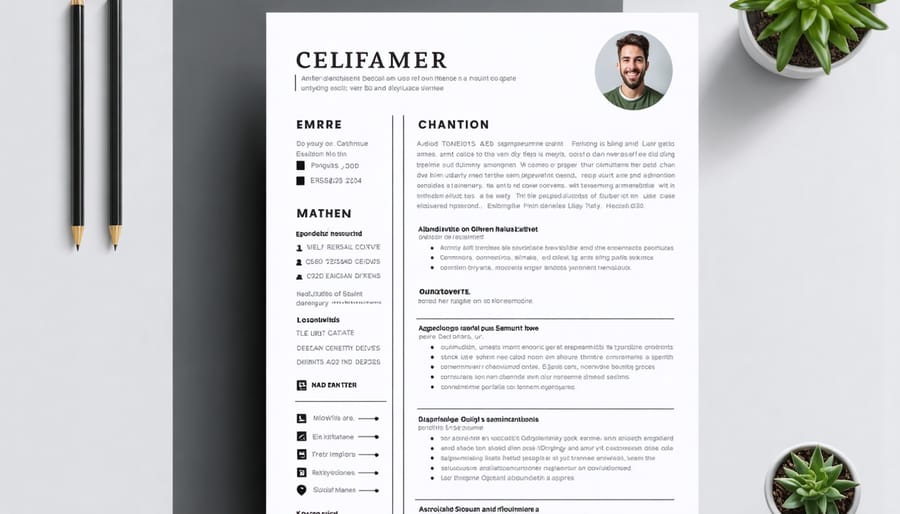
Give your resume room to breathe by strategically using white space. Think of it as creating comfortable reading zones that guide the recruiter’s eyes naturally through your content. Aim for margins between 0.5 to 1 inch, and maintain consistent spacing between sections (try 12-18pt). Break up dense paragraphs into bullet points, and limit each bullet to two lines maximum. Keep your line spacing between 1.15 and 1.5 to prevent a cramped appearance. Remember, a cluttered resume is like an overcrowded coffee shop – it makes people want to leave quickly. By balancing text and white space effectively, you’ll create a document that’s inviting and easy to scan, increasing the chances that hiring managers will spend more time reviewing your qualifications.
Quantify Your Achievements
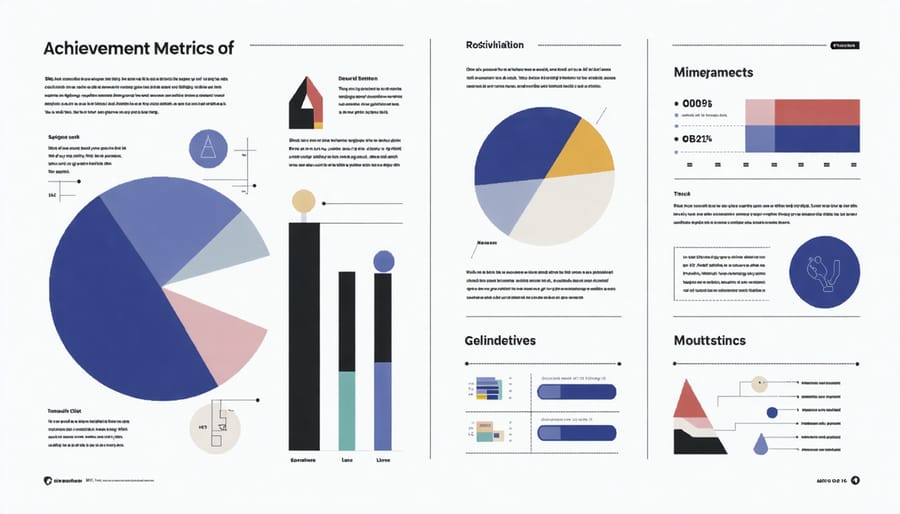
Numbers speak louder than words when it comes to resumes. To showcase your achievements effectively, transform vague statements into powerful, quantifiable results. Instead of saying “increased website traffic,” specify “grew monthly website traffic by 150% over six months through SEO-optimized content.”
For freelance writers, focus on metrics that matter to potential clients. Consider these examples:
– “Delivered 98% of projects ahead of deadline”
– “Maintained a 4.9/5 client satisfaction rating across 50+ projects”
– “Generated $50,000 in revenue through ghostwritten e-books”
– “Increased client conversion rates by 35% through compelling landing page copy”
Don’t have exact numbers? Use ranges or averages:
– “Typically delivered 3-5 articles per week”
– “Averaged 2,000-3,000 words daily”
– “Maintained 80%+ client retention rate”
Remember to highlight growth metrics in your portfolio pieces:
– Social media engagement rates
– Email open rates for newsletters
– Click-through rates for marketing content
– Revenue generated through sales copy
Even seemingly small wins count. Track your achievements consistently, keeping a spreadsheet of project outcomes, client feedback, and performance metrics. This data-driven approach helps potential clients understand your real value and positions you as a results-oriented professional.
Tailor Your Content
One of the most powerful strategies for landing your dream writing gig is customizing your resume for each application. Start by carefully analyzing the job posting, highlighting key requirements and responsibilities. Then, mirror the language used in the posting throughout your resume, incorporating relevant keywords naturally.
For instance, if a client seeks a “content strategist with SEO expertise,” emphasize your SEO achievements and content planning experience. If they want a “creative storyteller,” highlight your narrative writing projects and engaging content examples.
Rearrange your experience sections to prioritize the most relevant skills for each position. When applying for a technical writing role, lead with your documentation projects. For a creative writing position, showcase your published stories or compelling marketing copy first.
Remember to adjust your professional summary for each application. This brief introduction should directly address what the client is looking for while highlighting your unique value proposition. Think of it as your elevator pitch, tailored specifically for that opportunity.
Don’t forget to include relevant industry-specific accomplishments and metrics that align with the job requirements. This targeted approach shows potential clients that you’ve done your homework and understand their specific needs.
Keywords That Matter
In today’s digital-first hiring landscape, getting your resume past Applicant Tracking Systems (ATS) is crucial. Start by carefully reviewing the job posting and identifying key terms and phrases that appear multiple times. These are your golden keywords. For writing positions, include specific terms like “content creation,” “editorial,” “copywriting,” or “SEO writing” when they match your experience.
Incorporate these keywords naturally throughout your resume, particularly in your professional summary and work experience sections. However, avoid keyword stuffing – ATS systems and human recruiters can spot this tactic immediately. Instead, weave them into meaningful sentences that showcase your achievements.
For Canadian writers, include relevant certifications and Canadian-specific experience markers when applicable. If you’re targeting specific industries, add sector-specific terminology like “B2B content,” “technical writing,” or “marketing communications.”
Remember to include both the spelled-out version and acronym of important terms (e.g., Search Engine Optimization and SEO) to ensure your resume gets picked up regardless of how the keyword is entered in the ATS. Keep your formatting simple and clean – complex designs can interfere with ATS readability.
Show, Don’t Tell
Instead of simply stating “excellent communication skills,” demonstrate your abilities through concrete examples. Write “Created a weekly newsletter that increased client engagement by 35%” or “Managed a writing team of five freelancers across three major projects.” Quantify your achievements whenever possible – numbers tell a compelling story. For creative projects, describe specific outcomes: “Developed content strategy that doubled blog traffic in six months” rather than “Good at content creation.”
Share brief success stories that highlight your problem-solving abilities. For example, “Streamlined editorial workflow by implementing new project management tools, reducing turnaround time by 25%” shows both initiative and results. Remember to tailor these examples to each job application. When highlighting writing expertise, mention specific industries, publications, or content types you’ve worked with, such as “Produced technical documentation for SaaS companies” or “Published feature articles in leading Canadian lifestyle magazines.”
Crafting a winning resume doesn’t have to be overwhelming. By following these eight tips – from highlighting your achievements to maintaining clean formatting – you’ll create a resume that catches employers’ attention. Remember to customize each resume for specific positions, proofread thoroughly, and keep your content concise yet impactful. Take action today: review your current resume, implement these strategies, and start landing those dream writing opportunities. Your perfect freelance career awaits!