

Explore translation management systems like Phrase, Lokalise, or Crowdin to see how they streamline multilingual content workflows—many offer free trials that let you test their interfaces without upfront investment. Start with simple localization projects by volunteering to adapt existing content for different regional markets, building your portfolio while learning how cultural nuances affect messaging. Master CAT (Computer-Assisted Translation) tools such as SDL Trados or MemoQ, which experienced translators and localization specialists use daily to maintain consistency across large projects and tight deadlines.
Software localization represents one of the most promising expansions for your freelance writing business. Companies launching products globally need skilled writers who understand both language and technology—and they’re willing to pay premium rates for this specialized expertise. Unlike traditional translation, localization requires you to adapt user interfaces, error messages, and help documentation so they feel natural to each target audience.
The best part? You don’t need a linguistics degree to get started. Combining your existing writing skills with writing technologies opens doors to tech companies, software startups, and app developers who desperately need writers who can make their products accessible worldwide. Many successful localization writers started exactly where you are—curious about the field but unsure how to begin.
This guide breaks down which tools you actually need, how to build relevant skills affordably, and what realistic income expectations look like. You’ll discover practical steps for landing your first localization project and learn from writers who’ve successfully made this transition.
Why Freelance Writers Need Software Localization Skills
The Real Money in Multilingual Markets
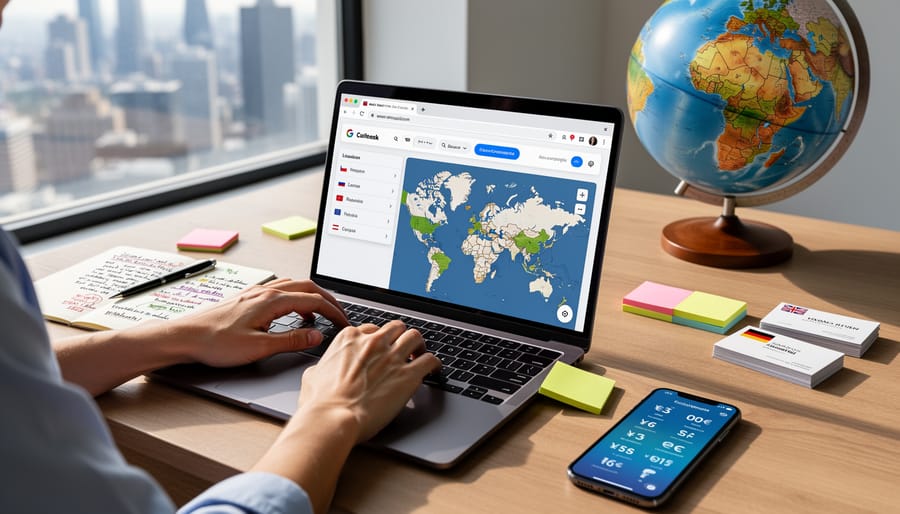
Here’s the exciting news: companies regularly pay 25-50% more for localized content compared to standard translation work. Software companies expanding into new markets need writers who understand cultural nuances, not just language conversion. For Canadian writers, this creates unique advantages. Your understanding of both English and French markets positions you naturally for bilingual projects, and many American tech companies specifically seek Canadian writers for their international expansion efforts.
The beauty of software localization is that companies view it as an investment, not an expense. They know that poorly adapted content can tank a product launch, so they’re willing to pay premium rates for quality work. Entry-level localization projects might start around $0.08-$0.12 per word, while experienced specialists command $0.15-$0.25 or higher. Some writers even transition to monthly retainers with software companies, earning steady income while helping adapt entire product ecosystems.
You don’t need to be fluent in multiple languages to start. Many Canadian writers begin by adapting English content for different English-speaking regions, adjusting terminology, examples, and cultural references for audiences in the UK, Australia, or different parts of North America. This experience builds your portfolio and demonstrates your understanding of localization principles before expanding into additional language markets.
Beyond Simple Translation: What Localization Actually Means
If you’re new to this field, you might think localization is just translation with a fancier name. Actually, it’s much more nuanced and that’s great news for your writing skills.
Translation converts words from one language to another. Localization adapts entire experiences for different cultures and regions. Think of it this way: translation handles the script, while localization directs the whole production.
Here’s a practical example. Imagine you’re localizing marketing copy that says “hit it out of the park.” A straight translation into Spanish keeps the baseball metaphor, but in countries where soccer dominates, that reference falls flat. Localization changes it to a soccer analogy that resonates emotionally.
Or consider date formats. Americans write 12/05/2024, but Canadians and Europeans read that as May 12th, not December 5th. Localization catches these details that translation alone misses.
Tone matters too. German business communication tends toward formality, while Australian content often embraces casual friendliness. The same English words need different approaches for each market.
As a writer, you’re already skilled at adapting voice and style for different audiences. Localization simply extends that talent across cultural boundaries, making it a natural fit for your existing expertise.
Essential Software Localization Tools Every Freelance Writer Should Know
CAT Tools That Don’t Require a Tech Degree
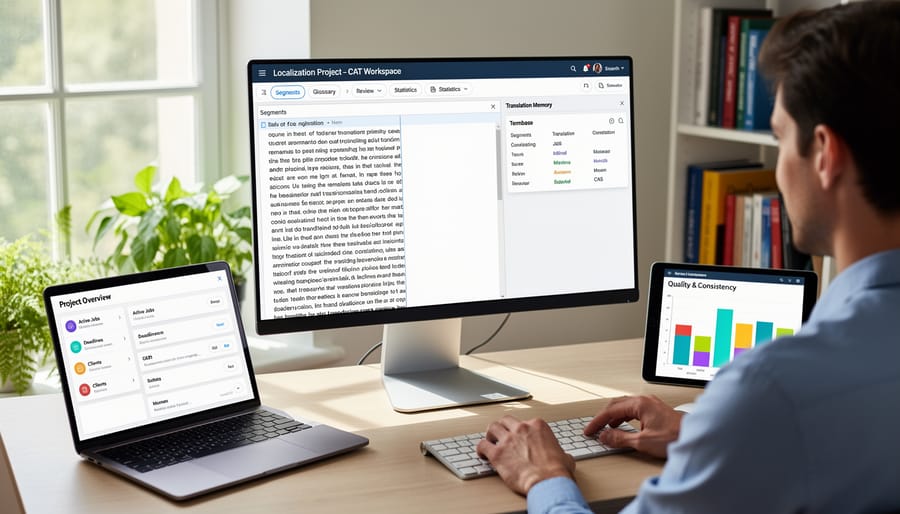
The good news? You don’t need a computer science background to start using professional CAT tools. These platforms are designed with translators and writers in mind, not programmers.
SDL Trados Studio remains the industry standard, especially for agency work. While it has a learning curve, thousands of freelance writers have mastered it through online tutorials and practice. The investment pays off since many translation agencies specifically request Trados experience. Think of it as learning a new word processor, just with some extra features for managing translations.
MemoQ offers a friendlier interface that many writers find more intuitive. It’s particularly popular among freelancers because it balances powerful features with accessibility. The community support is excellent, and you’ll find plenty of fellow writers willing to share tips in user forums.
For those just starting out, Smartcat is a genuine game-changer. It’s cloud-based, which means no complicated software installation, and the free tier gives you everything you need to take on your first localization projects. You can literally create an account and start working within minutes. Many Canadian freelancers have landed their first software localization gigs using Smartcat’s collaborative features.
The secret to choosing your first CAT tool? Start with whatever your potential clients are using. Check job postings in your niche to see which tools appear most frequently. Most offer free trials, so you can experiment before committing. Remember, mastering even one CAT tool opens doors to projects you couldn’t access before, and the skills transfer surprisingly well between platforms once you understand the basic concepts.
Translation Management Platforms for Writer-Client Collaboration
When you’re working with international clients on software localization projects, you’ll need more than just translation skills—you’ll need the right platform to manage everything smoothly. That’s where translation management systems come in, and the good news is that many of them are designed with freelancers in mind.
Phrase, Lokalise, and Crowdin are three popular collaboration platforms that connect writers with clients who need localization work. These systems do the heavy lifting when it comes to project organization. Instead of juggling endless email threads and version-controlled documents, everything lives in one central hub where you can see your assignments, track your progress, and communicate with clients.
Here’s what makes these platforms particularly valuable for Canadian writers: they handle the technical side automatically. When you log in, your assigned text segments are waiting for you, complete with context and reference materials. You translate or adapt the content, and the system tracks your word count and manages quality checks. Many clients pay directly through these platforms too, which simplifies invoicing across borders.
Getting started is straightforward. Most platforms offer free accounts where you can create a translator profile and browse available projects. You’ll often find work ranging from mobile apps to website content, giving you the chance to build diverse experience in software localization while working with clients worldwide.
Free and Budget-Friendly Options for Beginners
You don’t need a massive budget to start offering localization services. Several free and low-cost tools give you everything needed to begin this rewarding specialty, and they’re straightforward enough to learn alongside your other essential writing tools.
OmegaT stands out as a completely free, open-source translation memory tool that works across Windows, Mac, and Linux. It helps you maintain consistency across projects by remembering how you’ve translated phrases before. While the interface looks a bit dated, it’s surprisingly powerful and has supported many freelancers through their first localization projects without costing a penny.
Wordfast Anywhere offers a generous free tier that’s perfect for beginners. You can process up to 500 translation units monthly at no cost, which is plenty for testing the waters. The cloud-based platform means you can work from anywhere, and its clean interface makes the learning curve much gentler than professional-grade alternatives.
Google Translate API integration deserves mention too, though it requires some technical comfort. Many Canadian writers have successfully combined it with their existing workflows to speed up initial drafts, then apply their linguistic skills for refinement and cultural adaptation.
Starting with these free options lets you build real experience and decide if localization suits your writing practice before investing in premium software. Many successful localization writers still use these tools for certain projects even after expanding their toolkit.
Quality Assurance Tools to Polish Your Work
Before you deliver your localized work to clients, quality assurance tools act as your safety net, catching mistakes that might otherwise slip through. Think of these as your proofreading partners that never get tired or miss details.
Xbench is a popular choice among localization professionals. This free tool checks your translations for consistency issues, terminology mismatches, and formatting errors. It scans your work against glossaries and previous translations, ensuring you’re using the same terms throughout a project. For freelancers just starting out, Xbench offers a gentle learning curve while providing professional-grade results.
QA Distiller is another valuable option that integrates with various CAT tools. It automatically identifies potential problems like missing punctuation, number inconsistencies, and tag errors. These small details matter enormously to clients, and catching them before submission shows your commitment to quality.
Many successful freelance translators share that implementing QA tools transformed their confidence and reduced revision requests dramatically. One Canadian translator mentioned how running Xbench before every delivery cut her client queries in half within three months.
Start simple by running basic checks on every project. As you grow comfortable, explore advanced features like creating custom checklists for recurring clients or specific industries. These tools might seem intimidating initially, but they’re actually quite user-friendly once you complete a few practice runs.
Remember, quality assurance tools don’t replace your judgment—they enhance it. They handle the tedious verification work, freeing you to focus on the creative and nuanced aspects of localization where your unique skills truly shine.
Getting Started: Your First Localization Project
Building Skills Before You Pitch
Before diving into paid localization projects, you’ll want to build a solid foundation. The good news? Plenty of free resources can help you develop these skills at your own pace.
Start with online learning platforms like Coursera and edX, which offer free courses on translation basics and cultural adaptation. LinkedIn Learning also provides beginner-friendly tutorials on popular localization tools, perfect for getting your feet wet without financial commitment.
Practice makes perfect, and you can gain hands-on experience by volunteering with open-source projects on platforms like Transifex or Crowdin. These communities welcome newcomers and let you work with real software translation projects while receiving feedback from experienced localizers.
Join Facebook groups and subreddits focused on translation and localization where Canadian freelancers share tips, answer questions, and sometimes post entry-level opportunities. The ProZ.com community forum is another excellent resource where you can connect with professionals, ask questions, and learn from others’ experiences.
Consider starting small by offering to help local businesses translate their websites or apps. This builds your portfolio while developing practical skills. Remember, every expert localizer started exactly where you are now. Taking these preparatory steps positions you to confidently pitch clients and command fair rates for your specialized services.
How to Position Yourself to Clients
Once you’ve gained some familiarity with localization tools, it’s time to let potential clients know about your expanding skill set. Start by adding a dedicated line to your portfolio or LinkedIn profile mentioning your experience with software localization. You might say something like “Experienced with CAT tools including SDL Trados and Smartcat for translation and localization projects.” Keep it honest—if you’re still learning, phrases like “developing expertise in” or “trained in” work perfectly well.
When pitching to clients, focus on the value you bring rather than listing every feature of the tools you use. For example, explain that you can help them maintain consistency across multiple languages or streamline their workflow for international content. Real clients care more about results than technical specs.
Update your service descriptions to include localization as an offering, but be clear about your current capabilities. If you’ve only completed a few practice projects, consider offering discounted rates initially while you build your portfolio. This approach worked beautifully for Toronto-based writer Marcus Chen, who landed his first localization client by honestly stating he was building his portfolio and offering competitive pricing in exchange for a testimonial.
Remember to showcase any relevant projects in your portfolio, even if they started as practice exercises. Before-and-after examples demonstrating how you’ve adapted content for different markets can be particularly compelling. The key is authentic confidence—show what you can genuinely deliver while remaining open about your learning journey.

Real Writers, Real Results: Success Stories
Meet Sarah Chen from Vancouver, who spent five years writing marketing content exclusively in English before discovering software localization tools. “I was hesitant at first because I’m not a native French speaker,” she admits. “But I started with Smartling’s free tier to adapt simple product descriptions for Quebec-based clients. Within six months, I’d increased my monthly income by 40% and signed three retainer clients who needed consistent English-to-French localization.” Sarah emphasizes that the tools handled the heavy lifting while she focused on cultural nuances and tone. “I’m not replacing professional translators for complex work, but I’ve carved out a profitable niche in software and e-commerce localization that didn’t exist for me before.”
Toronto-based freelancer Marcus Williams took a different approach. After noticing many local tech startups needed help preparing their apps for international markets, he learned Phrase TMS and Crowdin through their free documentation and tutorials. “I positioned myself as a localization project coordinator rather than just a writer,” Marcus explains. “I help clients organize their content, manage translation workflows, and ensure their messaging stays consistent across languages.” Within a year, he transformed his struggling freelance practice into a thriving business, now earning over $75,000 annually. “The best part? I’m working with exciting tech companies on meaningful projects. These tools opened doors I didn’t even know existed.”
Both writers stress that success didn’t happen overnight, but the investment in learning these platforms created opportunities they couldn’t access through traditional writing services alone.
Common Pitfalls and How to Avoid Them
Starting with software localization tools can feel overwhelming, but knowing what to watch out for will save you time and frustration. Many writers jump in without testing tools first, only to discover steep learning curves or features that don’t match their needs. Always take advantage of free trials before committing to paid plans. Spend a few hours exploring the interface with sample projects to see if it genuinely simplifies your workflow.
Pricing mistakes are surprisingly common. Some writers underestimate how quickly translation memory credits or API calls add up, leading to unexpected bills. Review pricing structures carefully, and start with smaller projects to gauge actual costs. Consider setting monthly budgets in your accounting system to track expenses against the income these tools generate.
Scope creep poses another challenge. A client might request “just a quick translation” that expands into full localization with cultural adaptation, layout adjustments, and multiple revision rounds. Protect yourself by defining deliverables clearly in your contracts. Specify what localization includes versus what requires additional fees, such as desktop publishing or cultural consulting.
Technical hurdles can discourage beginners, especially when dealing with file formats or integration issues. Don’t let this stop you. Most tool providers offer tutorials, webinars, and responsive support teams. Join online communities where experienced localization writers share troubleshooting tips and workflows.
The key is starting small. Choose one accessible tool, practice with personal projects, and gradually build your skills. Many successful localization writers began exactly where you are now, learning one tool at a time while continuing their regular writing work. This measured approach prevents burnout and builds genuine expertise you can confidently offer clients.
You don’t need to master every localization tool overnight. Start with one free platform, explore its features, and take on a small project to build your confidence. As you gain experience, you’ll naturally develop preferences and discover which tools align best with your workflow.
The competitive advantage you’ll gain is real. Many Canadian freelance writers overlook localization, which means less competition and better rates for those who embrace it. Companies actively seek writers who understand both language and the technical side of adapting content for different markets. This combination of skills sets you apart in a crowded marketplace.
Remember, every expert was once a beginner. These tools might feel intimidating at first, but they’re designed to be learnable. Dedicate time to tutorials, join online communities, and don’t hesitate to ask questions. With consistent practice, what seems complex today will become second nature.
The career possibilities that open up when you add localization to your skillset are genuinely exciting. You’re not just translating words—you’re helping businesses connect with new audiences and cultures. That’s meaningful work that pays well and keeps evolving. Your freelance writing career can expand far beyond what you imagined, and it starts with taking that first small step into localization.