

Protect your creative work from day one when starting your freelance writing career by implementing robust copyright practices. Register your written works with the Canadian Intellectual Property Office within 90 days of publication to establish clear ownership and legal protection. Include copyright notices on all deliverables using the format “© [Year] [Your Name] – All Rights Reserved” to assert your rights and deter potential infringement.
As Canadian freelancers, we’re fortunate to have automatic copyright protection the moment we create original work, but taking proactive steps strengthens our legal position. Draft clear copyright terms in your client contracts, specifically outlining usage rights, transfer of ownership, and attribution requirements. Consider retaining rights for portfolio use and derivative works while granting clients the specific permissions they need.
Digital protection matters just as much as legal documentation. Maintain detailed records of your creative process, including dated drafts and correspondence. Use digital watermarks or embedded metadata in your files, and regularly monitor the internet for unauthorized use of your content using tools like Google Alerts or Copyscape.
The freelance writing landscape offers incredible opportunities, but only when you safeguard your intellectual property from the start. With these foundational copyright practices in place, you can focus on growing your business with confidence.
Understanding Copyright in Legal Content Writing
What Can Be Protected
As a freelance writer, you can protect various forms of creative work under copyright law. Your written articles, blog posts, and web content are automatically protected from the moment you create them. Original research papers, case studies, and legal analyses also fall under copyright protection. Even your drafts and unpublished works are covered!
Beyond written content, your copyright protection extends to creative elements like custom graphics, infographics, and photographs you create for clients. If you develop unique templates, worksheets, or writing guides as part of your freelance business, these are protected too.
However, keep in mind that you can’t copyright facts, ideas, or common phrases. For example, while your unique analysis of a legal case is protected, the basic facts of the case aren’t. Similarly, standard contract clauses or commonly used legal terminology cannot be copyrighted.
Digital content also receives protection, including your email newsletters, social media posts, and online courses. Remember that your work is protected regardless of whether you’ve registered it officially, though registration offers additional benefits for enforcement.

Fair Use in Legal Writing
Fair use in legal writing allows you to quote and reference existing legal materials while creating content for your clients. As a freelance legal writer, you can use portions of court decisions, statutes, and legal documents without permission, provided you follow certain guidelines.
When using legal content, always cite your sources properly and ensure your usage is for educational, commentary, or research purposes. A good rule of thumb is to quote only what’s necessary to make your point and add substantial original analysis or explanation around the quoted material.
Keep in mind that while legal documents like court decisions are generally in the public domain, secondary sources like legal textbooks and articles are usually copyrighted. When using these materials, limit yourself to brief excerpts and always provide proper attribution.
To stay within fair use boundaries:
– Quote selectively and briefly
– Add your own analysis and commentary
– Cite all sources accurately
– Transform the material through explanation
– Avoid copying entire documents or substantial portions
Remember that fair use protects both your work and allows you to reference others’ work appropriately, creating a balanced ecosystem for legal content creation.
Protecting Your Legal Content
Registration Process
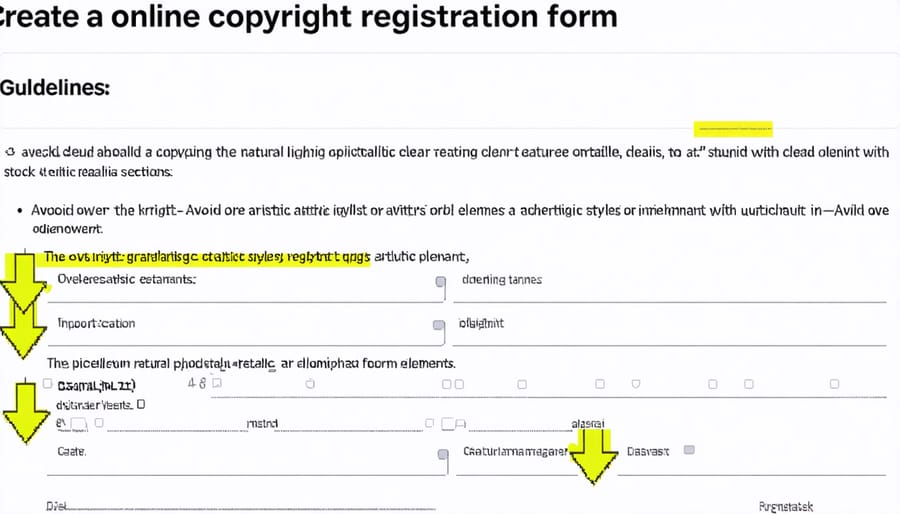
Protecting your creative work starts with proper copyright registration, and the process is more straightforward than you might think. Here’s your step-by-step guide to securing your rights as a Canadian freelance writer:
1. Gather Your Materials
First, compile your written work, including the title, completion date, and any previous publication information. Make sure your work is in its final form, as registration protects the specific version you submit.
2. Visit the Canadian Intellectual Property Office
Head to CIPO’s official website and locate the copyright registration section. You can complete the entire process online, making it convenient for busy freelancers.
3. Complete the Application Form
Fill out Form 2 – Application for Registration of a Copyright. You’ll need to provide:
– Your personal information
– Work details
– Category of work (literary, artistic, etc.)
– Creation date
– Publication status
4. Pay the Registration Fee
The standard fee for online registration is $50. Keep in mind this is a one-time payment per work, and it’s a tax-deductible business expense.
5. Submit Supporting Documentation
Upload your work sample or documentation as required. For written works, this typically means the first and last few pages of your manuscript.
6. Await Confirmation
Processing usually takes about 2-4 weeks. Once approved, you’ll receive an official certificate of registration, which serves as proof of your copyright ownership.
Remember, while registration isn’t mandatory for copyright protection in Canada, it provides valuable legal evidence of your ownership and makes it easier to defend your rights if needed.
Contract Clauses That Matter
When crafting your next freelance writing contract, pay special attention to these essential copyright clauses that can make or break your successful freelance writing career. First, ensure your contract clearly states who owns the final work. While clients typically want full rights, consider negotiating to retain certain usage rights, especially for portfolio purposes.
Include a specific transfer of rights clause that outlines exactly when and how the copyright transfers to the client. This usually happens upon full payment, protecting you if the client fails to pay. Consider adding a kill fee clause that ensures partial payment if the project is cancelled mid-way.
Don’t forget to address derivative works – specify whether the client can modify your content and under what conditions. For ghostwriters, include a confidentiality clause that balances client privacy with your right to claim the work in private portfolio presentations.
Add a warranty clause stating that your work is original and doesn’t infringe on others’ rights. This protects both you and your client. Also, consider including a reversion clause that returns rights to you if the client doesn’t use the work within a specified timeframe.
Remember to make these clauses clear and straightforward – avoid legal jargon that might confuse either party. Having these elements in your contract helps establish professional boundaries and protects your creative interests.
Digital Protection Strategies
In today’s digital landscape, protecting your freelance writing work requires a strategic approach combining both technical tools and proactive measures. Start by implementing digital watermarks on your content, which act as invisible signatures that can help prove ownership if disputes arise. Regular screenshots and timestamps of your work’s development stages can also serve as valuable documentation.
Consider using specialized digital media content protection tools like Copyscape to detect unauthorized use of your work across the internet. Set up Google Alerts for unique phrases from your content to receive notifications when they appear elsewhere online.
Password-protect your shared documents and use secure file-sharing platforms when delivering work to clients. When sharing drafts or samples, consider using PDF formats with embedded security features that prevent copying and editing. Remember to maintain an organized system for tracking where and how your content is being used.
For additional security, register your most valuable pieces with the Canadian Intellectual Property Office. While not mandatory, this official registration provides stronger legal protection if infringement occurs. Consider adding clear copyright notices and terms of use to your work, especially when publishing on personal platforms or portfolios.
Regular content audits can help you spot potential infringement early, allowing for swift action to protect your intellectual property rights.
Enforcing Your Rights
Identifying Infringement
Identifying unauthorized use of your content starts with regular monitoring of both online and print media. Set up Google Alerts for unique phrases from your work and your name to receive notifications when your content appears elsewhere. For visual content, try reverse image searches using tools like TinEye or Google Images.
Watch for telltale signs of infringement, such as exact matches of your text appearing without attribution, your images being used without permission, or your work being repackaged under someone else’s name. Pay special attention to industry publications, competitor websites, and content aggregators.
If you work with clients through platforms, regularly check similar job postings to ensure your sample work isn’t being used to attract other writers. Keep detailed records of your published work, including screenshots and publication dates, to help establish your ownership if disputes arise.
Remember that not all similar content constitutes infringement. Look for substantial copying rather than coincidental similarities, and consider whether the use might fall under fair dealing exceptions before taking action.
Taking Action
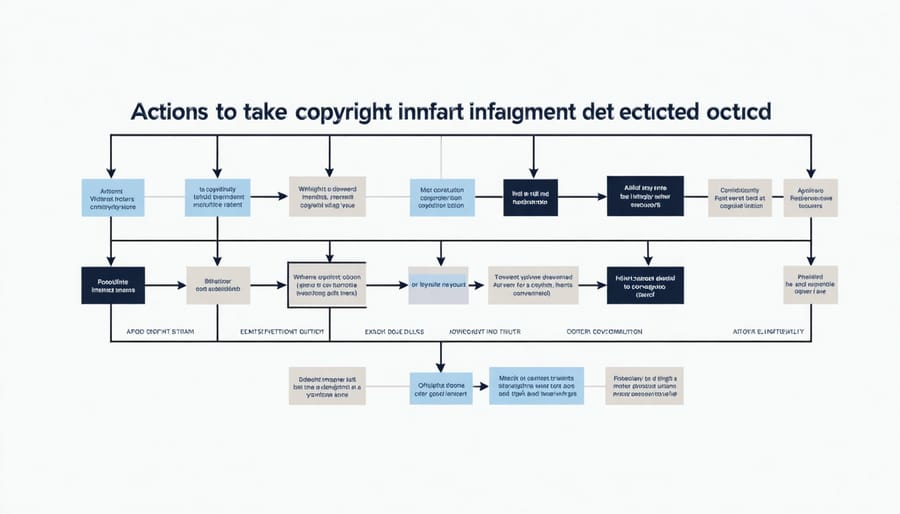
If you discover your work has been used without permission, take these proactive steps to protect your rights. First, document everything – save screenshots, URLs, and dates of unauthorized use. This evidence will be crucial if legal action becomes necessary.
Next, reach out to the person or organization using your work. Often, copyright violations happen due to misunderstanding rather than malice. Send a professional email explaining that you own the copyright and request they either remove the content or negotiate proper licensing terms.
If direct contact doesn’t work, consider sending a formal cease and desist letter. While this sounds intimidating, it’s simply a document stating your ownership rights and requesting the unauthorized use stop. You can find templates online or consult with a legal professional to draft one.
For online violations, file a DMCA takedown notice with the hosting platform or service provider. Most reputable websites have processes for handling copyright claims and will respond promptly to valid requests.
Keep detailed records of all your communications and actions taken. If the situation escalates, you may need to consult with a copyright lawyer who specializes in creative work. Many offer free initial consultations to evaluate your case.
Remember, protecting your work isn’t just about individual cases – it helps maintain professional standards for all freelance writers and ensures fair compensation for creative work.
Working with Clients
When copyright disputes arise, maintaining positive managing client relationships becomes crucial for your freelance career. Start by addressing concerns professionally and promptly through clear communication. Document all interactions and keep copies of contracts, emails, and project specifications.
If a client uses your work beyond the agreed terms, approach the situation diplomatically. Send a polite email outlining the original agreement and suggesting a solution, such as additional compensation for extended usage rights. Many disputes arise from misunderstandings rather than intentional violations.
Consider including a mediation clause in your contracts to handle disagreements without costly legal action. This shows clients you’re professional while protecting both parties’ interests. When negotiating resolution, focus on finding win-win solutions that preserve the working relationship.
Remember, your reputation in the freelance community is valuable. Even in difficult situations, maintain professionalism and seek constructive solutions. Sometimes, offering flexible terms or a compromise can lead to stronger, long-term client partnerships while protecting your creative rights.
As we’ve explored throughout this guide, protecting your intellectual property is not just a legal formality – it’s an essential investment in your freelance writing career. Taking proactive steps to secure your copyright ensures that your creative work remains yours and helps build a sustainable, professional practice.
Remember that copyright protection begins the moment you create your work, but strengthening that protection through proper documentation, clear contracts, and regular monitoring can save you from potential headaches down the road. Many successful freelancers attribute their long-term success to establishing strong copyright practices early in their careers.
Make it a habit to register your important works, use clear copyright notices, and maintain detailed records of your creative process. Stay informed about your rights and don’t hesitate to seek legal advice when needed. The small investment in protecting your work today can prevent significant losses tomorrow.
Most importantly, don’t let copyright concerns stifle your creativity. Instead, let them empower you to create more confidently, knowing your work is protected. As the digital landscape continues to evolve, staying proactive about copyright protection will become increasingly important for freelance writers.
Take action today to implement the strategies we’ve discussed. Your future self will thank you for laying this solid foundation for your freelance writing business. Remember, protecting your work isn’t just about defending against infringement – it’s about valuing your creativity and maintaining your professional reputation in the industry.