

Your audience doesn’t consume content on a single platform anymore—they scroll Instagram during breakfast, listen to podcasts during their commute, and read long-form articles before bed. As a Canadian freelance writer, mastering multimedia storytelling means meeting readers wherever they are, transforming a single story idea into multiple revenue streams across blogs, social media, video scripts, newsletters, and audio content.
The shift toward multiplatform storytelling has created unprecedented opportunities for writers willing to adapt. Publications and brands now seek communicators who can craft a compelling narrative for their website, then reshape that same story into engaging Instagram carousels, YouTube scripts, or podcast episodes. This isn’t about doing more work—it’s about working smarter by repurposing your research and core message into platform-specific formats that each generate separate income.
Consider Toronto-based writer Sarah Chen, who turned a single investigative piece about sustainable fashion into six different content formats across four platforms, earning three times her original article fee through strategic repurposing. Her success wasn’t accidental—it came from understanding how each platform’s unique strengths could showcase different angles of her story.
This guide will walk you through practical strategies for developing serialized, multiplatform content that amplifies your voice, expands your client base, and significantly increases your earning potential. Whether you’re just starting your freelance journey or looking to evolve your established practice, multimedia storytelling represents the future of digital communication—and your opportunity to thrive within it.
What Serialized Storytelling Actually Means in Today’s Digital World
Serialized storytelling isn’t a complicated concept, even though it might sound intimidating at first. Simply put, it’s the art of telling a story in installments across time and platforms, rather than delivering everything at once in a single piece.
Think about the content you already consume daily. That true crime podcast releasing weekly episodes? Serialized storytelling. The Substack newsletter sharing chapter-by-chapter memoir installments? Same thing. The Instagram account posting a month-long photo series documenting small business owners across your city? You guessed it—another example of serialized storytelling in action.
What makes this approach particularly powerful in today’s digital world is how it aligns with how people actually consume content. Rather than expecting audiences to commit to reading a 5,000-word article in one sitting, you’re meeting them where they are, delivering digestible pieces that build anticipation and keep them coming back.
The multiplatform element simply means you’re not locked into a single channel. You might start a story on LinkedIn, continue it through a newsletter, add visual elements on Instagram, and wrap it up with a podcast interview. Each platform plays to its strengths while contributing to a larger narrative. Creating serial content across platforms allows you to reach different audience segments and maximize your storytelling impact.
For Canadian freelancers, understanding this approach opens significant opportunities. Clients increasingly want writers who can think beyond single assignments and develop ongoing content strategies. A corporate client might hire you to develop a six-part LinkedIn series about industry innovation. A nonprofit could need someone to craft a serialized email campaign telling beneficiary stories. These projects often command higher rates and lead to longer-term relationships than one-off articles.
The beauty of serialized storytelling is that you’re probably already encountering it everywhere. Now it’s about recognizing these patterns and understanding how to create them yourself, transforming this knowledge into tangible freelance opportunities that showcase your versatility as a modern digital communicator.
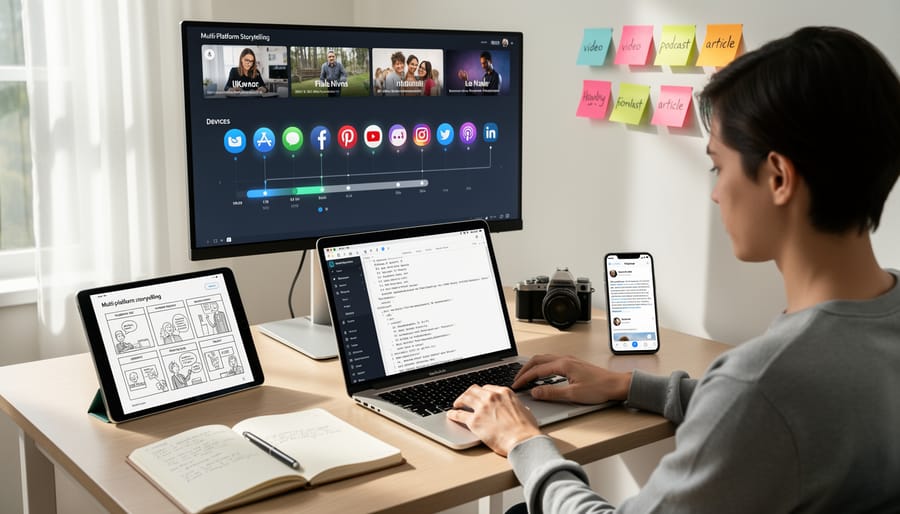
Why Clients Are Paying More for Multi-Platform Story Series
The Engagement Factor That Keeps Clients Coming Back
Think of serialized content like your favorite streaming series—you keep coming back because you’re invested in what happens next. The same psychology works for brands, and they’re willing to pay premium rates for content creators who understand this engagement factor.
When you create a multi-part story spread across platforms—perhaps starting with a blog post, continuing through Instagram stories, and concluding with a podcast episode—you’re building anticipation and habit. Audiences check back regularly, boosting metrics that matter to clients: return visits, time on site, and social media engagement.
This approach directly translates to better opportunities for you as a freelancer. Brands recognize that serialized storytelling keeps their audience engaged longer than one-off content pieces. A Toronto-based freelancer shared how she transformed a single article assignment into a six-month retainer by proposing a weekly serialized feature that increased the client’s newsletter open rates by 40 percent.
The retention factor makes your services more valuable because you’re not just creating content—you’re building audience relationships. Clients see measurable results in their analytics, making renewals and referrals more likely. When you pitch serialized concepts, you’re positioning yourself as a strategic partner who understands the bigger picture of audience development, not just someone who delivers individual pieces.
From One-Off Articles to Ongoing Story Contracts
Single article assignments can feel like a feast-or-famine cycle. You pitch, you write, you get paid, then you start over. Serialized storytelling offers a refreshing alternative that creates predictable income while building deeper audience connections.
When you pitch a multi-part series or ongoing column, you’re essentially creating a contract for recurring work. Instead of invoicing once for a single piece, you might secure payment for six episodes, twelve installments, or even a year-long commitment. This approach gives you financial stability and lets you plan your schedule with confidence.
Consider Sarah, a Toronto-based writer who transformed her one-time feature about sustainable living into a monthly column. That single pitch evolved into eighteen months of consistent work, allowing her to decline lower-paying assignments and focus on quality storytelling.
The beauty of serialized contracts is they benefit everyone. Editors appreciate having reliable content planned ahead, which means less scrambling to fill their editorial calendar. Meanwhile, audiences develop loyalty to your recurring features, returning specifically for your perspective.
Start small by identifying publications that already run series or columns. Study their existing formats, then pitch your own serialized concept with a clear arc and episode breakdown. Show editors you’ve thought beyond one article to create lasting value.
The Essential Elements of Multimedia Storytelling for Freelance Writers
Starting Simple: Text and Images That Work Together
You don’t need fancy equipment or technical expertise to start your multimedia storytelling journey. The most accessible entry point is pairing your written content with simple, complementary images—and this combination can work wonders across platforms like blogs, Instagram, and LinkedIn.
Start with what you already have. A well-crafted blog post becomes more engaging with a relevant header image and a few supporting visuals throughout. These don’t need to be professional photographs. Free stock photo sites like Unsplash or Pexels offer high-quality images that can enhance your message without any cost.
For Instagram, think of text and images as equal partners. Your caption shouldn’t just describe the photo—it should tell a micro-story that the image supports. One freelance writer in Toronto shared how she gained her first three corporate clients by posting weekly writing tips with simple Canva-designed graphics. Her secret? Consistency and clear value in both the visual and written elements.
LinkedIn rewards this combination too. Posts with images receive significantly more engagement than text-only updates. Share a quick insight about your writing process alongside a workspace photo, or announce a recent project win with a celebratory image.
The key is harmony. Your image should enhance your words, not compete with them. Choose visuals that create emotional connection or clarify your point. This foundation makes expanding into more complex multimedia formats—like video or audio—much less intimidating when you’re ready to grow.
Adding Audio and Video Without Breaking the Bank
You don’t need expensive equipment to create compelling audio and video storytelling content. Canadian freelancers have access to incredible free and budget-friendly tools that deliver professional results.
For podcasting, start with Audacity, a free open-source audio editor that works on any computer. Record using your smartphone or invest in a basic USB microphone like the Audio-Technica ATR2100x (around $100) for noticeably better sound quality. Anchor, now part of Spotify for Podcasters, offers free hosting and distribution to all major platforms.
Video creators can use CapCut or DaVinci Resolve for editing—both free with powerful features. Your smartphone camera is likely good enough to start; focus on good lighting (natural window light works wonderfully) and clear audio instead. Canva provides free templates for YouTube thumbnails and video graphics.
Toronto-based freelancer Maria Chen grew her client base by 40 percent after adding short video interviews to her content packages. She started filming with her iPhone and a simple ring light from Amazon.
The Canadian Media Fund and provincial arts councils sometimes offer equipment loans or grants for digital content creators. Check your local library too—many now lend recording equipment and offer free editing software tutorials.
Remember, your storytelling skills matter more than fancy gear. Start simple, learn as you go, and upgrade gradually as projects justify the investment. Clients value creativity and consistency over production budgets.

Crafting Stories That Flow Seamlessly Across Different Platforms
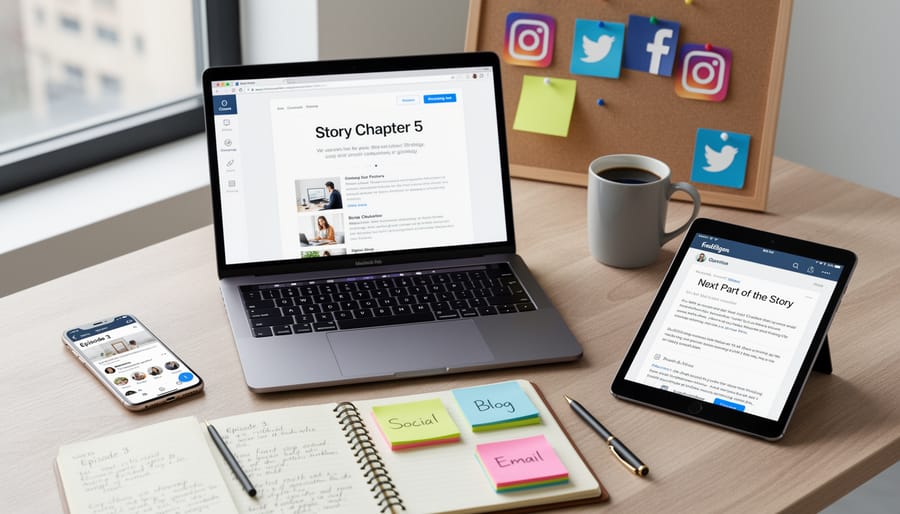
Mapping Your Story’s Journey from Platform to Platform
Think of your story as a journey that travels through different neighborhoods, with each platform offering unique advantages. The secret to effective social media storytelling lies in matching your content to each platform’s strengths.
Start by identifying your story’s core message. What’s the one thing you want audiences to remember? This becomes your anchor across all platforms.
Next, break your story into components. Instagram works beautifully for visual teasers and quick emotional hooks—think compelling images with captions that spark curiosity. Canadian freelancer Sarah Martinez found success posting striking photography on Instagram that drove traffic to her longer-form content, increasing her client base by 40 percent.
Your blog or website is perfect for deep-dive explorations where readers crave details, context, and analysis. This is where you establish expertise and provide real value that justifies premium rates.
Email newsletters offer exclusivity. Share behind-the-scenes insights, bonus interviews, or early access to content. This builds loyal communities willing to support your work directly.
Twitter or LinkedIn snippets can highlight key statistics or quotable moments, positioning you as a thought leader in your niche.
Create a simple spreadsheet mapping each story element to its ideal platform. List the platform, content type, posting time, and how it connects to other pieces. This planning takes just 30 minutes but ensures your story flows seamlessly across channels, multiplying your reach without multiplying your workload. Each platform becomes a strategic stepping stone, guiding audiences deeper into your narrative world.
Keeping Your Narrative Thread Strong Across Episodes
Think of your serialized story like your favorite streaming series—each episode needs to satisfy while leaving viewers hungry for more. For Canadian writers building multimedia narratives, maintaining that narrative thread is what transforms casual readers into devoted followers.
Start with a story bible—a simple document tracking characters, timelines, and unresolved plot points. This becomes your continuity compass across platforms. When Toronto-based writer Maria Chen launched her serialized podcast mystery, her story bible prevented contradictions and helped her plan compelling callbacks that delighted listeners episodes later.
Create micro-arcs within your macro-story. Each episode should offer a complete moment—a revelation, emotional beat, or answered question—while advancing the larger narrative. This dual satisfaction keeps audiences returning without frustrating newcomers who jump in mid-series.
Strategic cliffhangers work wonders, but avoid cheap tricks. The most effective endings pose genuine questions your audience cares about: “Will she take the job?” beats “Who’s at the door?” every time. Consider emotional cliffhangers too—leaving characters at pivotal decision points creates powerful tension.
Build momentum through escalation. Each episode should raise stakes slightly higher than the last. Vancouver writer James Liu increased his newsletter subscribers by 300 percent by structuring his six-part career transition series with progressively bolder challenges and revelations.
Cross-reference between platforms strategically. Your Instagram Story might tease tomorrow’s blog post revelation, while your podcast episode references last week’s video content. These connections reward engaged followers and encourage platform-hopping.
Remember: consistency in publishing schedule matters as much as narrative consistency. Audiences develop rhythms around your content. Delivering reliably builds trust and anticipation that strengthens your entire storytelling ecosystem.
Real Success Stories: Canadian Freelancers Winning with Serialized Content
Meet Sarah Chen from Vancouver, who transformed her struggling blog into a $75,000 annual income by serializing her travel stories across Instagram Stories, a weekly podcast, and Medium. She started by turning a single backpacking trip into a 12-week series, adapting each destination story for different platforms. Her Instagram featured visual highlights, her podcast dove into cultural encounters, and her Medium posts provided practical travel guides. Within six months, three tourism boards approached her for sponsored content, and she now has regular contracts with two travel magazines.
Toronto-based tech writer Marcus Williams took a different approach. He pitched a six-part series on AI ethics to a business publication, simultaneously creating Twitter threads summarizing each installment and LinkedIn articles with professional insights. The multi-platform strategy caught the attention of a fintech company that hired him as their content strategist at double his previous freelance rates. Marcus says the key was showing how one story could serve multiple audiences without simply copying and pasting.
Food writer Amélie Dubois from Montreal built her career by serializing recipe development stories. She documents her testing process through Instagram Reels, shares detailed recipes on her blog, and created a companion newsletter with subscriber-only tips. Her serialized “Mastering Sourdough” series attracted 5,000 newsletter subscribers and led to a cookbook deal with a Canadian publisher.
Even niche writers are finding success. Edmonton’s James Park focused on local history, creating a serialized podcast about forgotten Alberta stories while posting archival photos on Instagram and writing expanded articles for regional publications. His multi-platform approach earned him a consulting contract with the provincial museum.
These writers prove that serialized storytelling works across every niche. The common thread? They all started small, experimented with different platform combinations, and let their unique voice shine through each medium.
Pitching Serialized Projects to Clients Who Don’t Know They Need Them
Many clients don’t realize they need serialized content until you show them what’s possible. Your job is to help them see the opportunity without overwhelming them with complexity.
Start your pitch by identifying their existing challenge. Does their blog traffic drop between posts? Are their social media followers disengaged? Do they struggle to build anticipation for launches? Frame serialized storytelling as the solution to problems they already recognize. Instead of saying “I can create a multi-part documentary series,” try “I noticed your product launches get initial buzz but fade quickly. What if we built anticipation over three weeks with behind-the-scenes content that keeps people coming back?”
When explaining ROI, focus on tangible benefits. Serialized projects increase repeat visits, build email lists through episode notifications, and create more touchpoints with audiences. Share metrics that matter to clients: “Serialized content typically generates 40% more engagement than standalone posts because audiences return for each installment.” If you’ve worked with cross-media marketing strategies before, mention specific results you’ve achieved.
The “start small, scale up” approach works beautifully for hesitant clients. Propose a three-part series first rather than a twelve-episode commitment. A Toronto-based freelancer successfully pitched a modest four-week Instagram story series about a bakery’s new product development. The engagement was so strong that the client expanded it into a full YouTube documentary with accompanying blog posts and podcast episodes.
Present your pitch visually when possible. Create a simple one-page outline showing how the series unfolds across platforms. Map out tentative episode titles, publication dates, and platform distribution. This demonstrates you’ve thought through the logistics and makes the concept feel real and manageable.
Price strategically by offering package deals. Bundle the series at a rate that’s attractive compared to individual projects. This positions you as invested in the complete story while making the total investment feel more accessible.
Remember to emphasize that serialized content is actually easier for clients to plan around than sporadic projects. It creates a predictable content calendar and reduces the monthly scramble for fresh ideas. You’re not just selling a project; you’re offering a sustainable content solution that makes their lives easier while building stronger audience connections.

Tools and Resources to Get Started This Week
You don’t need a massive budget or technical degree to start creating compelling multimedia content. These accessible tools will help you begin your journey this week, with many offering free plans perfect for freelancers just getting started.
For content planning and organization, Trello and Notion provide intuitive visual boards to map out your serialized stories across platforms. Both offer free versions that let you track episode ideas, schedule posts, and collaborate with clients. Google Docs remains invaluable for scriptwriting and storyboarding, especially when working with editors or other creators.
When creating visual content, Canva stands out as the go-to platform for designing social media graphics, infographics, and simple animations without any design background. Their drag-and-drop interface and thousands of templates make professional-looking visuals achievable in minutes. For video editing, DaVinci Resolve offers powerful free software, though beginners might prefer starting with Clipchamp or CapCut, which have gentler learning curves.
Audio storytelling becomes accessible through Audacity, a free recording and editing tool that handles everything from podcast episodes to audio documentaries. Anchor by Spotify simplifies podcast distribution across all major platforms without hosting fees.
To build your skills, YouTube channels like The Futur and Peter McKinnon offer free tutorials on visual storytelling techniques. LinkedIn Learning provides structured courses, and many Canadian public libraries offer free access with your library card.
Start with one or two tools rather than overwhelming yourself. Toronto freelancer Maya Chen built her multimedia portfolio using only Canva and her smartphone camera before gradually expanding her toolkit. Focus on mastering the basics, then add complexity as your confidence grows. The key is beginning now with what’s available, not waiting for perfect conditions.
The world of multimedia storytelling isn’t just changing how stories are told—it’s opening new doors for Canadian freelance writers ready to embrace these opportunities. You already have the foundation: your writing skills, your creativity, and your unique perspective. Now it’s time to build on that foundation and position yourself as a versatile digital storyteller who can deliver content across multiple platforms.
Start small but start today. Choose one story idea you’ve been developing and reimagine it as a serialized, multi-platform project. Sketch out how it could unfold across three different platforms—perhaps a blog series, an Instagram story sequence, and a podcast script. This exercise alone will shift how you think about storytelling and reveal opportunities you might have missed.
Next, audit your current portfolio. Identify one client or editor you’ve worked with successfully and pitch them a multi-platform concept that addresses their audience’s needs. Use the strategies we’ve covered: emphasize the engagement benefits, demonstrate how serialization builds anticipation, and show how platform-specific content can extend their reach.
Remember, every successful multimedia storyteller started exactly where you are now. They learned by doing, refined their approach with each project, and gradually built a reputation for delivering compelling stories that resonate across platforms. You have the talent and the tools—now take that first step. Your next great story is waiting to unfold, and Canadian audiences are ready to experience it in ways that truly connect with how they consume content today.