

Transform office spaces into flexible collaboration hubs with dedicated quiet zones and team meeting areas to maximize productivity during in-person days. Establish clear communication protocols that specify which tasks require office presence versus remote work, empowering teams to make informed decisions about their workdays. Create data-driven scheduling systems that track office capacity, meeting room usage, and team overlaps to optimize the hybrid environment for meaningful interactions.
The hybrid model has revolutionized modern workplaces, delivering improved work-life balance while maintaining team cohesion. Organizations that master this balance see up to 40% higher employee satisfaction rates and 25% lower turnover compared to traditional office-only environments.
Success hinges on three core principles: intentional office design, transparent communication frameworks, and technology infrastructure that seamlessly connects remote and in-person team members. Leaders who implement these practices create resilient organizations capable of adapting to evolving workplace demands while fostering strong company culture and sustained productivity growth.

Setting Up Your Hybrid Foundation
The Right Technology Stack
A robust technology stack is the backbone of successful hybrid work arrangements. Start with a reliable video conferencing platform like Zoom, Microsoft Teams, or Google Meet for face-to-face interactions. These platforms offer essential features like screen sharing, virtual backgrounds, and breakout rooms that make remote meetings feel more personal and productive.
Cloud-based document collaboration tools are non-negotiable. Google Workspace or Microsoft 365 allow team members to work on files simultaneously, regardless of location. Consider using project management platforms like Asana, Trello, or Monday.com to keep everyone aligned on tasks and deadlines.
Communication tools should go beyond basic email. Slack or Microsoft Teams provide instant messaging, file sharing, and channel-based discussions that help maintain team connectivity. For creative collaboration, tools like Miro or MURAL offer virtual whiteboards where teams can brainstorm and visualize ideas together.
Don’t forget about security and accessibility. A reliable VPN service ensures secure access to company resources, while single sign-on (SSO) solutions streamline authentication. Time tracking tools like Harvest or Toggl can help maintain accountability without micromanaging.
Remember to choose tools that integrate well with each other to avoid creating digital silos. The goal is to create a seamless experience that supports both in-office and remote work while maintaining productivity and team cohesion.
Clear Communication Protocols
Clear communication is the cornerstone of successful hybrid work environments. Start by establishing consistent channels for different types of interactions – for example, use Slack for quick questions, email for formal communications, and video calls for collaborative discussions. Create a shared team calendar where everyone marks their in-office and remote days, making it easier to plan face-to-face meetings and collaborative sessions.
Set clear expectations about response times during both remote and in-office days. A good practice is implementing a “traffic light” status system where team members can indicate their availability: green for readily available, yellow for focused work but can be interrupted if needed, and red for do not disturb.
Document all important communications and decisions in a centralized digital space, such as a team wiki or shared drive. This ensures that information remains accessible regardless of where team members are working. Consider creating communication templates for common scenarios to maintain consistency and clarity across the team.
Regular check-ins are crucial – schedule brief daily stand-ups to keep everyone aligned and monthly team meetings to address broader concerns. Remember to balance synchronous and asynchronous communication methods to accommodate different time zones and work schedules.
Encourage open feedback about communication practices and be ready to adjust protocols based on team needs. The goal is to maintain seamless collaboration while respecting both in-office and remote work arrangements.
Creating Your Hybrid Schedule That Works
Core Hours vs. Flexible Time
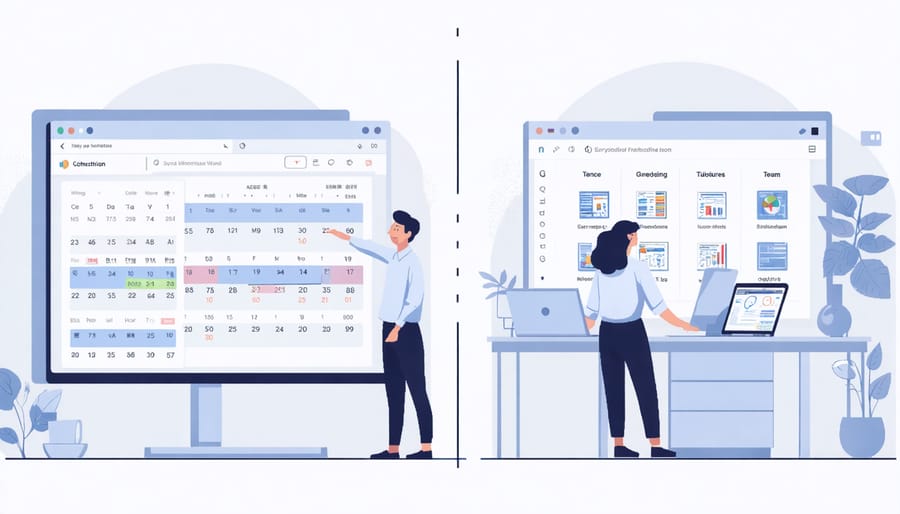
In today’s hybrid workplace, striking the right balance between structured core hours and flexible work arrangements is crucial for team success. Core hours typically represent a set period when all team members must be available for collaboration, meetings, and real-time communication. For Canadian organizations, these often fall between 10 AM and 2 PM, allowing for time zone differences across provinces.
Consider establishing a 4-hour core window where teams can count on each other’s availability. During these hours, schedule important meetings, brainstorming sessions, and collaborative projects. This ensures everyone can participate meaningfully while maintaining team cohesion.
Outside core hours, embrace flexibility. Let team members adjust their schedules to accommodate personal responsibilities, peak productivity periods, and work-life integration. Some might prefer early morning starts, while others perform better in the afternoon or evening. This flexibility often leads to increased job satisfaction and improved output quality.
To make this system work effectively:
– Clearly communicate core hours expectations
– Use shared calendars to display availability
– Document important discussions for async team members
– Respect both core hours and flexible time boundaries
– Regular check-ins to ensure the system works for everyone
Remember that different roles may require different levels of synchronous work. While developers might need longer periods of uninterrupted focus time, client-facing positions may require more structured hours. Adjust your approach based on team needs and regular feedback.
The key is finding the sweet spot between collaboration and independence, ensuring both business needs and employee well-being are met.
Team Coordination Strategies
Maintaining team cohesion in a hybrid work environment requires intentional strategies and consistent effort. Start by establishing clear communication rhythms, such as daily virtual check-ins and weekly team meetings that accommodate both remote and in-office team members. These touchpoints help keep everyone aligned and foster a sense of connection.
Create dedicated virtual spaces for casual interactions using platforms like Slack or Microsoft Teams. Set up channels for water-cooler conversations, project discussions, and team celebrations to mirror the spontaneous interactions that happen naturally in office settings.
Implement a buddy system where remote workers are paired with office-based colleagues for regular catch-ups and collaboration. This approach helps bridge the location gap and ensures remote team members stay connected to office happenings.
Use visual collaboration tools like Miro or Trello to maintain project transparency and keep everyone engaged regardless of location. These platforms create a shared virtual workspace where team members can contribute ideas and track progress in real-time.
Schedule quarterly in-person team gatherings when possible. These face-to-face meetings are valuable for relationship building and strategic planning. During these sessions, focus on activities that benefit from physical presence, such as brainstorming sessions or team-building exercises.
Document and share team decisions, updates, and important information in a central digital hub accessible to all team members. This practice ensures everyone has equal access to information and reduces the risk of communication gaps between remote and in-office workers.
Remember to rotate meeting times to accommodate different time zones and work schedules, ensuring no team members consistently face inconvenient meeting times. When planning hybrid team activities, always consider both the in-person and remote experience to create inclusive engagement opportunities.
Building Strong Remote-Office Culture
Virtual Team Building
Building strong connections in hybrid teams requires intentional effort and creative approaches to virtual team building. While many have found remote work success, maintaining team cohesion requires regular, meaningful interaction.
Consider implementing virtual coffee chats where team members can connect informally for 15-minute casual conversations. These brief catch-ups help recreate those spontaneous water cooler moments that naturally occur in office settings.
Online team-building activities can be both fun and productive. Try virtual escape rooms, online trivia contests, or remote cooking classes where everyone prepares the same dish together. These shared experiences create lasting memories and strengthen team bonds across physical distances.
Create dedicated Slack channels or Teams spaces for non-work discussions, where colleagues can share personal achievements, pet photos, or weekend plans. This digital water cooler helps maintain social connections naturally.
Schedule hybrid-friendly celebrations for team milestones and birthdays. Send care packages to remote team members and coordinate simultaneous unboxing sessions during video calls. This ensures everyone feels equally included, regardless of their location.
Consider implementing “buddy systems” where in-office and remote workers are paired regularly for collaboration and mutual support. This practice helps bridge the gap between different work arrangements while fostering meaningful professional relationships.
Remember to rotate meeting times to accommodate different time zones and ensure virtual team building activities are accessible to all team members, regardless of their location or work schedule.
Inclusive Meeting Practices
In today’s hybrid workplace, ensuring everyone has an equal voice requires thoughtful planning and execution of meetings. Start by establishing a “remote-first” mindset where virtual participants are treated as primary attendees rather than afterthoughts. This means setting up quality audio-visual equipment in meeting rooms and testing it before each session.
Create clear meeting protocols where remote participants speak first in group discussions. This prevents the natural tendency for in-office workers to dominate conversations. Use collaborative tools like digital whiteboards and shared documents that everyone can access and contribute to in real-time, regardless of location.
Designate an in-office meeting advocate for each session who monitors the virtual chat, ensures remote participants can hear clearly, and voices any technical concerns. This person should also help facilitate equal participation by actively bringing remote colleagues into the conversation.
Schedule meetings at times that work across different time zones and keep them shorter – ideally 45 minutes instead of an hour – to maintain energy and engagement. Record important meetings for team members who couldn’t attend live, and share detailed notes afterward.
Consider implementing a rotation system where some in-office meetings become fully virtual, putting everyone on equal footing. This helps build empathy and understanding between remote and office-based workers while highlighting any communication challenges that need addressing.
Measuring Hybrid Success
Key Performance Indicators
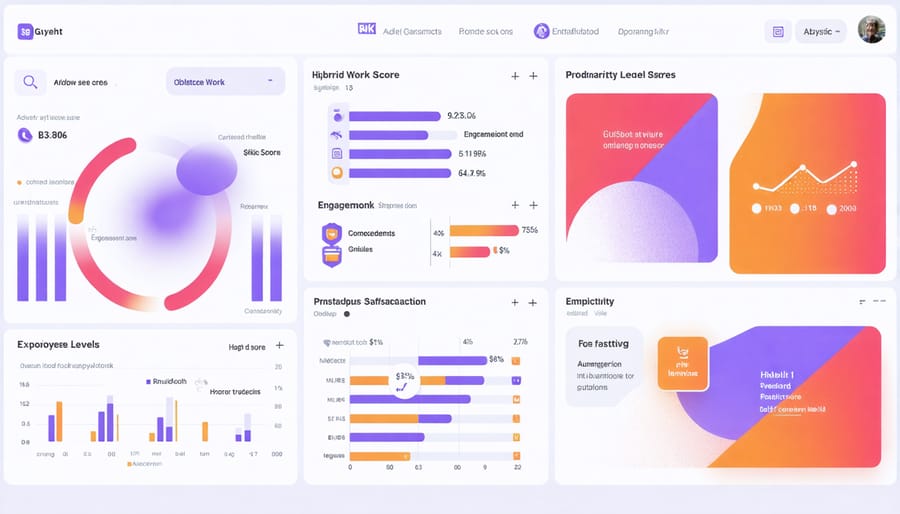
To ensure your hybrid work model is successful, track these essential performance indicators. Start with productivity metrics like project completion rates, task turnaround times, and overall output quality. Monitor employee engagement through regular pulse surveys, participation in virtual meetings, and collaboration tool usage rates.
Keep an eye on work-life balance indicators by measuring average working hours, after-hours communication frequency, and time spent in meetings. Track technology adoption rates and help desk ticket volumes to gauge how well your team adapts to digital tools.
Team cohesion metrics are crucial – measure participation in both virtual and in-person team activities, cross-department collaboration frequency, and mentor-mentee program engagement. Don’t forget to monitor space utilization when teams are on-site, including meeting room bookings and desk occupancy rates.
Regular employee satisfaction surveys should assess comfort with hybrid arrangements, communication effectiveness, and access to resources. Finally, track retention rates and recruitment success to understand how your hybrid model affects talent acquisition and retention. Review these metrics quarterly to refine your approach and make necessary adjustments.
Regular Feedback Loops
Regular feedback helps ensure your hybrid work model stays effective and evolves with your team’s needs. Consider implementing quarterly surveys to gauge employee satisfaction and gather insights about their hybrid work experience. These check-ins can reveal valuable information about what’s working and what needs adjustment.
Create multiple channels for feedback collection, including anonymous suggestion boxes, regular one-on-one meetings, and team discussions. This variety allows employees to share their thoughts in ways they feel most comfortable. Pay special attention to challenges unique to hybrid work, such as communication barriers or technology issues.
Make feedback actionable by establishing a clear process for reviewing and implementing suggestions. Share updates with your team about changes made based on their input – this shows you value their opinions and encourages continued participation in the feedback process.
Consider using pulse surveys for quick temperature checks between more comprehensive reviews. These brief, focused questionnaires can help you spot and address emerging issues before they become significant problems. Remember to tailor your feedback mechanisms to both in-office and remote work situations, ensuring all team members have equal opportunities to share their perspectives.
As we’ve explored throughout this guide, successful hybrid work models blend the best of both worlds – the flexibility of remote work with the collaborative energy of office environments. Remember, there’s no one-size-fits-all solution, but by focusing on clear communication, the right technology tools, and strong team engagement, you can create a thriving hybrid workplace.
The key to success lies in remaining flexible and responsive to your team’s needs. Start by implementing the core practices we’ve discussed – structured communication channels, regular check-ins, and collaborative workspaces. Monitor what works and what doesn’t, and don’t be afraid to adjust your approach.
Many Canadian organizations have found that hybrid work models boost both productivity and employee satisfaction when properly executed. By focusing on outcomes rather than hours logged, and by nurturing a culture of trust and accountability, you’ll set your team up for success.
Take small steps to begin – perhaps start with a pilot program involving a few teams. Use the feedback and metrics to refine your approach before scaling up. Remember to prioritize mental health and work-life balance in your policies.
The future of work is hybrid, and by embracing these best practices, you’re positioning your organization at the forefront of this evolution. Start implementing these strategies today, and watch your team thrive in this new way of working.