

Create sample pieces that mirror your ghostwriting style without revealing client details. Build generic examples in your niche—if you write executive thought leadership, craft sample LinkedIn articles on trending topics. If you ghostwrite memoirs, develop fictional character sketches that showcase your narrative voice.
Request permission from past clients to include sanitized versions of your work. Many clients will agree to let you share edited samples with identifying details removed, or allow you to list the project type without attribution. Present this professionally: explain how portfolio samples help you attract similar clients, benefiting everyone in the industry.
Develop case studies that focus on results rather than content. Share metrics like “increased blog traffic by 200%” or “completed 50,000-word manuscript in three months” without revealing the actual writing. This demonstrates your effectiveness while respecting confidentiality agreements.
Join professional ghostwriting communities where you can share work in trusted circles for feedback and credibility. Fellow writers understand NDA constraints and can provide testimonials about your skills. These relationships often lead to referrals, helping you build your reputation even when your best work remains invisible to the public.
The ghostwriting paradox challenges every writer in this field: your greatest achievements must stay hidden. But with strategic portfolio building and transparent client communication, you can showcase your expertise while maintaining the professional integrity that makes ghostwriting relationships work.
Why Ghostwriters Face the Portfolio Problem
Ghostwriters face a unique catch-22 that can feel frustrating: clients want to see your work before hiring you, but your best projects are locked behind non-disclosure agreements. This isn’t just an inconvenience—it’s a genuine professional barrier that affects your ability to grow your business.
Here’s why this matters so much. When potential clients evaluate freelancers, they’re looking for proof you can deliver. Building a strong portfolio is essential for landing quality gigs, but ghostwriting contracts typically include strict confidentiality clauses. You sign away your right to claim authorship, which means that brilliant book you wrote or that viral blog post you crafted can’t appear under your name.
The challenge becomes even more complex because these NDAs aren’t just formalities—they’re legally binding contracts. Violating them could damage your reputation, end client relationships, and potentially lead to legal consequences. Many ghostwriters feel stuck between respecting their commitments and marketing their services effectively.
But here’s some encouraging news: this challenge is absolutely solvable. Take Sarah Chen, a Toronto-based ghostwriter who faced this exact problem early in her career. After completing several high-profile projects she couldn’t share, Sarah felt invisible to potential clients. She solved this by creating sample pieces in her niche, requesting testimonials from satisfied clients, and developing anonymous case studies that highlighted her process without revealing confidential details. Within six months, her client roster doubled. Her success shows that with creativity and strategic thinking, you can showcase your expertise while maintaining professional integrity and respecting the agreements that protect both you and your clients.

What Your NDA Actually Says (And Doesn’t Say)
Before you sign that NDA, let’s decode what you’re actually agreeing to. Most non-disclosure agreements aren’t as restrictive as you might think, and understanding the fine print can open up opportunities you didn’t know you had.
The typical ghostwriting NDA prevents you from claiming authorship or revealing you worked with a specific client. However, it usually doesn’t stop you from describing the type of work you completed in general terms. For example, you can’t say “I wrote the bestselling memoir for Celebrity X,” but you can often say “I’ve ghostwritten memoirs for public figures.” That’s a crucial distinction that many writers overlook.
Common clauses you’ll encounter include confidentiality periods (often two to five years, sometimes indefinitely), scope limitations (what specific information you can’t share), and permitted disclosures (what you can discuss). Some agreements allow you to list the work in private portfolios shown during job interviews, while others permit generic descriptions on your website without naming the client.
Here’s what NDAs typically don’t cover: your general expertise, the skills you developed, or broad descriptions of project types. They also can’t prevent you from discussing your experience in category terms or mentioning your specialization in certain industries.
Before signing any agreement, read it carefully and look for these key elements. Does it specify what happens after the project ends? Can you use the work as a writing sample with client names removed? Are you allowed to acknowledge the collaboration after a certain time period? These details matter tremendously for your future portfolio.
When contract language feels unclear or overly restrictive, don’t hesitate to ask questions or request modifications. Professional clients respect writers who understand their business agreements. If a contract seems unusually limiting or contains confusing legal language, investing in a quick consultation with an entertainment or contract lawyer can save you headaches down the road. Many lawyers offer affordable contract reviews specifically for freelancers, and that small investment protects your ability to showcase your talent while honoring your commitments.
Smart Ways to Showcase Ghostwritten Work
Create Anonymized Examples
Creating anonymized examples is your secret weapon for building a compelling portfolio while honoring confidentiality agreements. The good news? You can safely alter quite a bit while keeping your work authentic and impressive.
Start by changing all identifying details. Replace company names, product names, individual names, and specific locations with generic alternatives. If you wrote about “Johnson’s Bakery in Vancouver,” transform it to “a local bakery in Western Canada.” You can also adjust industry-specific details—a tech startup becomes “an emerging technology company” without losing the essence of your work.
What should stay authentic? Your actual writing quality, style, and the strategic approach you took. Keep your headlines, transitions, and persuasive techniques intact. These elements showcase your true skills without revealing client secrets.
Consider creating composite examples that blend elements from multiple projects. This approach protects individual clients while demonstrating your range. One Canadian ghostwriter successfully combined three similar blog posts into one stellar sample, maintaining the quality while ensuring no single client was identifiable.
Always review your anonymized samples carefully. Ask yourself: could someone trace this back to my client? If there’s any doubt, make additional changes. Your reputation as a trustworthy professional is worth more than any portfolio piece.
Use Private Portfolio Presentations
For serious prospects who genuinely need to see your confidential work, consider creating password-protected online portfolios or private viewing links. Services like Dropbox, Google Drive, or specialized portfolio platforms allow you to share specific samples temporarily and track who’s accessing them.
Before sharing anything, have a brief conversation about mutual confidentiality. You might say, “I’ve worked on some relevant projects that are confidential, but I’d be happy to share them privately once we’ve discussed your needs and established trust.” This approach demonstrates professionalism while protecting your existing clients.
In-person or video call presentations work beautifully for high-value projects. You can screen-share samples without giving the prospect permanent access or downloadable files. Many successful ghostwriters reserve this option for clients with budgets above a certain threshold or those who’ve already expressed strong interest.
Consider asking the prospect to sign a simple mutual non-disclosure agreement before sharing confidential samples. This isn’t about being difficult—it shows you take client confidentiality seriously, which actually makes you more attractive as a ghostwriter. Remember, a client who respects your boundaries with previous work will likely respect the confidentiality of their own project too.
Request Permission for Select Pieces
Sometimes, the best portfolio pieces come from simply asking. While many clients prefer complete confidentiality, others may be open to letting you showcase your work with proper attribution. The key is approaching them professionally and respectfully.
Start by identifying clients with whom you’ve built strong relationships. Consider projects that performed well or received positive feedback, as clients are more likely to agree when they’re proud of the results.
Here’s a sample email template you can adapt:
“Hi [Client Name],
I hope you’re doing well! I’ve really enjoyed working with you on [project name], and I’m grateful for the opportunity we’ve had to collaborate.
I’m currently updating my portfolio and wondered if you’d be comfortable with me featuring [specific piece] as a writing sample. I’m happy to include attribution however you prefer, or keep certain details confidential if needed.
I completely understand if you’d prefer to keep the work private, and our working relationship remains my top priority either way.
Thanks for considering this!
[Your Name]”
When making your request, timing matters. Wait until after a successful project completion when goodwill is high. Be specific about what you’re asking for and offer flexibility, whether that means delayed permission, partial attribution, or anonymized examples. Always emphasize that you respect their decision either way, keeping the relationship intact regardless of their response.
Highlight Your Process, Not Just Products
When demonstrating your expertise as a ghostwriter, shift the spotlight from specific products to your problem-solving abilities. Create compelling case studies that outline the challenge your client faced, the approach you took, and the measurable results you achieved—all without naming names or revealing proprietary information.
For example, instead of saying “I wrote an ebook for Company X,” try: “Developed a 15,000-word leadership guide for a tech executive that increased their speaking engagement bookings by 40% within three months.” This approach showcases your strategic thinking, research capabilities, and ability to deliver results.
Share your process generously. Describe how you conducted interviews, synthesized complex information, or adapted your voice to match different industries. Talk about the revisions you navigated, tight deadlines you met, or how you transformed technical jargon into accessible content. These details prove your professionalism and versatility without breaching confidentiality. Future clients want to understand how you work and the value you bring—your methodology is just as impressive as any finished product.
Build Writing Samples Outside Client Work
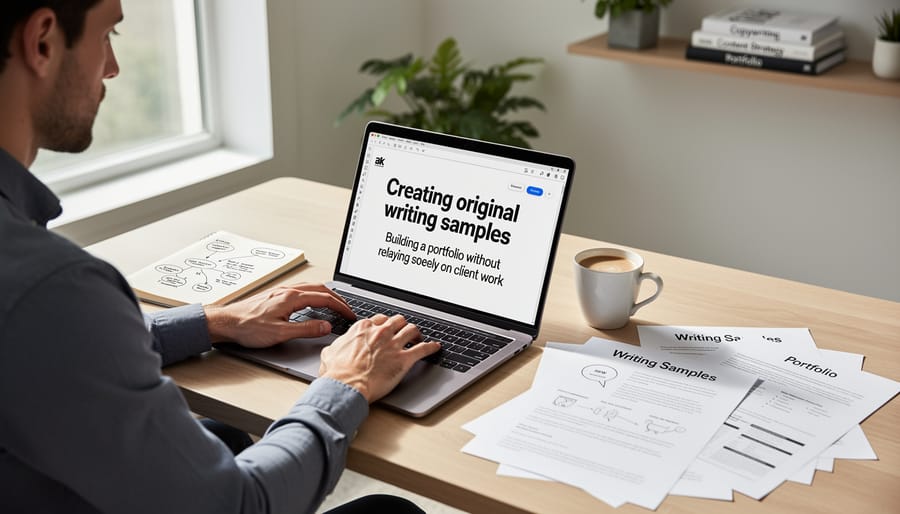
When client work can’t fill your portfolio, take matters into your own hands by creating original writing samples in your target niches. Write guest posts for industry blogs, craft spec pieces that demonstrate your expertise, or start your own blog to showcase your voice and versatility.
The key is being strategic. Focus on topics and formats that align with the ghostwriting work you want to attract. If you’re targeting business clients, publish LinkedIn articles about industry trends. If you want to write books, create sample chapters or case studies.
Balance is essential here. Dedicate specific time blocks to portfolio building without sacrificing paid work. Even two hours weekly can produce several strong samples monthly. Many successful Canadian freelancers credit their breakthrough clients to these self-initiated pieces that demonstrated their capabilities when NDAs limited their options.
What to Tell Potential Clients About Your Portfolio
When potential clients ask about your ghostwriting experience, confidence is key. Start by acknowledging the confidential nature of your work: “Much of my portfolio involves ghostwritten content for clients who prefer to remain private, which speaks to the trust they’ve placed in me.” This immediately positions NDAs as a professional asset rather than a limitation.
For clients who want to see published work, offer alternatives. Explain that you can provide sanitized samples with identifying details removed, or offer to create a similar piece on spec that demonstrates your style. You might say, “While I can’t share the actual articles I ghostwrote for a financial services company, I’ve prepared a comparable piece on retirement planning that showcases my approach and expertise.”
Consider this winning approach from successful ghostwriter Maria Chen: “I created a one-page document listing my ghostwriting projects by industry and content type, without revealing client names. It showed the breadth of my experience while respecting confidentiality.” She pairs this with testimonials from clients who’ve agreed to provide references.
Turn your NDAs into selling points during pitches. Try: “I take client confidentiality seriously, which is why all my ghostwriting agreements include NDAs. This protects your intellectual property and ensures your content remains exclusively yours.” This demonstrates professionalism and reassures potential clients about your discretion.
Remember, building your personal brand as a trustworthy ghostwriter means emphasizing your reliability and ethics. Create public-facing content on your own blog or Medium to showcase your writing skills openly, giving clients tangible examples while your ghostwriting work remains confidential. Your professionalism in handling NDAs becomes part of your unique value proposition.

Red Flags: When Not to Take a Ghostwriting Gig
Not every ghostwriting opportunity deserves your talent. Some contracts are so restrictive that they’ll severely limit your ability to showcase your skills and attract future clients. Knowing when to walk away protects your long-term career growth.
Watch for extreme confidentiality clauses that prevent you from ever mentioning the project, even in vague terms. If a client won’t allow you to say you’ve written in a particular industry or format, that’s a significant red flag. You’re essentially working in complete anonymity with no career benefit beyond the paycheck.
Before signing anything, negotiate portfolio clauses that work for both parties. Ask if you can include anonymized samples, case studies without identifying details, or permission to mention the collaboration after a set timeframe. Many clients are willing to compromise when you explain how portfolio pieces help you deliver better results for future clients like them.
Consider walking away when clients refuse any portfolio flexibility, especially for lower-paying work. The math simply doesn’t add up if you can’t leverage the experience to grow your business. One writer we know declined a restrictive contract and instead accepted a slightly lower-paying gig that allowed portfolio use. That sample landed her three higher-paying clients within months.
Trust your instincts. If a client seems unreasonably secretive or dismissive of your professional needs during negotiations, imagine working with them long-term. The best ghostwriting relationships balance confidentiality with mutual respect for your career development. You deserve contracts that help you build both your income and your future opportunities.
Building a strong ghostwriting career without a traditional portfolio is absolutely possible. Your professionalism, reliability, and respect for confidentiality aren’t limitations—they’re actually your greatest assets. Clients value writers who take NDAs seriously because it demonstrates integrity and trustworthiness. Every project you complete under an NDA is building your reputation, even if it’s not visible in a public portfolio.
Remember that many successful ghostwriters have thrived using the strategies we’ve discussed: generic writing samples, case studies with sanitized details, client testimonials, and thoughtful communication about your experience. These alternatives effectively showcase your skills while honouring your commitments.
The writing industry needs professionals like you who understand the delicate balance between marketing yourself and protecting client relationships. Your ability to navigate NDAs with grace sets you apart from writers who might not appreciate these nuances.
Move forward confidently knowing that every satisfied client becomes part of your network, every testimonial strengthens your credibility, and every project—whether publicly acknowledged or not—sharpens your craft. Focus on delivering exceptional work, communicate openly with clients about portfolio needs, and trust that your professionalism will open doors. You’re providing tremendous value as a ghostwriter, and the right clients will recognize and appreciate that dedication.