

Navigating cross-border tax obligations as a non-resident in Canada demands strategic planning and precise documentation. File form NR73 immediately to establish your non-resident status with the Canada Revenue Agency (CRA), preventing potential double taxation issues. Submit the NR4 form by March 31st to report any Canadian-source income, including royalties, dividends, or contract work payments. Track your Canadian business ties meticulously – from client relationships to bank accounts – as these factors directly impact your tax obligations. Understanding these requirements isn’t just about compliance; it’s about maximizing your earnings while maintaining a clear financial relationship with Canadian tax authorities. Whether you’re a remote worker, digital nomad, or international consultant, mastering these tax essentials ensures your Canadian income streams remain both profitable and compliant.
Understanding Your Tax Residency Status
Residential Ties That Matter
When determining your tax status in Canada, the Canada Revenue Agency (CRA) looks at two types of residential ties: primary and secondary. Primary residential ties include owning or leasing a home in Canada, having a spouse or common-law partner living in Canada, and having dependents who reside in Canada.
Secondary residential ties, while less significant individually, can add up to affect your tax status. These include maintaining personal property like cars or furniture in Canada, having Canadian bank accounts or credit cards, holding a Canadian driver’s license, and keeping social ties through memberships or professional associations.
The CRA evaluates these ties together to determine whether you’re a resident, non-resident, or deemed resident for tax purposes. For freelancers working remotely, it’s crucial to understand how these ties impact your status. For instance, if you maintain a home in Canada while working abroad temporarily, you might still be considered a resident for tax purposes.
Keep detailed records of your residential ties and any changes to them throughout the tax year to ensure accurate reporting and avoid complications during tax season.
Common Freelancer Scenarios
Consider Sarah, a Vancouver-based graphic designer who spends eight months a year working with international clients from her apartment in Bali. Her extended stays abroad could affect her residency status, requiring careful attention to tax reporting. Similarly, meet Marco, a Toronto freelance writer who maintains his Canadian home but travels frequently to New York for client meetings. Despite his regular US visits, he keeps strong residential ties to Canada through his permanent home and family.
Then there’s Lisa, a web developer from Montreal who splits her time evenly between Canada and Mexico. She needs to track her days carefully and maintain proper documentation of her primary residential ties to determine her tax obligations. These real-world scenarios highlight how important it is to understand your residency status and its impact on your tax requirements. Remember, factors like maintaining a Canadian bank account, keeping your driver’s license, and holding health insurance can all influence your residency determination for tax purposes.
Essential Tax Forms for Non-Resident Freelancers
NR73: Determining Residency Status
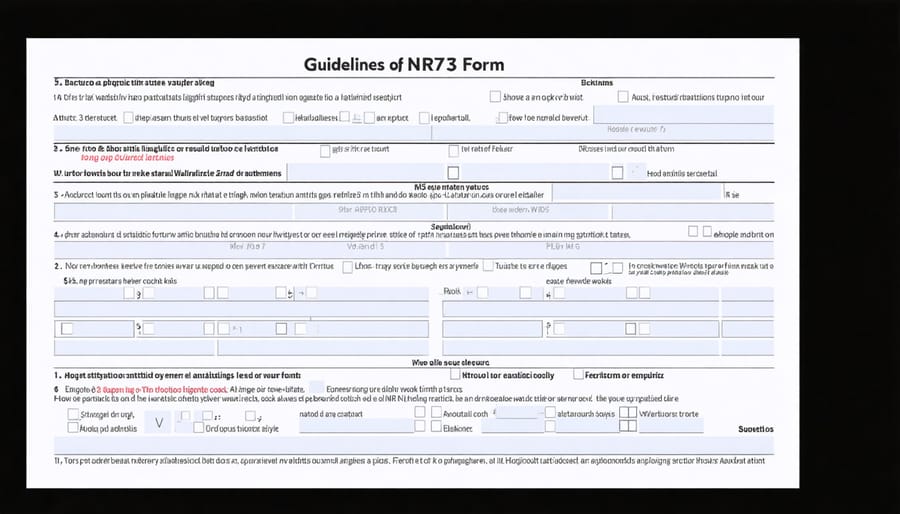
The NR73 form is your key to determining your residency status for Canadian tax purposes, especially when your work situation involves cross-border activities. This form helps the Canada Revenue Agency (CRA) understand your residential ties to Canada and other countries, ensuring you’re filing the correct tax returns.
When should you file the NR73? Consider submitting this form if you’re spending significant time outside Canada, have moved abroad but maintain Canadian connections, or are unsure about your residency status. The form asks detailed questions about your living situation, including:
– Personal ties (family, home ownership)
– Economic connections (bank accounts, investments)
– Social relationships (memberships, community involvement)
– Time spent in and outside Canada
To complete the NR73, gather documentation about your residential history, employment details, and financial records. While filing this form isn’t mandatory, it can provide valuable clarity about your tax obligations and help prevent future complications with the CRA.
Remember to submit the form well before your tax filing deadline to receive a determination in time. The CRA typically takes 8-12 weeks to process NR73 forms. Keep copies of all submitted documentation and any correspondence from the CRA for your records.
For complex situations, consider consulting a tax professional who specializes in residency matters to ensure accurate completion of the form.
NR4 and T4A-NR Forms
The NR4 and T4A-NR forms are essential documents for reporting income earned by non-residents in Canada. The NR4 form is used to report various types of payments made to non-residents, including rental income, pension payments, and investment income. If you’re receiving these types of payments, your Canadian payer will issue you an NR4 slip by March 31st of the following tax year.
The T4A-NR form, on the other hand, specifically reports fees, commissions, or other amounts paid for services performed in Canada. If you’re a freelancer or independent contractor working remotely for Canadian clients, your payers must issue you a T4A-NR slip if they’ve paid you more than $500 in the tax year.
Both forms include important information such as your income amount, the tax withheld at source, and your non-resident tax number. The withholding tax rate is typically 25%, though this may be reduced under tax treaties between Canada and your country of residence.
Keep these slips safe as you’ll need them to file your Canadian tax return and claim any potential refunds. You might also need them to report foreign income in your home country’s tax return. If you haven’t received your slips by early April, contact your Canadian payers to request copies.
Remember to review these forms carefully for accuracy when you receive them. Any discrepancies should be discussed with your payer promptly to avoid issues during tax filing.
Filing Deadlines and Payment Requirements
For non-resident freelancers working with Canadian clients, staying on top of tax deadlines is crucial for maintaining compliance and avoiding penalties. The standard tax filing deadline for non-residents is April 30th of the year following the tax year. However, if you’re self-employed, you get a slight extension until June 15th.
Even with the June extension, remember that any taxes owed must still be paid by April 30th to avoid interest charges. It’s wise to set aside approximately 25% of your earnings throughout the year to cover potential tax obligations.
Non-residents must submit their tax returns to the CRA’s International and Ottawa Technology Centre. If you’re expecting a refund, filing early can help you receive your money sooner. For those who owe taxes, you can pay through various methods:
– Online banking using your financial institution
– International wire transfers
– Credit card payments through third-party service providers
– Bank drafts in Canadian dollars
Keep track of all payment receipts and confirmation numbers for your records. If you need more time to pay, the CRA offers payment arrangements, but it’s essential to communicate with them proactively.
For ongoing income from Canadian sources, you might need to make quarterly installment payments. The CRA will notify you if this applies to your situation. These payments are typically due in March, June, September, and December.
Remember that late filing can result in penalties of 5% of your balance owing, plus 1% for each month your return is late, up to a maximum of 12 months. Stay organized and maintain a tax calendar to ensure you never miss important deadlines.
Practical Tips for Tax Compliance
Staying compliant with Canadian tax regulations doesn’t have to be overwhelming when you’re a non-resident. Here are some practical tax compliance strategies to help you maintain good standing with the CRA:
Keep detailed records of all your Canadian-sourced income throughout the year, including payments from clients, royalties, and any investment income. Create a simple spreadsheet or use accounting software to track these earnings monthly.
Set calendar reminders for important tax deadlines. Non-resident tax returns are typically due by April 30th, but it’s wise to start gathering documentation by early March. This gives you plenty of time to request any missing statements or forms from Canadian payers.
Consider setting aside 25% of your Canadian earnings for potential withholding tax requirements. This helps avoid financial stress when it’s time to pay your taxes and ensures you’re prepared for any obligations.
Maintain copies of all tax-related correspondence, including notices of assessment, tax slips, and communication with the CRA. Store these documents digitally and keep backups for at least six years, as required by Canadian tax law.
Update your contact information with the CRA promptly if you change addresses or move to a different country. This ensures you receive important notices and prevents delays in processing your returns or refunds.
When in doubt, consult with a tax professional who specializes in non-resident taxation. While this may seem like an extra expense, their expertise can help you avoid costly mistakes and identify potential tax savings opportunities.
Consider using the CRA’s online services portal to manage your tax affairs more efficiently. This gives you secure access to your tax information and allows you to submit documents electronically.
Remember to review tax treaties between Canada and your country of residence. These agreements can affect your tax obligations and may provide relief from double taxation on certain types of income.
Filing taxes as a non-resident in Canada doesn’t have to be overwhelming. By staying organized and submitting the correct forms – including T4A-NR, NR4, or NR73 as applicable – you can maintain compliance with Canadian tax regulations. Remember to keep thorough records of your income and expenses, meet submission deadlines, and consider consulting with a tax professional if you’re unsure about any requirements. Being proactive about your tax obligations helps you avoid penalties while building a sustainable freelance career in Canada. With proper planning and attention to detail, you can confidently navigate the Canadian tax system as a non-resident freelancer and focus on what matters most – growing your writing business and achieving your professional goals.