

Artificial Intelligence is revolutionizing how Canadian freelance writers and businesses work, transforming everything from daily tasks to managing remote work effectively. From smart writing assistants that polish your prose to AI-powered project management tools that streamline your workflow, workplace AI solutions are no longer future possibilities—they’re here, boosting productivity and creating new opportunities for creative professionals.
In this practical guide, we’ll explore eight real-world AI applications that are already making waves in Canadian workplaces. Whether you’re a seasoned writer looking to enhance your toolkit or a business owner aiming to modernize your operations, these AI solutions offer tangible benefits without requiring extensive technical expertise. By understanding and implementing these tools strategically, you’ll position yourself at the forefront of the digital transformation while maintaining the human touch that makes your work unique.
Let’s dive into these game-changing AI workplace examples that are helping professionals work smarter, not harder, while delivering better results for their clients.
AI-Powered Writing Assistants
Grammar and Style Enhancement
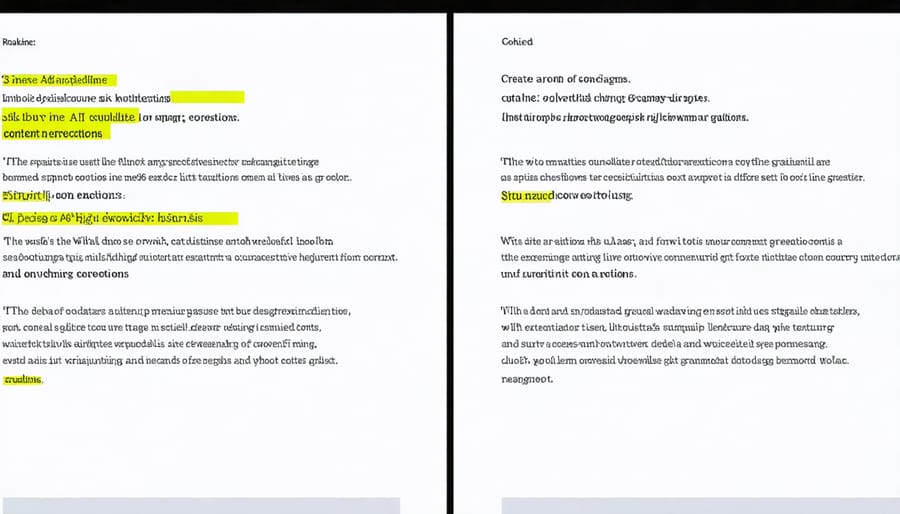
AI-powered grammar and style tools have revolutionized how freelance writers polish their work. Grammarly leads the pack, offering real-time suggestions for grammar, punctuation, and style improvements while you write. Many Canadian writers find it invaluable for catching those sneaky typos and ensuring consistent tone across client projects.
ProWritingAid goes a step further by providing in-depth writing analysis, helping you identify repetitive phrases, passive voice, and readability issues. It’s like having a patient writing mentor who helps strengthen your prose without cramping your style.
These AI tools are particularly helpful when you’re juggling multiple projects with different style requirements. They can automatically adjust suggestions based on whether you’re writing casual blog posts or formal business reports. Plus, they learn from your writing patterns over time, making increasingly relevant recommendations.
The best part? These tools don’t just fix mistakes – they help you become a better writer. By explaining each suggestion, they turn every editing session into a mini writing workshop. Many successful freelancers report that using these AI assistants has helped them deliver cleaner first drafts and win more repeat clients.
Content Generation Support
Content generation tools powered by AI are revolutionizing how writers tackle their daily tasks. When you’re staring at a blank page, AI assistants like ChatGPT and Claude can help generate creative outlines, suggest article structures, and provide writing prompts to get your creative juices flowing. Many Canadian writers report saving hours of preparation time by using AI to create initial drafts and brainstorm ideas.
For example, if you’re working on a blog post about sustainable living, AI can quickly generate a comprehensive outline with main points, potential subtopics, and even relevant statistics to include. This gives you a solid foundation to build upon while maintaining your unique voice and expertise.
Writers experiencing creative blocks can use AI tools to suggest alternative angles or generate related topics. The key is to use these tools as supportive partners rather than replacements for human creativity. They’re particularly helpful when you need to produce content consistently for multiple clients or maintain a regular publishing schedule.
Remember to fact-check AI-generated suggestions and add your personal touch to ensure authenticity and originality in your final piece.

Project Management AI Tools
Automated Scheduling
Modern AI scheduling tools are revolutionizing how freelance writers manage their time and projects. Apps like Calendly and Motion AI have transformed traditional calendar management into a seamless experience, helping writers achieve a better work-life balance. These intelligent systems can automatically schedule client meetings, set project deadlines, and even suggest optimal writing times based on your peak productivity hours.
What makes AI scheduling truly remarkable is its ability to learn from your patterns. It can analyze your work habits, identify potential scheduling conflicts, and suggest the best times for focused writing sessions. For instance, if you consistently complete your best work in the morning, the AI will prioritize scheduling important writing tasks during those hours.
The real game-changer is how these tools handle project planning. They can break down large writing assignments into manageable tasks, estimate completion times based on your previous work, and even factor in buffer time for revisions. This smart approach to time management helps freelancers stay organized and meet deadlines consistently.
Task Prioritization
AI has revolutionized how writers manage their workload through intelligent task prioritization systems. Tools like Asana and Monday.com now incorporate AI features that analyze your writing assignments based on deadlines, complexity, and client importance. These smart assistants can suggest the optimal order for tackling your projects, ensuring you meet all deadlines while maintaining quality.
The AI examines patterns in your work habits, identifying peak productivity hours and matching them with high-priority tasks. It can also factor in research time needed for different topics, helping you allocate your energy more effectively. For instance, if you have multiple blog posts due, the AI might suggest tackling the more research-intensive pieces during your morning hours when you’re typically most focused.
Writers particularly appreciate how these systems automatically adjust priorities when new assignments come in, eliminating the stress of constant manual reorganization. The AI can even predict potential scheduling conflicts and suggest proactive solutions, keeping your workflow smooth and efficient.
Research and SEO Optimization

Smart Research Assistants
AI-powered research assistants are revolutionizing how freelance writers gather and verify information. These smart tools go beyond basic search functions, helping writers find credible sources, fact-check data, and compile research efficiently. Tools like Consensus and Elicit can analyze thousands of academic papers in seconds, providing writers with accurate, peer-reviewed information for their articles.
For freelancers working on specialized content, these virtual collaboration tools can identify industry trends, summarize complex research, and even suggest relevant expert sources to contact. Popular options like Scholarcy and Connected Papers create visual maps of related research, making it easier to understand complex topics and their relationships.
What makes these AI assistants particularly valuable is their ability to learn from your research patterns and preferences. They can alert you to new publications in your niche, flag potential contradictions in your sources, and even help you organize your findings into coherent outlines. This means less time spent on manual research and more time for actual writing, helping you deliver well-researched content more efficiently.
SEO Enhancement Tools
AI-powered SEO tools have revolutionized how freelance writers optimize their content for search engines. Tools like Surfer SEO and MarketMuse use artificial intelligence to analyze top-ranking content and provide data-driven recommendations for improving your articles. These smart assistants can suggest relevant keywords, identify content gaps, and help structure your writing to match search intent.
Many writers now rely on AI tools like Clearscope to generate content briefs and track content optimization scores in real-time. As you write, these tools provide instant feedback on readability, keyword density, and topic coverage. They can even suggest related terms and questions your audience commonly searches for.
What makes these AI tools particularly valuable is their ability to learn and adapt to changing search patterns. Rather than following rigid SEO rules, they analyze millions of search results to understand what actually works. This means you can focus on creating quality content while the AI handles the technical SEO aspects, saving hours of manual research and optimization work.
For freelancers looking to deliver SEO-optimized content consistently, these AI tools have become indispensable partners in content creation.
Client Communication AI
Automated Response Systems
Automated response systems powered by AI are revolutionizing how businesses handle client communications. These smart tools can instantly respond to common customer inquiries, schedule meetings, and manage basic support tickets without human intervention. For freelance writers, this means more time focusing on creative work instead of administrative tasks.
Popular AI chatbots and virtual assistants can now recognize context, emotion, and urgency in client messages, providing appropriate responses that sound natural and professional. They can handle everything from project inquiries to deadline confirmations, maintaining a consistent communication flow even during off-hours.
The best part? These systems learn and improve over time. They analyze past interactions to provide better responses and can be customized to match your brand voice. Many freelancers use these tools to manage their growing client base efficiently, setting up automated responses for frequently asked questions while handling more complex discussions personally. This balance of automation and personal touch helps maintain strong client relationships while boosting productivity.
Client Feedback Analysis
AI-powered feedback analysis tools are revolutionizing how businesses understand and act on client input. These smart systems can process thousands of customer comments, reviews, and survey responses in minutes, pulling out key trends and sentiment patterns that might take humans days to identify.
For freelance writers, this technology is particularly valuable when managing multiple clients. AI tools can analyze client revision requests and feedback patterns, helping you spot common areas for improvement in your writing. They can also track satisfaction levels over time and flag potential issues before they become problems.
Many popular project management platforms now include AI feedback analysis features that automatically categorize client comments, suggest improvement areas, and even predict client satisfaction based on communication patterns. This helps writers maintain strong client relationships while continuously improving their services.
The beauty of these tools is that they turn scattered feedback into actionable insights, allowing you to make data-driven decisions about your writing business and professional development.
Implementing AI in Your Workflow
Getting started with AI in your writing workflow doesn’t have to be overwhelming. Begin by identifying one or two tasks that take up most of your time, such as research or editing, and introduce AI tools specifically for those areas. For instance, you might start using Grammarly’s AI-powered editor for initial proofreading or ChatGPT for brainstorming article ideas.
Create a structured implementation plan that allows you to gradually integrate AI while still maintain mental resilience and control over your creative process. Start with these practical steps:
1. Set aside 15-30 minutes daily to experiment with new AI tools
2. Document which AI features work best for your specific writing needs
3. Establish clear boundaries for AI usage (like using it for research but not for final content)
4. Create templates and prompts you can reuse for common writing tasks
Remember to maintain your unique voice while leveraging AI capabilities. Use AI as a collaborative tool rather than a replacement for your expertise. For example, when working on client projects, you might:
– Use AI to generate outline suggestions, then refine them with your professional insight
– Have AI analyze your drafts for readability and tone consistency
– Employ AI research assistants to gather initial information, which you’ll verify and expand upon
– Use AI tools to help manage your writing schedule and track deadlines
Start small and gradually expand your AI toolkit as you become more comfortable. Many writers find success by beginning with basic AI writing assistants and slowly incorporating more advanced features like content optimization and SEO analysis tools. The key is to find a balance that enhances your productivity while preserving the quality and authenticity of your work.
As we’ve explored these eight powerful examples of AI in the workplace, it’s clear that artificial intelligence isn’t just changing how we work – it’s opening new doors for creativity and productivity. For freelance writers and content creators, AI has become an invaluable partner that enhances our natural abilities rather than replacing them.
The benefits of integrating AI into our daily workflows are substantial: increased efficiency, reduced time on repetitive tasks, improved accuracy, and the ability to focus more on creative and strategic work. From smart writing assistants to advanced research tools, AI is helping writers deliver higher quality work while maintaining their unique voice and perspective.
Looking ahead, the future of AI in the workplace appears bright and full of possibility. We can expect to see even more sophisticated tools emerging, particularly in areas like personalized content creation, advanced language processing, and automated workflow management. For freelance writers, this means more opportunities to expand their service offerings and deliver greater value to clients.
The key to success lies in viewing AI as a complement to human creativity rather than a replacement. By embracing these tools while maintaining our professional judgment and creative intuition, we can create a more efficient and rewarding work environment. Remember, the goal isn’t to automate everything – it’s to use AI strategically to enhance our natural talents and deliver exceptional results for our clients.