

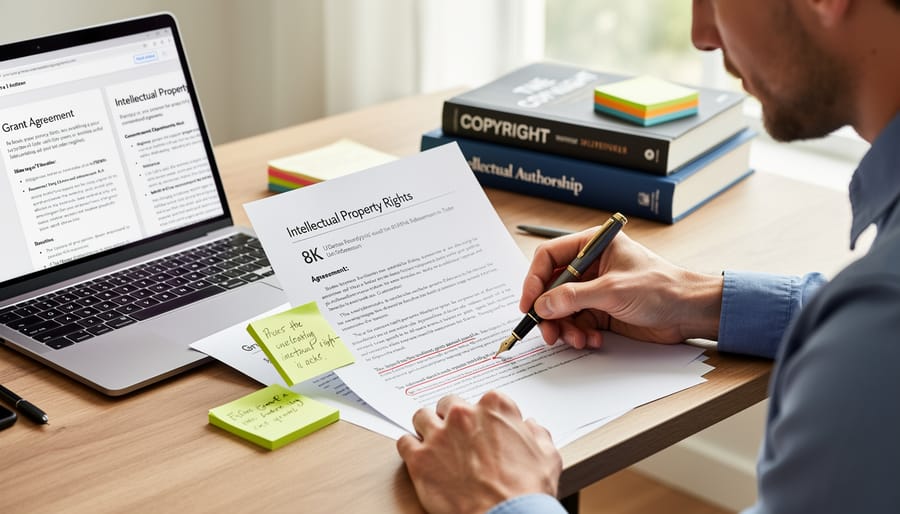
Review the grant agreement before signing to identify any intellectual property clauses that transfer ownership of your work to Yale or restrict your future publishing rights. Most Yale grants for writers and researchers include terms about IP ownership that directly impact your ability to sell, adapt, or republish your creative work after the fellowship ends.
Request written clarification from the program administrator about who owns the copyright to work produced during your fellowship period. Many prestigious grants, including those offered by Yale, default to standard university IP policies that may claim partial or full ownership of creative output, particularly if you’re working with faculty advisors or using university resources. Getting this information upfront helps you negotiate terms or decide whether the funding aligns with your long-term career goals.
Compare fellowship terms across multiple institutions to understand industry standards and strengthen your negotiating position. While Yale’s reputation carries significant weight for your writing career, accepting funding that compromises your intellectual property rights could limit your earning potential from future book deals, film adaptations, or syndication opportunities. Some institutions offer identical prestige with more writer-friendly IP agreements.
Document everything you create before, during, and after the fellowship period with timestamps and version control. This protection strategy ensures you can prove which ideas and drafts existed independently of Yale’s resources, preserving your ownership claims if disputes arise later. Canadian writers especially benefit from understanding how both U.S. university policies and Canadian copyright law intersect when accepting cross-border funding opportunities.
What Yale Grants and Fellowships Actually Mean for Writers
Popular Yale Funding Programs for Creative Writers
Yale offers several prestigious funding opportunities that creative writers should know about, each with different focuses and benefits for your career.
The Fox International Fellowship supports emerging writers interested in exploring international themes or conducting research abroad. This year-long program places fellows at partner institutions worldwide, making it ideal if you’re working on a project with global perspectives. Past fellows have used this time to research novels set in foreign countries or develop cross-cultural creative nonfiction.
The Yale Institute of Sacred Music Visiting Fellows Program welcomes writers whose work intersects with arts, theology, and music. If your creative writing explores spiritual themes or liturgical traditions, this residency provides studio space, mentorship, and a vibrant interdisciplinary community.
For those pursuing hybrid projects, the Franke Visiting Fellows Program at the Whitney Humanities Center supports scholars and artists working across disciplines. Writers developing projects that blend creative writing with other fields—like science writing, historical fiction, or literary journalism—have found success here.
The MacMillan Center also administers various faculty and postdoctoral fellowships that occasionally accept creative writers, particularly those working in international or area studies contexts. These competitive grants typically require a research component alongside creative work.
Before applying to any program, carefully review the intellectual property terms. Most Yale fellowships allow you to retain copyright of creative work produced during your tenure, but it’s essential to confirm this in writing. Each program has different requirements, so read application guidelines thoroughly and reach out to program coordinators with specific questions about rights and ownership.
How Yale Structures Its Funding Agreements
Yale’s funding agreements typically follow a straightforward structure that balances support with accountability. When you receive a Yale grant or fellowship, you’ll get a clear award letter outlining the funding amount, duration, and payment schedule. Most Yale fellowships provide a stipend paid in installments, often monthly or quarterly, directly deposited into your account.
What you receive goes beyond just money. Many programs include access to Yale’s libraries, writing workshops, and networking events with faculty and fellow writers. Some fellowships also offer housing stipends or on-campus accommodation, which can significantly reduce your living expenses during the fellowship period.
Your obligations are generally reasonable and designed to support your creative development. You’ll typically need to maintain regular progress on your proposed project, submit periodic updates to your program coordinator, and participate in program activities like readings or workshops. Some fellowships ask you to give a public presentation of your work near the end of your term.
The good news for Canadian writers is that Yale’s agreements usually respect your intellectual property rights, allowing you to retain ownership of your creative work while fulfilling these modest commitments.
The Intellectual Property Question Every Writer Should Ask
What You Create vs. What Yale Owns
Understanding who owns what you create during a Yale fellowship is crucial for protecting your future income and creative freedom. The good news is that most Yale fellowships respect your ownership rights, but the specifics vary depending on what you’re creating and the terms of your particular grant.
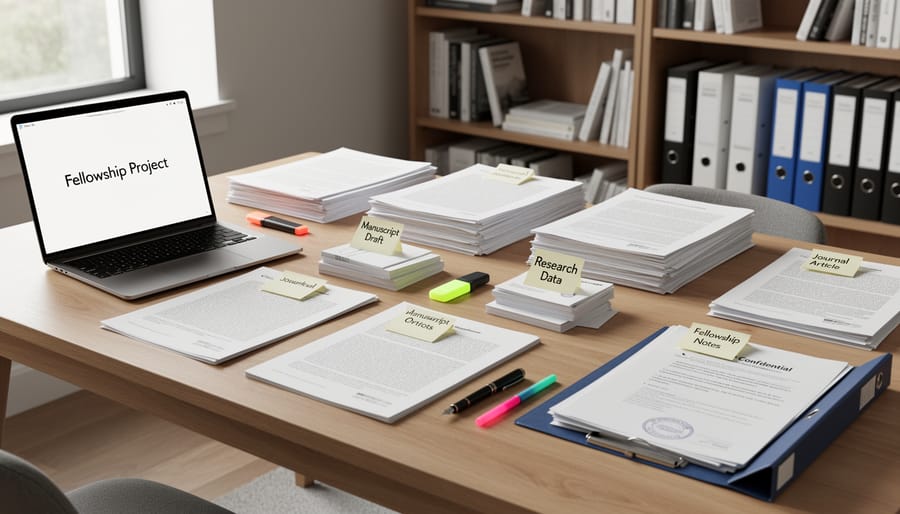
Generally speaking, traditional creative outputs like manuscripts, novels, poetry collections, and creative nonfiction pieces remain your intellectual property. If you’re writing a book during a Yale fellowship, you typically retain full copyright and can publish it wherever you choose. This means you control future royalties, adaptation rights, and all commercial opportunities stemming from your work.
Academic research falls into slightly different territory. Scholarly articles, research papers, and critical essays you produce are usually yours as well, but publication expectations may differ. Some fellowships encourage or require fellows to acknowledge Yale’s support in publications, which is standard practice and doesn’t affect ownership.
The distinction becomes more nuanced with collaborative projects or works created using significant Yale resources beyond the fellowship stipend itself. If you’re using university labs, accessing proprietary databases, or working closely with Yale faculty on joint research, there may be shared ownership considerations. This is similar to broader issues around research grants and IP rights across academic institutions.
Digital projects, websites, or multimedia work created during your fellowship also typically remain yours, though you should verify whether Yale requires attribution or has any licensing preferences.
The key takeaway? Read your fellowship agreement carefully before signing. Most Yale programs are designed to support your creative development without claiming ownership, making them excellent opportunities for advancing your writing career while maintaining control over your work.
The Fine Print That Changes Everything
When you’re reviewing Yale grant agreements, certain clauses deserve extra attention because they directly impact your future opportunities. Publication rights are often the first surprise—many grants include stipulations about when and where you can publish your work. Some agreements require Yale’s name in the acknowledgments section, while others mandate prior approval before submission to certain journals or publishers.
Attribution requirements can be more nuanced than you’d expect. You might find language requiring you to credit Yale in all derivative works or future projects that build on your grant-funded research. This isn’t necessarily problematic, but it’s worth understanding upfront how these attributions might affect your professional brand.
Future use restrictions are where protecting your creative rights becomes crucial. Some agreements specify whether you can repurpose your research for commercial projects, adapt it into a book, or use it as the foundation for future funded work. The good news is that many grant administrators are willing to discuss these terms before you sign.
Take time to read every clause carefully, and don’t hesitate to ask questions. Understanding these details now prevents uncomfortable surprises later and helps you make confident decisions about which funding opportunities truly support your writing career.
Real Scenarios: How IP Rights Affect Your Writing Career
When Grant Funding Helps Your Portfolio
Meet Sarah Chen, a Canadian playwright who secured a Yale Drama Series Award early in her career. Like many emerging writers, she worried about losing control of her work, but Yale’s fellowship structure proved different from what she expected.
Sarah’s grant came with no strings attached to her intellectual property. She retained full ownership of her play, complete rights to adaptations, and freedom to pursue publishing deals independently. The $10,000 award and professional production opportunity launched her career without compromising her future earnings.
Within two years of receiving the fellowship, Sarah sold film rights to her play and secured three additional commissions. The Yale recognition opened doors with agents and producers who might never have read her work otherwise.
What made this success possible? Sarah asked the right questions upfront. Before accepting the award, she reviewed the fellowship agreement carefully, confirming that Yale claimed no ownership stake in her script. She also verified she could negotiate separate deals for international productions and digital streaming rights.
Her story illustrates an important truth: prestigious grant funding can accelerate your writing career while you maintain complete creative control. The key is understanding the terms before you sign.

When Restrictions Become Roadblocks
Imagine this: You receive a prestigious Yale fellowship, spend months researching and writing a groundbreaking article, only to discover you can’t publish it in your preferred magazine because the fellowship agreement restricts where your work can appear. Or perhaps you’ve created a manuscript during your fellowship period, but unclear terms leave you wondering whether Yale has claims to your future book royalties.
These scenarios happen more often than you’d think. Without clear IP agreements upfront, what seemed like a dream opportunity can quickly become frustrating. Some writers have faced delays in publishing their fellowship work because approval processes weren’t outlined in the original agreement. Others discovered restrictions on selling their creative output to commercial publishers, limiting their income potential.
The challenge intensifies when multiple funding sources are involved. If you’re combining a Yale grant with other fellowships or freelance contracts, overlapping IP claims can create legal tangles that delay your projects and cost money to resolve.
This is where careful post-award grant management becomes essential. Before accepting any fellowship, ask specific questions: Can I publish this work commercially? Who owns the copyright? Are there review or approval requirements before publication? What happens to work created partially during the fellowship but finished afterward?
Understanding these details upfront helps you negotiate better terms and avoid roadblocks that could derail your writing career. Remember, asking questions shows professionalism, not suspicion.
Questions to Ask Before Signing Any Agreement
Your Rights to Publish and Sell
Before you accept any Yale grant or fellowship, get crystal clear on what you can do with your work afterward. Most Yale programs let you retain copyright to creative writing, articles, and books you produce during the fellowship, which is wonderful news for freelancers building their careers. However, specifics matter enormously.
Ask upfront whether you’re free to publish your work in magazines, literary journals, or anthologies. Confirm you can sell subsidiary rights like film adaptations or translations. Some academic fellowships include publication agreements with university presses, which might limit where else you can shop your manuscript.
Request written clarification about commercial use. Can you turn your research into a paid workshop? Self-publish your novel? License your writing for educational materials? These revenue streams matter when you’re freelancing.
Here’s an encouraging reality: Yale generally supports writers sharing their work widely, recognizing that publication success benefits everyone. Many fellowship alumni have published bestsellers, won major awards, and built thriving careers from work developed during their Yale tenure.
Document everything in writing. If verbal assurances promise full publication rights, get confirmation via email. This protects your future opportunities and eliminates uncertainty, letting you focus on creating your best work while maintaining the freedom to profit from it later.
Attribution and Credit Considerations
Understanding how Yale expects to be credited is an important consideration that protects both your professional reputation and your relationship with the institution. Most Yale grants and fellowships have specific acknowledgment requirements, typically asking you to include a standard credit line in publications, presentations, or project materials developed with their funding.
Before accepting any grant, carefully review the acknowledgment clause in your agreement. Some fellowships simply request a mention like “This work was supported by a Yale Fellowship,” while others may have more detailed requirements about logo placement or specific wording. The good news is that proper attribution actually enhances your professional branding rather than diminishing it. Having Yale’s name associated with your work signals credibility and can open doors to future opportunities.
When you credit Yale appropriately, you’re demonstrating professionalism and building valuable connections. Think of it as a partnership rather than a restriction. Many successful writers have found that acknowledging prestigious institutions in their work has actually boosted their visibility and attracted new clients or publishers.
Keep detailed records of Yale’s acknowledgment requirements and integrate them naturally into your author bios, project descriptions, and thank-you sections. This simple practice ensures you maintain positive relationships while strengthening your professional portfolio with institutional backing.
How This Compares to Other Grant Programs
Yale’s approach to intellectual property sits comfortably within the middle range of what you’ll encounter across major grant and fellowship programs. Understanding where they stand helps you make informed decisions about which opportunities align best with your career goals.
The good news? Yale’s policies are generally more writer-friendly than corporate-sponsored grants. Many industry-funded fellowships require shared ownership or first-publication rights as part of their grant application requirements. Yale, like most academic institutions, typically allows fellows to retain copyright while requesting acknowledgment in published work.
Government grants through organizations like the Canada Council for the Arts or the Social Sciences and Humanities Research Council offer similar creator-friendly terms. These public funding bodies rarely claim ownership of your creative output. They focus on supporting artistic and scholarly development rather than controlling the resulting work.
Where Yale differs from some writer-specific programs is in residency expectations and research output requirements. Organizations like the MacDowell Colony or Yaddo artist residencies impose virtually no IP restrictions, while Yale fellowships often include expectations around scholarly publication or public presentation of your work.
Private foundation grants fall across a wider spectrum. Some mirror Yale’s hands-off approach, while others embedded in commercial enterprises may request licensing agreements or publication rights. The key is reading each opportunity’s fine print carefully.
Here’s an encouraging perspective: most prestigious fellowships recognize that writers need to maintain control over their work to build sustainable careers. Yale’s policies reflect this understanding. They’re investing in your development as a creator, not trying to profit from your intellectual property. This positions their grants favorably compared to many commercial alternatives, giving you both financial support and creative freedom to grow your writing career.
Protecting Yourself: Practical Steps Before Applying

Getting Professional Review Without Breaking the Bank
Legal review doesn’t have to drain your grant money. Many Canadian writers successfully navigate this process affordably.
Start with your provincial writers’ association. Organizations like the Writers’ Union of Canada and the Quebec Writers’ Federation often provide free or discounted legal consultations for members. These resources specifically understand the unique challenges Canadian writers face with international funding agreements.
Law schools across Canada offer legal clinics where students, supervised by experienced professors, review contracts at minimal cost. Universities like Osgoode Hall and the University of British Columbia run intellectual property clinics perfect for grant agreements.
Consider scheduling just one focused consultation rather than full representation. A lawyer can highlight red flags in your Yale agreement during a single hour-long session, typically costing between $150-$300. Come prepared with specific questions about IP ownership, publication rights, and territory restrictions.
The Canadian Intellectual Property Office provides free educational resources and basic guidance. While they can’t review your specific contract, their materials help you understand fundamental concepts before meeting with a lawyer.
Remember, investing in professional review protects your long-term earning potential. Understanding your rights now prevents costly disputes later and helps you negotiate confidently with Yale or any funding institution.
Red Flags That Should Make You Walk Away
When reviewing any grant or fellowship agreement, certain terms should raise immediate concerns. If you encounter language stating the funder owns all work created during the grant period—not just the specific project funded—that’s a serious problem. Similarly, watch for agreements that claim rights to derivative works or future projects inspired by your funded research.
Another warning sign is vague language around IP ownership. If the agreement doesn’t clearly state who owns what, or uses phrases like “shared intellectual property” without defining percentages or usage rights, request clarification before signing. You deserve crystal-clear terms about your creative work.
Be cautious of agreements requiring you to credit the institution as a co-creator rather than simply acknowledging their financial support. There’s a significant difference between “funded by Yale” and “created in partnership with Yale.” The latter suggests shared ownership you probably don’t intend to grant.
Exclusivity clauses that prevent you from publishing or sharing your work elsewhere should also concern you. If you can’t submit your manuscript to publishers or share your research freely, that severely limits your career opportunities. Remember, finding funding without losing rights is possible—never settle for terms that compromise your creative future.
Yale grants and fellowships can open incredible doors for your writing career. These prestigious opportunities provide not just financial support, but also validation, networking connections, and time to focus on your craft. The key is approaching them with your eyes wide open, especially when it comes to protecting your intellectual property rights.
Remember, knowledge is power. Before submitting any application, take the time to thoroughly review the terms and conditions. Don’t hesitate to reach out to the grants office with questions—it’s their job to clarify these details, and asking shows you’re a professional who takes your work seriously. If something seems unclear or concerning, seek clarification before signing anything. Consider consulting with a lawyer or writers’ organization if you’re uncertain about specific clauses.
The good news is that many Yale programs respect creator rights and offer reasonable terms. By doing your homework upfront, you’ll know exactly what you’re agreeing to and can make decisions that align with your long-term goals. Think of it as an investment in your future—not just the grant itself, but the knowledge you gain about protecting your creative work.
You’ve worked hard to develop your skills and build your writing career. Your intellectual property is valuable, and you have every right to understand and protect it. Whether you’re just starting out or you’re a seasoned professional, taking control of these decisions empowers you to create on your own terms. Trust yourself, ask the right questions, and pursue opportunities that truly serve your creative vision and professional aspirations.