

Protect your written work by registering it on blockchain-based copyright platforms like Copy.ai or Po.et, which create tamper-proof timestamps proving your ownership without expensive legal fees. These platforms generate digital certificates within minutes, giving Canadian freelancers immediate proof of authorship that stands up legally.
Streamline international payments through cryptocurrency-enabled platforms such as Bitwage or Request Network, which eliminate weeks-long bank transfers and reduce transaction fees by up to 80 percent. You’ll receive payments from global clients within hours instead of days, with full transparency on every transaction recorded permanently on the blockchain ledger.
Discover higher-paying opportunities on decentralized freelance marketplaces like Braintrust and LaborX, where writers keep 100 percent of their earnings because blockchain technology removes traditional platform middlemen who typically claim 20-30 percent commissions. These platforms also use smart contracts that automatically release your payment when you submit approved work, ending the frustration of chasing clients for overdue invoices.
Build verified credentials through blockchain portfolio systems that showcase your published articles with authenticated proof of authorship and client reviews that cannot be faked or deleted. This permanent professional record travels with you across platforms, helping you stand out in competitive job markets.
Blockchain tools transform abstract concerns about payment security, copyright theft, and platform fees into solved problems, letting you focus on what matters most—your writing. Understanding these practical applications puts you ahead of writers still navigating outdated payment systems and vulnerable contracts.
What Blockchain Actually Means for Freelance Writers
Think of blockchain as a digital ledger that everyone can see but no one can erase or tamper with. Instead of one company controlling all the records, copies exist across many computers, making information transparent and permanent. For freelance writers, this isn’t about cryptocurrency trading or complex coding. It’s about solving real problems you face every day.
At its core, blockchain creates trust without needing a middleman. Imagine writing a contract with a client that automatically releases your payment when you submit your work, no chasing invoices or waiting for approval. The system itself handles the transaction based on agreed-upon terms. That’s a smart contract, and it’s one way blockchain joins other innovative writing technologies making your career easier.
Here’s another way to understand it: remember those group projects in school where everyone claimed they did the most work? Blockchain is like having a teacher who documented every single contribution in permanent ink. For writers, this means creating an unchangeable record of your work. When you publish an article or create content, you can register it on blockchain, proving you created it at a specific time. No more disputes about who wrote what first.
Direct payments represent another practical benefit. Traditional payment platforms take fees and processing time. Blockchain allows clients to pay you directly, often faster and with lower costs, especially for international work. The technology removes barriers between you and your earnings.
Your portfolio also becomes more trustworthy. Instead of claiming you wrote certain pieces, blockchain verification provides proof. Potential clients can see your actual work history without wondering if you’re being honest about your experience.
The beauty of blockchain for freelancers is simple: it creates transparency, security, and efficiency in areas where writers traditionally struggled. You don’t need to understand the technical details to benefit from tools built on this foundation.

Smart Contracts: Getting Paid Faster and More Securely
Platforms That Make Smart Contracts Simple
Getting started with smart contracts doesn’t require a computer science degree. Several platforms have simplified the process specifically for creatives like writers who want secure payment systems without the technical headaches.
Bunzz stands out as a beginner-friendly option that’s accessible to Canadians. This platform offers pre-built smart contract templates you can customize without writing code. You simply select the type of agreement you need, fill in your terms, and deploy it. Think of it as using a website builder instead of coding from scratch.
Another excellent choice is OpenLaw, which combines traditional contract language with blockchain security. You write contracts in plain English, and the platform handles the technical blockchain integration. It’s particularly useful for writers managing multiple clients and projects simultaneously.
For writers already comfortable with freelance platforms, Bitwage offers a gentle introduction to blockchain payments. You can receive payments from international clients in cryptocurrency, which then converts to Canadian dollars in your bank account. Setup takes about fifteen minutes, and their customer support specifically assists Canadian freelancers.
The key advantage? These platforms handle the complicated blockchain infrastructure while you focus on what matters: your writing. Most offer free trials or basic free tiers, letting you experiment without financial commitment. Start small with one client contract to build your confidence before expanding your blockchain toolkit.
Success Story: How Sarah Eliminated Late Payments
Sarah Thompson, a Toronto-based freelance writer specializing in tech content, used to spend countless hours chasing late payments. “I’d wait 45 to 60 days for invoices to clear, and some clients conveniently ‘forgot’ entirely,” she recalls. Her cash flow was unpredictable, making it difficult to plan her finances or invest in her business.
Everything changed when Sarah started using Request Network for her international clients. The blockchain-based invoicing platform automatically tracks payments and sends reminders without her lifting a finger. “My average payment time dropped from 50 days to just 12,” Sarah says. “The system is transparent, so clients can’t claim they never received an invoice.”
For her larger corporate clients, she began accepting payment through Bitwage, which allows clients to pay in traditional currency while Sarah receives either cryptocurrency or direct deposit. This eliminated the awkward conversation about payment methods while giving her more flexibility.
The real breakthrough came when Sarah required a 50% deposit through smart contracts for projects over $2,000. “The contract automatically releases payment when I submit the final draft. No more waiting, no more excuses,” she explains. Within six months, her late payment rate dropped to nearly zero, and her annual income increased by 23% simply because she was getting paid on time. “I wish I’d discovered these tools years ago. The peace of mind alone is worth it.”

Building an Unshakeable Portfolio with Blockchain Verification
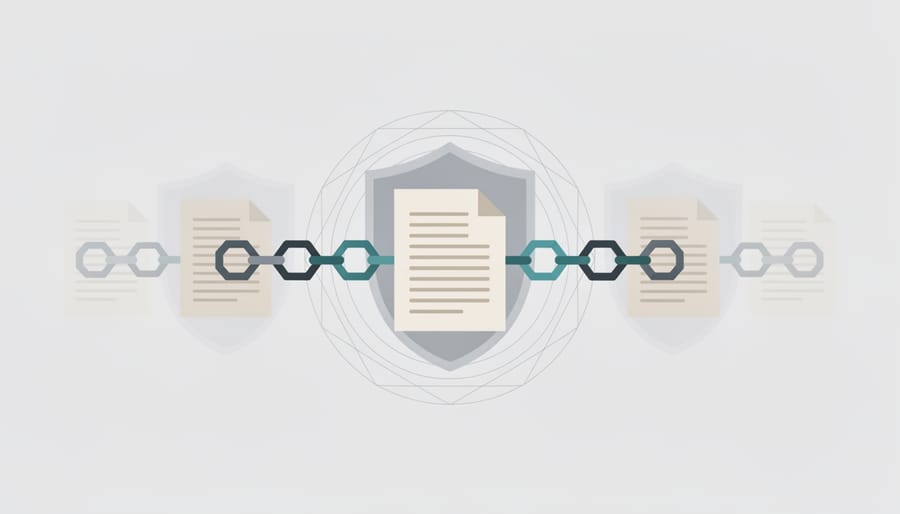
Tools for Timestamping and Protecting Your Work
You don’t need to be a tech wizard to protect your creative work with blockchain technology. Several user-friendly platforms make it surprisingly simple to timestamp and verify your writing, giving you proof of ownership without diving into complex code.
Wordproof is an excellent starting point, offering a WordPress plugin that automatically timestamps your articles as you publish them. It creates an unchangeable record of when you created your content, which can be invaluable if ownership disputes arise later. The basic version is free and takes just minutes to set up.
Po.et provides a straightforward platform specifically designed for writers and publishers. You simply upload your work, and the system creates a permanent record on the blockchain. It’s like getting a digital certificate of authenticity for every piece you write, and the interface feels familiar if you’ve ever used content management systems.
For those seeking copyright protection, Blockai lets you register your creative work quickly through an intuitive dashboard. While blockchain registration doesn’t replace traditional copyright, it provides additional proof of when you created something, strengthening your claim if someone copies your work without permission.
Civil, though it has evolved over time, pioneered blockchain-based journalism tools and still offers resources for understanding decentralized publishing. Their educational materials help writers grasp how blockchain can support independent journalism.
The beauty of these tools is their simplicity. Most require nothing more than creating an account and uploading your content. You’re building a protective layer around your writing career without needing technical expertise, giving you peace of mind to focus on what you do best: creating compelling content.
Cryptocurrency Payments: Should You Accept Them?
Getting Started with Crypto Payments in Canada
Ready to start accepting crypto payments for your freelance writing? It’s easier than you might think, and you don’t need to be a tech expert to get started. Let’s break it down into simple, manageable steps.
First, you’ll need a digital wallet to receive and store cryptocurrency. Think of it as a bank account specifically for digital currencies. For beginners, user-friendly options like Coinbase or Newton (a Canadian platform) offer straightforward interfaces and built-in security features. Download the app, verify your identity, and you’re ready to receive payments. Write down your recovery phrase and store it somewhere safe—this is your backup if you ever lose access to your account.
When it comes to choosing which cryptocurrency to accept, stability matters. While Bitcoin is well-known, consider requesting payment in stablecoins like USDC or USDT. These are designed to maintain a steady value tied to the Canadian or US dollar, protecting you from dramatic price swings. This means the $500 you earn today will still be worth roughly $500 tomorrow.
Now, here’s the important part: understanding your tax obligations. The Canada Revenue Agency treats cryptocurrency as a commodity, not currency. This means when you receive crypto payment and convert it to Canadian dollars, you may need to report capital gains or losses. Keep detailed records of every transaction, including the date, amount in crypto, and its Canadian dollar value at the time of receipt. Consider using crypto tax software like Koinly or CoinTracking to simplify year-end reporting.
Starting small helps build confidence. Try accepting partial payment in crypto before committing fully, giving yourself time to learn the system without pressure.
Finding Blockchain Writing Opportunities
The blockchain and cryptocurrency space is experiencing explosive growth, and there’s a significant shortage of writers who can explain these topics clearly. This creates an exciting opportunity for Canadian freelancers willing to explore this niche without needing to become programmers or financial experts.
Start by understanding that blockchain writing rarely requires deep technical knowledge. Most projects need writers who can translate complex concepts into language everyday readers understand. You’ll be explaining how blockchain helps people solve real problems, not writing code or analyzing cryptographic algorithms. Your existing technical writing skills already give you a foundation.
Where can you find these opportunities? Cryptocurrency exchanges need blog content, tutorials, and help documentation. NFT marketplaces require clear guides for new users. Web3 companies seek writers for white papers, case studies, and educational content. Many pay significantly above standard rates because finding qualified writers remains challenging.
Toronto freelancer Sarah began writing for blockchain companies in 2022 with zero cryptocurrency experience. She focused on user education articles and now commands rates between 50 to 75 cents per word, more than double her previous earnings writing general business content.
Position yourself by highlighting your ability to simplify complex information rather than claiming blockchain expertise. Create sample articles explaining blockchain basics or reviewing popular crypto apps. Join writing communities focused on Web3 to learn industry terminology and connect with potential clients.
LinkedIn remains the best platform for finding blockchain writing work. Many crypto companies post opportunities there, and recruiters actively search for writers with clear portfolios. Twitter also hosts a vibrant Web3 community where companies announce writing needs.
Remember, companies value clarity over technical depth. They already have developers and engineers. What they desperately need are writers who can help regular people understand why blockchain matters and how to use these new tools confidently.

Practical Tips for Getting Started Today
Ready to dip your toes into blockchain without feeling overwhelmed? The best approach is to start small and build your comfort level gradually. You don’t need to revolutionize your entire freelance practice overnight.
Begin with just one simple blockchain application. If payment delays frustrate you most, start with a crypto payment option like accepting payments through a beginner-friendly wallet. Coinbase and PayPal’s crypto features are excellent starting points because they feel familiar and don’t require extensive technical knowledge. Set up an account, add it as a payment option on your invoice, and see how it works with one willing client.
For protecting your work, try Wordproof or Po.et. These platforms make copyright registration surprisingly straightforward. Upload one piece of writing to test the process. You’ll quickly see how blockchain verification works without committing to a complete workflow overhaul.
Join communities where other writers share their blockchain experiences. The Freelance Writers Den and Canadian Freelance Union both have members exploring these technologies. Learning alongside peers makes the journey less intimidating and more practical.
Set aside just 30 minutes weekly to explore. Watch one tutorial, read one article, or experiment with one feature. This gentle pace prevents burnout and allows concepts to sink in naturally.
Remember that blockchain represents just one category among many tools to improve your freelance business. It complements traditional methods rather than replacing them entirely. You might find blockchain perfect for international clients while sticking with conventional payments for local work.
Most importantly, stay curious but selective. Not every blockchain tool will suit your needs, and that’s perfectly fine. Experiment with what interests you, discard what doesn’t work, and celebrate small wins along the way. Your freelance career is unique, so your blockchain journey should be too.
Blockchain doesn’t have to be intimidating or complicated. Like any emerging technology, it’s simply another tool that can make your freelance writing business more secure, efficient, and profitable. The key is staying curious and open-minded about innovations that could genuinely improve how you work.
You don’t need to become a blockchain expert overnight. Start small by exploring one platform or tool that addresses a specific challenge you’re facing, whether that’s payment delays, contract disputes, or copyright protection. Many Canadian freelancers are already discovering how these solutions can reduce administrative headaches and give them more time for what matters most: writing great content.
Remember, staying competitive in today’s freelance market means being adaptable without sacrificing your well-being. Blockchain tools can actually support better work-life balance by automating payments, streamlining contracts, and reducing the stress of chasing invoices. These aren’t replacements for your skills and creativity; they’re enhancements that let you focus on the work you love while building a more sustainable business. Embrace the opportunity to learn, experiment, and grow alongside the industry. Your freelance career will be stronger for it.