

Transform your storytelling by mastering the five fundamental narrative structures that power bestselling novels, compelling articles, and viral content. Every successful piece of writing, from personal essays to marketing copy, follows proven storytelling frameworks that keep readers hooked from start to finish. Whether you’re crafting a three-act business case study or weaving a hero’s journey into your brand story, understanding these time-tested structures unlocks your ability to create content that resonates and converts.
Think of narrative structure as your story’s blueprint – it’s the invisible framework that turns scattered ideas into powerful, purposeful content. Top-earning freelance writers don’t just tell stories; they architect them using proven patterns that build tension, create emotional connections, and deliver satisfying conclusions. Master these structures, and you’ll transform from a writer into a storyteller who commands higher rates and attracts premium clients.
Let’s explore the narrative frameworks that will elevate your writing from good to unforgettable, with real examples you can adapt for your next project.
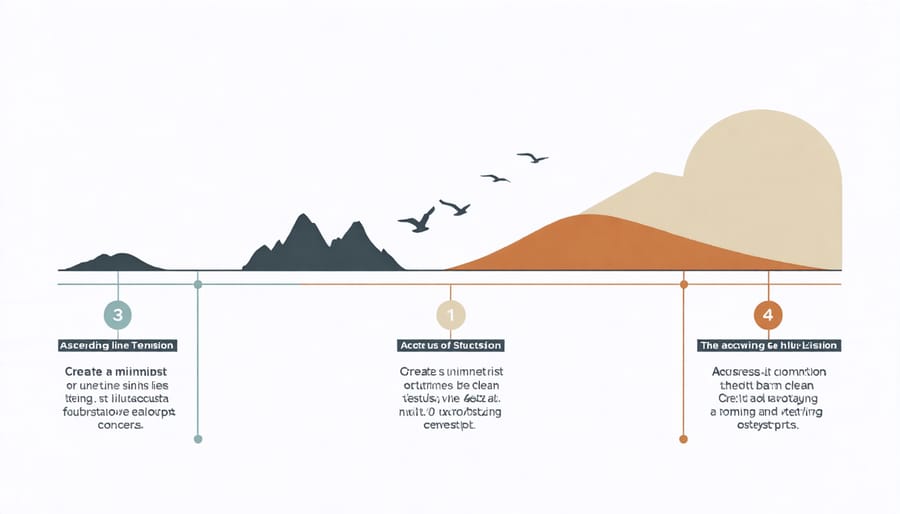
Classic Three-Act Structure: The Storytelling Foundation
Making the Setup Hook Readers
Hooking readers from the first paragraph requires a delicate balance of intrigue and clarity. Start with a strong emotional trigger – whether it’s a shocking statement, a thought-provoking question, or engaging sensory details that transport readers directly into your scene. Consider opening with dialogue that reveals character personality, or establish immediate conflict that demands resolution. A well-crafted hook doesn’t just grab attention – it makes promises about the story to come. For freelance writers, testing your opening paragraphs on fellow writers can provide valuable feedback about what works. Remember, your first few sentences are your handshake with readers – make them count by creating questions in their minds that only your story can answer.
Building Tension Through Confrontation
Building tension through confrontation doesn’t always mean physical conflict. As a writer, you can create compelling moments through internal struggles, heated compelling dialogue, or mounting pressure from circumstances. Try introducing obstacles that force your characters to make increasingly difficult choices. Layer your conflicts by combining personal stakes with external challenges. For example, a freelance writer character might face both a looming deadline and a family emergency, creating two competing pressures that test their priorities. Remember to pace these confrontations strategically – spread them throughout your middle sections to maintain reader interest without overwhelming them. Each confrontation should raise the stakes higher than the last, leading naturally toward your story’s climax.
Crafting Satisfying Resolutions
A satisfying resolution ties together all your story’s threads while delivering emotional impact for your readers. Think of it as giving your audience a rewarding “aha” moment that feels both surprising and inevitable. Start by identifying your story’s central conflict and ensure its resolution aligns with your character’s journey. Don’t rush to wrap everything up – let the ending breathe and resonate.
Consider leaving some elements open-ended to spark reader discussion, but always address your main story questions. Whether you’re writing a happy ending or a thought-provoking conclusion, make it meaningful to your character’s growth. Remember, the best resolutions echo your story’s themes while offering fresh insight that stays with readers long after they’ve finished reading.
Avoid the temptation to explain everything. Trust your readers to connect the dots, and they’ll appreciate the ending even more. The key is finding that sweet spot between closure and intrigue.

Non-Linear Narratives That Captivate
Flashback Structure
Flashbacks are powerful storytelling tools that can add depth and emotional resonance to your narrative. Think of them as windows into your characters’ past experiences that help explain their present actions and motivations. When crafting authentic character voices, flashbacks can reveal formative moments that shaped who they became.
To use flashbacks effectively, establish clear transitions between present and past. This could be through sensory triggers (a familiar scent, an old photograph) or emotional connections (similar situations that spark memories). For example, a character facing a difficult decision might recall a childhood moment that taught them an important lesson.
Canadian author Margaret Atwood masterfully uses flashbacks in “The Handmaid’s Tale,” weaving past memories throughout the present narrative to highlight the stark contrast between freedom and oppression. This technique helps readers understand both the world-building and the protagonist’s psychological state.
Keep flashbacks focused and purposeful. They should reveal essential information that drives the story forward rather than simply providing background details. Time them strategically – placing them at moments when their emotional impact will be strongest. Remember, flashbacks work best when they create connections that deepen your reader’s understanding of the present story.
Parallel Storylines
Parallel storylines are like weaving multiple threads into a beautiful tapestry – each strand tells its own tale while contributing to a richer overall narrative. This technique involves running two or more distinct plot lines simultaneously throughout your story, often intersecting at crucial moments for maximum impact.
Think of movies like “The Hours” or “Cloud Atlas,” where multiple stories unfold across different time periods yet remain thematically connected. As a writer, you can use this approach to explore different perspectives, highlight contrasts, or reveal hidden connections between seemingly unrelated events.
To effectively handle parallel storylines, start by ensuring each narrative thread can stand on its own merit. Give each storyline its distinct voice, characters, and conflicts while maintaining a common theme that ties everything together. The key is finding the right balance – you don’t want one storyline to overshadow the others.
Consider using transitional devices to move smoothly between storylines. Chapter breaks, time stamps, or character perspectives can help readers navigate between different narratives. Remember to maintain tension across all storylines and time their convergence for maximum emotional impact.
Many successful Canadian authors use this technique. For instance, Margaret Atwood often weaves multiple timelines and perspectives in her novels, creating rich, layered narratives that keep readers engaged while exploring complex themes from different angles.
Choosing the Right Structure for Your Story
Matching Structure to Genre
Different genres naturally lend themselves to specific narrative structures, and understanding these relationships can help you craft more engaging stories. For thrillers and mysteries, a nonlinear structure often works well, allowing you to plant clues and create suspense through strategic reveals. Think of how many crime novels start with a dramatic scene before jumping back to show how events unfolded.
Romance stories typically benefit from a linear structure with clear emotional progression, building tension through the relationship development. This helps readers connect with the characters’ journey and invest in their eventual union or conflict resolution.
For science fiction and fantasy, parallel narratives can effectively handle complex world-building while maintaining reader engagement. You might follow multiple characters in different timelines or realms, gradually weaving their stories together.
Personal essays and memoirs often work best with a circular structure, opening with a significant moment and circling back to it after exploring its context and meaning. This approach helps create emotional resonance and provides satisfying closure.
Literary fiction can successfully employ experimental structures, like fragmented narratives or stream of consciousness, as these readers typically appreciate innovative storytelling approaches that challenge conventional expectations.
Adapting Structure for Different Formats
Different writing formats demand unique structural approaches, and successful freelancers know how to adapt their narrative flow accordingly. For blog posts, start with a compelling hook and maintain shorter paragraphs to keep readers engaged. Break up text with subheadings and use bullet points or numbered lists to improve scanability – essential for online readers who tend to skim content.
When writing articles for print publications, you have more flexibility to develop longer paragraphs and complex narrative arcs. Magazine features often benefit from a circular structure, where the ending connects back to the opening scene. News articles typically follow the inverted pyramid, presenting the most crucial information first before diving into supporting details.
For social media content, focus on concise storytelling that captures attention within seconds. Each platform has its sweet spot: Twitter demands precision in 280 characters, while LinkedIn posts can explore professional narratives in greater depth.
Personal essays and memoirs allow for more experimental structures, like weaving multiple timelines together or using thematic organization rather than chronological order. The key is matching your structure to both your audience’s expectations and the platform’s requirements while maintaining your authentic voice throughout.
Remember, successful adaptation isn’t about completely changing your story – it’s about presenting it in the most effective way for each format.
As we’ve explored throughout this guide, mastering narrative structure is a powerful tool that can transform your writing from good to exceptional. The various examples we’ve discussed – from the classic three-act structure to the hero’s journey and beyond – demonstrate that there’s no one-size-fits-all approach to storytelling. The key is finding the framework that best serves your story and your audience.
Remember that successful freelance writers often mix and match elements from different narrative structures to create something unique. Don’t be afraid to experiment with these frameworks in your own writing. Start with a familiar structure, then gradually incorporate elements from others as you become more comfortable.
Take small steps to implement these techniques in your next writing project. Try outlining your story using the five-act structure, or challenge yourself to write a piece following the hero’s journey format. Practice identifying these structures in the content you consume daily – whether it’s articles, novels, or even TV shows.
The beauty of narrative structure lies in its flexibility. While these frameworks provide a solid foundation, they’re meant to guide rather than restrict your creativity. As you develop your writing style, you’ll discover which elements resonate most with your voice and your readers’ needs.
For those seeking to build a successful freelance writing career in Canada, understanding these narrative structures can give you a competitive edge. Clients often look for writers who can craft compelling stories that engage their target audience, and your ability to deliberately implement these structures will set you apart.
Keep this guide handy as a reference, but don’t let it become a rigid rulebook. The most engaging stories often come from writers who understand the rules well enough to know when and how to break them creatively. Your unique perspective, combined with these structural tools, will help you create content that captivates readers and keeps clients coming back for more.