

Set your baseline technical writing rates at $60-85 per hour in the Canadian market, adjusting upward for specialized expertise in software, medical, or engineering documentation. Scale rates based on project complexity, not just word count.
Command premium rates of $100-150 per hour by targeting enterprise clients seeking documentation for complex systems, API documentation, or technical specifications. Landing high-paying technical writing jobs requires positioning yourself as a subject matter expert.
Package your services strategically – offer documentation audits at $1,500-2,500, technical documentation projects at fixed rates of $3,000-8,000, and ongoing retainer arrangements starting at $4,000 monthly. This approach attracts serious clients while protecting your income.
Negotiate confidently by highlighting your specialized knowledge, technical certifications, and proven track record of completing similar projects. Present case studies demonstrating how your documentation improved user experience, reduced support tickets, or accelerated product adoption.
Build long-term client relationships by delivering consistent quality, meeting deadlines, and providing strategic documentation solutions that align with business objectives. This reliability justifies premium rates and ensures steady work flow.
Current Technical Writing Rate Ranges in Canada
Entry-Level vs. Expert Rates
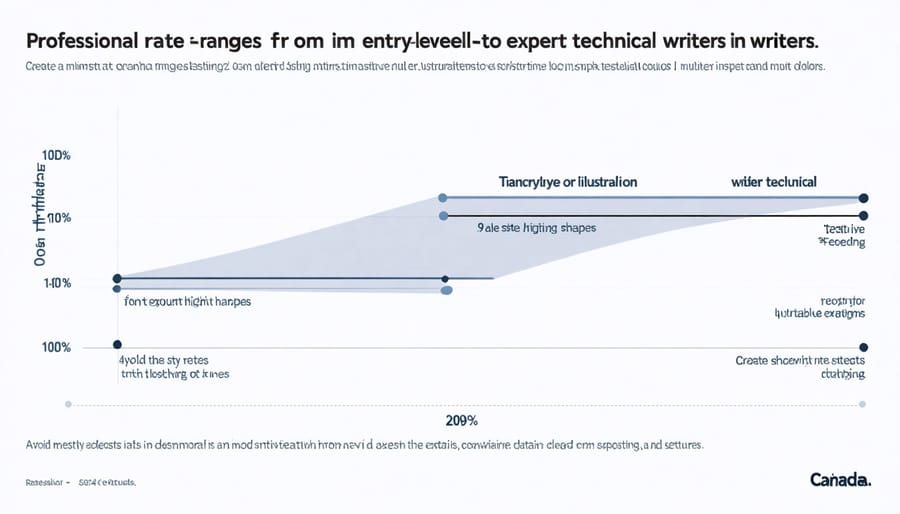
Technical writing rates vary significantly based on experience level, with entry-level writers typically starting at $30-45 per hour in the Canadian market. As you gain experience and develop specialized knowledge, your earning potential increases substantially.
Entry-level technical writers (0-2 years of experience) often begin with rates between $30-45 per hour for contract work, or $45,000-60,000 annually for full-time positions. At this stage, focus on building a strong portfolio and developing expertise in specific industries or technologies.
Mid-level writers (3-5 years) commonly charge $45-75 per hour, reflecting their increased efficiency and deeper understanding of technical documentation. These writers often have established relationships with clients and specialize in particular types of documentation.
Expert technical writers (6+ years) command rates of $75-150+ per hour, with some specialists charging even more. Their premium rates are justified by their ability to handle complex projects independently, mentor junior writers, and deliver high-quality work efficiently.
Remember that these ranges are guidelines rather than strict rules. Your actual rate should consider factors like your specific technical expertise, industry knowledge, and the complexity of projects you handle. Many successful technical writers started at entry-level rates and gradually increased their fees as they gained experience and proved their value to clients.
Project-Based vs. Hourly Rates
When setting your technical writing rates, you’ll typically choose between project-based or hourly pricing. Both models have their advantages, and successful freelancers often use a mix depending on the assignment.
Project-based rates work well for clearly defined deliverables with predictable scope. For instance, if you’re writing a user manual with a set number of pages or documenting a specific software feature, charging a flat rate can benefit both you and your client. This approach rewards efficiency and experience – the faster you work, the higher your effective hourly rate becomes.
Hourly rates, on the other hand, offer protection when project requirements are fluid or unclear. They’re ideal for tasks like reviewing and updating existing documentation, participating in development meetings, or handling ongoing documentation needs. Many Canadian technical writers start with hourly rates while building experience and transition to project-based pricing as they become more efficient.
To determine which model suits your situation, consider:
– Project complexity and scope clarity
– Client’s budget structure and preferences
– Your experience with similar projects
– Time tracking and management capabilities
– Potential for scope changes
Remember, you can always adjust your pricing model as you gain experience. Many successful technical writers maintain flexibility, choosing the most appropriate model for each unique project while ensuring fair compensation for their expertise.
Factors That Justify Higher Rates
Specialized Industry Knowledge
Your expertise in specific technical fields can significantly boost your earning potential as a freelance technical writer. When you can effectively demonstrate your expertise in areas like software development, healthcare, engineering, or financial technology, clients are often willing to pay premium rates for your specialized knowledge.
For instance, technical writers with expertise in artificial intelligence or cybersecurity can command rates 25-40% higher than general technical writers. This premium reflects the value of combining writing skills with deep industry knowledge that typically takes years to develop.
Consider focusing on industries where you have previous work experience or formal education. A background in nursing could make you invaluable for medical device documentation, while experience in IT could position you perfectly for software documentation projects.
Remember that building specialized knowledge is an ongoing process. Stay current with industry trends, attend relevant conferences, and engage with professional communities. This investment in your expertise will consistently translate into higher rates and more valuable client relationships.
Technical Certifications
Professional certifications can significantly boost your earning potential as a technical writer in Canada. Many clients value writers who hold recognized credentials, as they demonstrate a commitment to professional development and expertise in specific areas. Popular certifications include the Society for Technical Communication (STC) certification, API Documentation certification, and various software-specific credentials.
While certifications aren’t mandatory, they can justify higher rates and help you stand out in competitive markets. Technical writers with relevant certifications often command 15-25% higher rates than their non-certified counterparts. For instance, a certified technical writer specializing in medical documentation or software development might charge $75-100 per hour, compared to the standard $50-70 range.
Consider investing in certifications that align with your target industries and clients. Many Canadian technical writers find success by combining general technical writing certifications with specialized credentials in areas like UX writing, DITA, or regulatory compliance. Remember that the return on investment for certifications often comes through higher-paying clients and more specialized projects.
Project Complexity
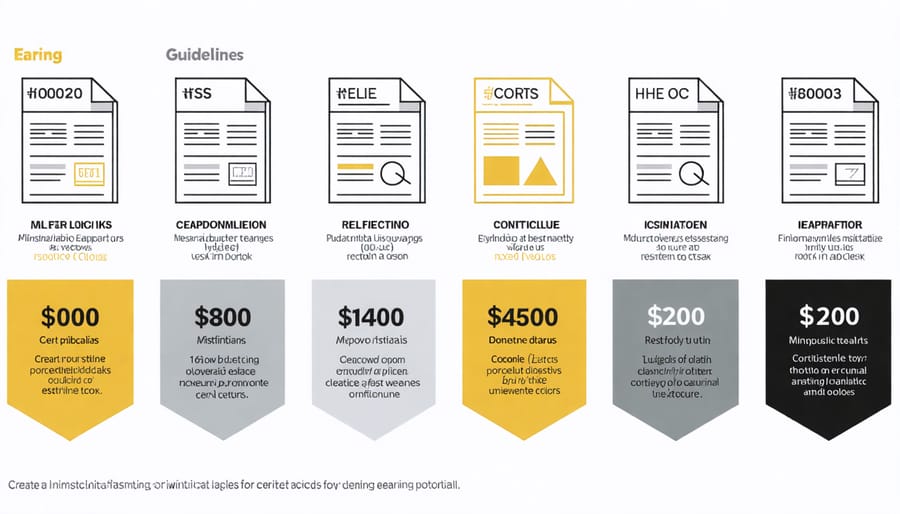
Project complexity significantly impacts your technical writing rates, and it’s essential to adjust your pricing accordingly. When a project requires specialized knowledge, extensive research, or complex technical concepts, you should command higher rates to reflect the additional expertise and time investment required.
For instance, writing user manuals for simple consumer products might fall into a lower pricing tier, while documentation for sophisticated software systems or medical devices would justify premium rates. Consider factors like the technical depth required, the target audience’s expertise level, and the amount of research needed to master the subject matter.
Key complexity factors that warrant higher rates include:
– Multiple stakeholder coordination
– Integration of complex technical specifications
– Need for extensive subject matter expert interviews
– Security or compliance requirements
– Multiple revision cycles
– Creation of detailed diagrams or technical illustrations
– Multiple document formats or delivery platforms
Remember to assess each project’s complexity before quoting rates. A helpful approach is to create a simple complexity scale (1-5) for your projects, with corresponding rate adjustments. For example, a level 1 project might command your base rate, while a level 5 project could justify a 50-100% premium.
Don’t hesitate to discuss complexity factors with potential clients during initial consultations. This transparency helps justify your rates and demonstrates your professional approach to project evaluation.
Calculating Your Base Rate
Determining your base rate as a technical writer doesn’t have to be complicated. Start by calculating your desired annual income, factoring in Canadian living costs and your financial goals. For example, if you’re aiming for $80,000 annually, break this down into monthly and weekly targets.
Next, consider your billable hours realistically. While a standard work year is 2,080 hours, freelancers typically spend about 50-60% of their time on billable work. The rest goes to administrative tasks, marketing, and professional development. If you plan to work 40 hours per week, expect about 20-25 billable hours.
Don’t forget to account for business expenses:
– Software subscriptions
– Computer equipment
– Internet and phone
– Professional development
– Health insurance
– Retirement savings
– Tax obligations
Add a 25-30% buffer to cover these costs. Remember, as a freelancer, you’re responsible for all benefits that would typically be provided by an employer.
To elevate your writing quality and command higher rates, invest in specialized technical knowledge and industry certifications. This investment should be factored into your rate calculations.
Here’s a simple formula:
(Desired Annual Income + Business Expenses) ÷ Annual Billable Hours = Minimum Hourly Rate
For example:
($80,000 + $20,000) ÷ 1,040 billable hours = $96/hour
This becomes your minimum acceptable rate. Remember, this is just your starting point – you can adjust upward based on project complexity, client budget, and market demand. Many successful technical writers in Canada charge between $75-150 per hour, with specialized expertise commanding even higher rates.
Negotiating Higher Rates

Value Proposition
When presenting your rates to potential clients, focus on communicating the value you bring rather than just quoting numbers. Start by highlighting your specific technical writing expertise, industry knowledge, and successful project outcomes. Remember, clients aren’t just paying for words on a page – they’re investing in clear documentation, improved user experience, and potentially reduced support costs.
Create a compelling value statement that emphasizes how your work directly benefits their business. For example, explain how well-written technical documentation can decrease customer support inquiries, speed up employee onboarding, or improve product adoption rates. Share concrete examples from your portfolio that demonstrate these benefits.
Be prepared to explain your process and the deliverables clients can expect. Break down your services into clear components: research time, writing, revisions, formatting, and quality assurance. This transparency helps clients understand what they’re paying for and justifies your rates.
Don’t forget to highlight any specialized skills that set you apart, such as experience with specific software documentation, API writing, or industry certifications. If you have expertise in the client’s industry, emphasize how this knowledge allows you to create more accurate and effective documentation with less oversight.
Remember to remain confident when discussing rates. Your expertise has value, and professional clients understand that quality technical writing is an investment in their business success.
Rate Increase Strategies
Raising rates with existing clients can feel challenging, but it’s a necessary step to advance your freelance career. The key is to approach rate increases strategically and professionally.
Start by documenting your growth and achievements. Keep track of successful projects, positive client feedback, and any additional skills or certifications you’ve acquired. This evidence helps justify your rate increase when you present it to clients.
The best time to discuss rate increases is after completing high-value projects or during annual reviews. Give clients advance notice – ideally 30-60 days before implementing new rates. Send a professional email explaining your rate adjustment, highlighting your value contribution, and expressing appreciation for their continued partnership.
Consider implementing gradual increases rather than dramatic jumps. A 10-15% increase is often more palatable than a 50% jump. For long-term clients, you might offer a stepped increase or grandfather them into new rates over time.
Remember to position your rate increase as an investment in quality. Explain how higher rates allow you to dedicate more time and resources to their projects, ultimately delivering better results. Most clients understand that rates naturally increase with experience and market conditions.
If a client can’t accommodate your new rates, be prepared to either maintain the current rate for a specific period or professionally part ways while offering referrals to other writers.
Setting your freelance technical writing rates doesn’t have to be overwhelming. By understanding market ranges, considering your experience level, and factoring in project complexity, you can confidently price your services in the Canadian market. Remember that rates typically range from $30 to $150 per hour, with most experienced writers charging between $65 and $85 per hour.
Your journey as a technical writer is unique, and your rates should reflect your value proposition. Start by researching current market rates, evaluating your expertise, and considering your target clients’ budgets. Don’t be afraid to adjust your rates as you gain experience and build your portfolio.
Success in freelance technical writing comes from finding the sweet spot between competitive pricing and fair compensation for your skills. Consider starting with slightly lower rates to build your client base, then gradually increase them as you prove your worth. Many successful Canadian technical writers began this way and now command premium rates for their expertise.
Take action today: Review your current rates, assess your skills and experience, and make necessary adjustments. Remember to regularly evaluate and update your pricing strategy as your expertise grows. With determination and proper pricing, you can build a thriving freelance technical writing career in Canada.