

Navigating W-9 forms as a Canadian freelancer doesn’t have to be complicated. When working with US clients, understanding proper W-9 completion protects your income and ensures smooth cross-border tax considerations. As a Canadian business entity, you’ll need to indicate your “Foreign” status clearly on the W-9, use your Canadian tax identification number, and maintain accurate records of all US-sourced income.
Unlike US contractors, Canadian freelancers aren’t subject to US tax withholding when properly completing the W-9. This means you’ll receive full payment from your US clients, but you’re still responsible for reporting this income to the Canada Revenue Agency. The key is marking yourself as “exempt payee” on the form while ensuring your Canadian business information is accurately represented.
Remember, a properly completed W-9 serves as your passport to hassle-free payments from US clients. It establishes your professional credibility and sets the foundation for successful cross-border business relationships. Take time to understand each field on the form – it’s your first step toward building a thriving international freelance career.
Why US Clients Request W-9 Forms
Common Scenarios for Canadian Freelancers
As a Canadian freelancer working with US clients, you’ll likely encounter several situations that require completing a W-9 form. The most common scenario is when you’re signing up with US-based content platforms or freelance marketplaces. These platforms typically request W-9 forms during the onboarding process to properly report your earnings to the IRS.
You might also need to submit a W-9 when working directly with US companies or publications that pay more than $600 in a calendar year. This includes ongoing writing contracts, regular contributor positions, or even one-time projects that exceed this threshold.
Digital marketing agencies and content creation companies based in the US often require W-9 forms before adding Canadian writers to their roster. Similarly, if you’re collaborating with US-based publishing houses or educational institutions on writing projects, they’ll likely request this documentation.
Remember that even for short-term projects, having a completed W-9 ready can help you appear more professional and speed up the hiring process.

Completing the W-9 as a Canadian Business
Key Fields and Information Required
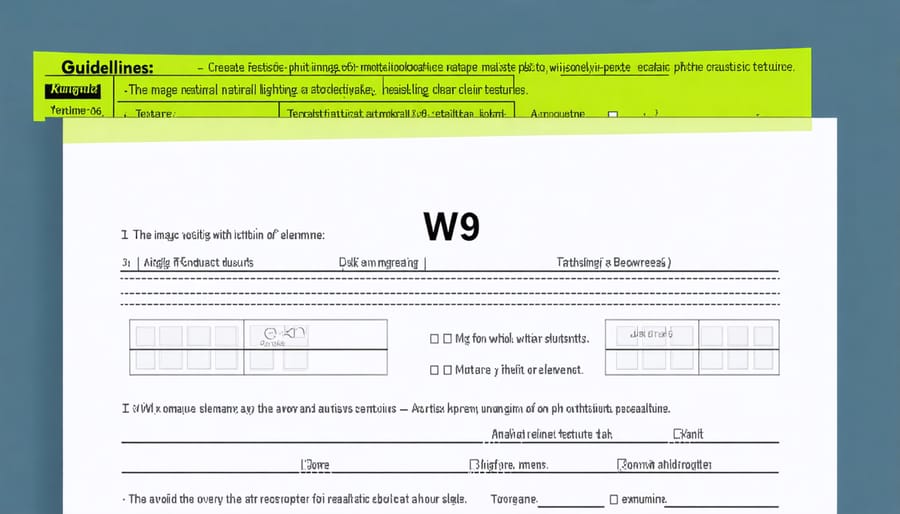
When filling out a W-9 as a Canadian company, you’ll need to pay special attention to several key fields. At the top of the form, enter your business name as it appears on your Canadian tax returns. If you operate under a different trade name, you can include this in the “Business name/disregarded entity name” field.
For the tax classification, most Canadian companies should check the “Foreign company” box. Your Business Number (BN) or Social Insurance Number (SIN) isn’t required here – instead, you’ll need to obtain an Individual Taxpayer Identification Number (ITIN) or Employer Identification Number (EIN) from the IRS.
The address fields should reflect your Canadian business location. Make sure to include your province and postal code. Don’t worry if you don’t have a US address – your Canadian address is perfectly acceptable.
Part I of the form requires your US tax identification number. If you don’t have one yet, write “Applied For” and submit your application for an ITIN or EIN separately.
In Part II, you’ll need to sign and date the form. As a Canadian entity, you’re certifying under penalties of perjury that you’re exempt from backup withholding and reporting. Remember, electronic signatures are usually acceptable unless specifically requested otherwise by your client.
Keep a copy of your completed W-9 for your records – you’ll likely need to reference it for future US clients or tax purposes.
Tax Implications and Considerations
US-Canada Tax Treaty Benefits
Under the US-Canada Tax Treaty, Canadian freelancers can enjoy significant tax benefits when working with US clients. The treaty typically reduces withholding tax rates and helps prevent double taxation on your income. As a Canadian freelancer, you’re eligible for a reduced tax rate of 0% on most independent personal services, meaning you won’t face immediate US tax withholding on your earnings. This benefit applies when you perform your work in Canada and don’t have a fixed base in the US.
To claim these treaty benefits, you’ll need to include “Article VII of the Canada-US Tax Treaty” on your W-9 form. This reference shows your client that you’re exempt from US tax withholding. Remember, while you won’t pay US taxes, you’re still responsible for reporting this income on your Canadian tax return and paying applicable Canadian taxes.
As a Canadian freelancer working with US clients, understanding and properly completing the W-9 form is a crucial step in establishing successful business relationships across the border. Remember to keep copies of all submitted W-9 forms for your records and maintain clear communication with your US clients about tax requirements. Consider consulting with a tax professional who specializes in cross-border taxation to ensure you’re meeting all obligations and maximizing your earnings. With the right approach and documentation, you can confidently pursue opportunities in the US market while staying compliant with both Canadian and US tax regulations. Take action today by preparing your W-9 documentation and expanding your freelance business into the lucrative US market.