

Grab your pen, set your timer for five minutes, and let your thoughts flow freely onto the page without judgment or editing. This simple yet powerful practice of continuous freewriting can transform your freelance writing career from sluggish to spectacular. Whether you’re battling writer’s block, brainstorming fresh ideas for clients, or developing your unique voice, dedicating just 5-10 minutes to unrestricted writing creates a daily pathway to stronger creativity and increased productivity. As a fellow Canadian writer who’s seen freewriting unlock countless writing breakthroughs, I can tell you: this isn’t just another writing exercise – it’s your secret weapon for crushing deadlines, generating brilliant ideas, and building a more sustainable writing business. Ready to unleash your creative potential? Let’s explore how this straightforward technique can revolutionize your writing process and boost your income, starting with today’s freewriting session.
Why Freewriting Matters for Busy Freelancers
Breaking Through Mental Barriers
Freewriting acts as a powerful tool to silence your inner critic and push past those nagging doubts that often hold writers back. By focusing on continuous writing without stopping to edit, you’re training your brain to separate the creation process from the editing phase. This mental shift helps break down the perfectionism that can paralyze your progress and stop you from getting words on the page.
Many writers find that their best ideas emerge when they stop overthinking and just let the words flow. Think of freewriting as a warm-up exercise that helps you build confidence in your natural voice. When you write without judgment for even just 5 minutes, you’ll often surprise yourself with creative connections and authentic expressions that wouldn’t have surfaced if you were trying to craft the perfect sentence.
The key is to embrace the messiness of the first draft and trust that you can refine your work later.
Warming Up Your Creative Engine
Think of freewriting as your morning stretch for the mind. Just as athletes warm up before a big game, writers need to limber up their creative muscles before diving into client projects. By dedicating 5-10 minutes to unrestricted writing, you’re creating a bridge between your cluttered thoughts and your professional work. This practice helps you stay productive and creative throughout your writing sessions.
Start by setting a timer and writing whatever comes to mind. Don’t edit, don’t judge, and definitely don’t stop moving your fingers across the keyboard. This mental warm-up clears away the cobwebs, silences your inner critic, and gets your creative juices flowing naturally. Many successful freelancers swear by this technique as their secret weapon for tackling challenging assignments with confidence and maintaining consistent writing quality throughout the day.
Setting Up Your Freewriting Practice

Creating the Perfect Environment
Creating the perfect freewriting environment starts with eliminating distractions. Find a quiet corner in your home office or a peaceful spot at your local café where you won’t be interrupted. Turn off your phone notifications and close all unnecessary browser tabs – those social media alerts can wait.
Keep your writing tools simple and accessible. Whether you prefer typing on your laptop or writing by hand, ensure everything you need is within reach before you start. Some writers find that using a basic text editor without formatting options helps maintain focus better than feature-rich word processors.
Set the mood with soft background music if it helps you concentrate, but avoid anything with lyrics that might compete for your attention. Natural lighting is ideal, but if you’re writing in the evening, ensure your workspace is well-lit to prevent eye strain.
Remember to have a glass of water nearby and maybe a light snack – hunger can be surprisingly distracting when you’re trying to maintain continuous writing flow.
Tools and Timing
To get the most out of your freewriting sessions, start with the basics: a timer, your preferred writing tool, and a quiet space. While traditional pen and paper work wonderfully, digital tools like Google Docs or Notion can make it easier to save and organize your work. The key is choosing a method that won’t distract you from the flow of writing.
Set your timer for 5-10 minutes – this is long enough to dig deep but short enough to fit into any effective time management strategy. Many writers find that early morning sessions yield the best results, when the mind is fresh and unclouded by the day’s concerns.
Keep your writing tools simple and accessible. Have everything ready before you start – nothing breaks the flow quite like searching for a pen or waiting for your laptop to boot up. Consider creating a dedicated freewriting space, whether it’s a corner of your desk or a favourite spot at your local café.
Making Freewriting Work for Your Business
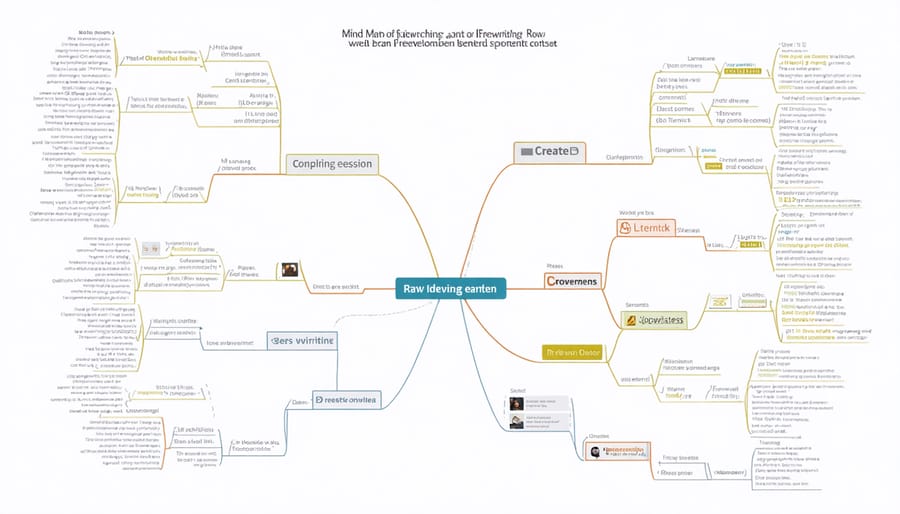
Mining Your Freewriting for Ideas
After completing your freewriting session, take a moment to review your work with fresh eyes. Look for interesting phrases, compelling ideas, or unexpected connections that emerged during your stream of consciousness. Highlight or circle these gems – they often represent your most authentic and creative thoughts.
Create a simple system to organize these discoveries. You might use different colored highlighters to mark potential blog topics, client project ideas, or personal writing projects. Pay special attention to recurring themes or subjects that got you particularly excited while writing.
Don’t dismiss seemingly random thoughts – they can often lead to unique angles for your writing assignments. That unexpected connection between your morning coffee routine and productivity could become an engaging blog post for a lifestyle client.
Consider keeping a dedicated idea journal where you can transfer and expand on the most promising concepts from your freewriting sessions. This creates a valuable resource bank for those times when you need fresh content ideas or inspiration for client projects.
Remember, even fragments of ideas can be valuable. Sometimes the most successful pieces come from combining multiple snippets discovered during different freewriting sessions.
Turning Practice into Profit
Transform your daily freewriting sessions into profitable content by mining them for client-worthy ideas. Start by reviewing your freewriting exercises with a business mindset – those random thoughts could be valuable seeds for blog posts, articles, or social media content. Keep a separate notebook or digital file to track promising concepts that emerge during your sessions.
Many successful freelancers use freewriting to generate multiple content angles from a single topic, helping them build a sustainable writing business. For example, a freewriting session about coffee might spark ideas for articles about coffee culture, home brewing tips, or the environmental impact of coffee production.
Create a simple system to categorize your freewriting revelations into different content types: immediate client pitches, future article ideas, and potential series concepts. Set aside time weekly to refine these raw ideas into polished proposals. Remember to note any unexpected connections or unique perspectives that emerge – these often make the most compelling pitches to clients.
Consider offering freewriting-based brainstorming sessions as a service to clients who struggle with content ideation. This can become a valuable add-on to your regular writing services, setting you apart from other freelancers.
Freewriting for just 5 to 10 minutes daily can transform your freelance writing career, helping you break through creative blocks and tap into your authentic voice. By making this simple practice a regular part of your routine, you’ll develop stronger writing muscles and greater confidence in your abilities. Remember, the key is to keep writing without judgment, letting your thoughts flow freely onto the page. Start small with 5 minutes if you’re new to the practice, and gradually work your way up as you become more comfortable. Whether you’re crafting blog posts, website content, or creative pieces, this fundamental technique will serve you well. Take action today – set your timer, grab your favorite writing tool, and let your creativity soar. Your future clients will thank you for the enhanced quality and authenticity you bring to your work.