

Blockchain technology revolutionizes content security for writers in ways traditional copyright systems never could. By creating an immutable record of your work’s origin and ownership, blockchain empowers creators to protect their intellectual property with military-grade encryption. Think of it as a digital vault that not only stores your content but also creates an unbreakable chain of proof that you’re the original creator.
Like many modern writing tools, blockchain platforms offer user-friendly interfaces that make securing your work as simple as saving a document. Canadian writers and publishers are increasingly turning to this technology, not just for protection, but also for new monetization opportunities through smart contracts and NFTs.
What sets blockchain apart is its decentralized nature – instead of trusting a single authority to protect your work, your content’s security is guaranteed by thousands of independent computers worldwide. This means no single point of failure and no central authority that could compromise your intellectual property rights.
For freelancers concerned about content theft and unauthorized use, blockchain provides peace of mind through transparent, verifiable proof of authorship that stands up in legal disputes.

How Blockchain Makes Your Published Work Tamper-Proof
Digital Fingerprinting Your Content
When you publish your work online, blockchain technology creates a unique digital signature – think of it as your content’s digital fingerprint. This signature is generated using complex mathematical algorithms that consider every word, image, and formatting element in your piece. The result is a one-of-a-kind identifier that’s impossible to duplicate or forge.
What makes this particularly valuable for writers is that once your content is fingerprinted on the blockchain, you have permanent proof of when you published it. If someone copies your work later, you can easily demonstrate that you’re the original creator by comparing the blockchain timestamps and signatures.
The fingerprinting process is automatic and happens in seconds. Your content gets encoded into what’s called a “hash” – a string of characters that serves as your work’s unique identifier. Even changing a single comma in the copied version would create a completely different hash, making it simple to detect unauthorized modifications or plagiarism.
This system gives you peace of mind knowing your creative work is protected with the same technology that secures millions of dollars in cryptocurrency transactions.
Smart Contracts for Rights Management
Smart contracts on the blockchain are revolutionizing how writers protect their publishing rights. Think of these contracts as digital guardians that automatically enforce your content rights without the need for middlemen. When you publish your work using a smart contract, it creates an unbreakable record of your ownership and automatically manages usage permissions.
For freelance writers, this means you can set specific terms for how your content is used. Want to license an article for a one-time use? The smart contract handles that. Need to ensure proper attribution? It’s built right in. The contract can even automatically collect and distribute royalties whenever your work is used.
The best part is that once these terms are set, they’re enforced automatically. If someone tries to use your content without permission, the smart contract prevents unauthorized access. This gives you peace of mind and more time to focus on what you do best – creating great content.
Many writers are already using smart contracts to protect their blog posts, articles, and books. These digital agreements are especially valuable for series writers and those producing regular columns, as they can set up recurring payment structures that work seamlessly.
Real Benefits for Canadian Writers
Proving Original Authorship
For writers looking to establish clear ownership of their work, blockchain technology offers a powerful solution through timestamping and permanent record-keeping. When you publish your work on a blockchain platform, it creates an immutable record of your authorship that can’t be altered or disputed.
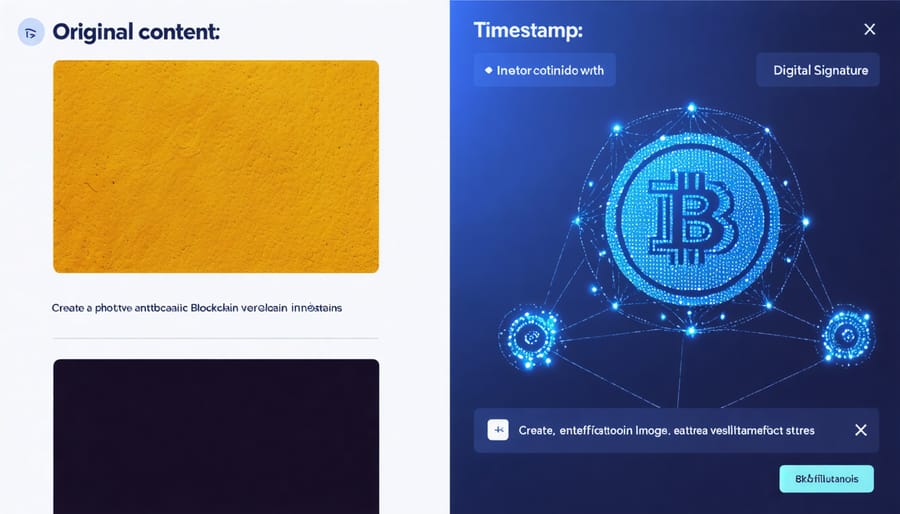
The process is surprisingly straightforward. First, you’ll need to create a digital signature for your work, which acts like a unique fingerprint. This signature is then recorded on the blockchain along with a timestamp, proving you were the first to publish that specific content. Think of it as a digital notary service that’s available 24/7.
Many blockchain platforms now offer user-friendly interfaces where you can upload your work directly. The system automatically generates a certificate of ownership, which includes important details like the date and time of publication, your name, and a unique identifier for your content.
To make your claim even stronger, consider these practical steps:
– Save draft versions of your work with timestamps
– Document your creative process through dated notes or outlines
– Keep correspondence related to the work’s development
– Register your work with traditional copyright offices as a backup
Remember, while blockchain provides strong proof of authorship, it works best as part of a comprehensive strategy to protect your intellectual property. The key is to create multiple touchpoints that verify your ownership, making your claim virtually undisputable.
Tracking Content Usage
Blockchain technology offers powerful tools for tracking how your content moves across the digital landscape. As writers embrace digital content creation, having clear visibility into content usage becomes essential for protecting your work and ensuring proper attribution.
The blockchain creates an immutable record each time your content is accessed, shared, or repurposed. This transparent tracking system lets you monitor where your articles appear, who’s sharing them, and how they’re being used. You’ll receive automatic notifications when someone interacts with your content, giving you peace of mind and control over your intellectual property.
Smart contracts can be programmed to automatically track usage metrics like view counts, sharing statistics, and engagement levels. This data helps you understand how readers interact with your work and identify potential unauthorized use. You can also set up automated systems to flag suspicious activity or unauthorized republishing.
For freelance writers, this level of tracking provides valuable insights into content performance and helps protect against plagiarism. You can easily demonstrate ownership and usage rights when needed, and maintain detailed records of how your work spreads across different platforms and publications. This transparency builds trust with clients while ensuring your creative efforts are properly protected and credited.
The system also enables fair compensation by tracking actual usage and engagement, helping writers receive appropriate payment for their work’s true reach and impact.
Getting Started with Secure Publishing
Choosing the Right Platform
When it comes to securing your written content through blockchain technology, choosing the right platform can transform your freelance workflow and provide peace of mind. Several established platforms cater specifically to writers and content creators, each offering unique features and security levels.
Po.et stands out as a user-friendly option for Canadian writers, providing straightforward content timestamping and ownership verification. It’s particularly suitable for bloggers and journalists who want to protect their articles without diving deep into technical details.
Mirror.xyz has gained popularity among creative writers, offering a clean interface and built-in monetization options. The platform combines content protection with community engagement features, making it ideal for writers building a dedicated readership.
For those seeking maximum security, Ethereum-based platforms like LXDX provide robust protection through smart contracts. While these platforms might require a steeper learning curve, they offer the highest level of content security and verification.
Consider these key factors when choosing your platform:
– Ease of use and interface accessibility
– Cost of publishing and maintaining content
– Integration capabilities with existing publishing tools
– Community support and platform stability
– Available monetization options
Start with a platform that matches your technical comfort level and gradually explore more advanced options as your blockchain publishing experience grows.
Setting Up Your First Secure Publication
Ready to secure your first publication on the blockchain? Let’s walk through this together, step by step. First, you’ll need to create a digital wallet – think of it as your secure virtual briefcase. Popular options like MetaMask or Trust Wallet are great for beginners, and they’re free to set up.
Once your wallet is ready, you’ll need to connect it to a blockchain publishing platform. Platforms like Mirror or IPFS offer user-friendly interfaces perfect for writers. Choose one that feels comfortable for you – there’s no wrong choice here!
Now comes the exciting part: preparing your content. Save your work as a PDF or text file, and generate what’s called a “hash” – a unique digital fingerprint of your work. Most platforms will do this automatically for you. This hash is what proves you’re the original creator.
Next, you’ll “mint” your publication. This means creating a permanent record of your work on the blockchain. You’ll need a small amount of cryptocurrency to cover the transaction fee – usually just a few dollars worth.
Finally, share your publication’s unique blockchain address with your audience. This serves as proof of ownership and timestamp of your work. Remember to keep your wallet credentials safe – they’re the keys to your blockchain kingdom!
The whole process typically takes less than 30 minutes, and once complete, your work is secured forever on the blockchain.
As we’ve explored throughout this article, blockchain security isn’t just another tech buzzword – it’s becoming an essential tool for protecting your creative work in today’s digital publishing landscape. For freelance writers and content creators, understanding and implementing blockchain security measures can mean the difference between vulnerable content and truly protected intellectual property.
The beauty of blockchain in publishing lies in its ability to create an unalterable record of your work while maintaining transparency and authenticity. Whether you’re submitting articles to major publications or self-publishing your content, blockchain technology offers a level of security that traditional copyright methods simply can’t match.
Looking ahead, we can expect blockchain security to become increasingly integrated into standard publishing workflows. Early adopters who embrace this technology now will find themselves better positioned to protect their work and potentially tap into new revenue streams through secure content distribution.
Remember, you don’t need to be a tech expert to benefit from blockchain security. Start small by exploring basic blockchain platforms designed for creative content, and gradually build your understanding as the technology evolves. The investment in learning about and implementing blockchain security today will pay dividends in protecting your creative future.
By securing your work through blockchain technology, you’re not just protecting your content – you’re investing in the future of digital publishing and taking control of your creative legacy.