

Transform your freelance writing income into smart tax advantages by learning to maximize your tax savings. As a Canadian writer, every dollar you claim correctly means more money staying in your business and supporting your creative journey.
Track your home office expenses meticulously – from that dedicated writing corner to the percentage of utilities powering your laptop during work hours. Your internet connection, professional software subscriptions, and even that ergonomic chair are potential deductions waiting to boost your bottom line.
Professional development investments pack a powerful tax punch. Writing workshops, industry conferences, reference materials, and subscriptions to writing platforms all qualify as legitimate business expenses. Even those coffee shop work sessions can count when meeting clients or conducting research.
The digital tools driving your success – from grammar checkers to project management software – deserve special attention on your tax forms. Canadian tax laws specifically recognize these modern business necessities, making them valuable deductions for tech-savvy freelancers ready to grow their writing enterprises.
Stay ahead of the game by organizing receipts monthly rather than scrambling at tax time. Smart documentation today means stress-free filing tomorrow and more resources to fuel your writing career.
Home Office Expenses That Actually Count

Calculate Your Workspace Percentage
Calculating your workspace percentage is simpler than you might think! Start by measuring your dedicated work area – this could be your home office, a corner of your living room, or any space you use regularly for your freelance writing business.
To get your percentage, divide your workspace area by your home’s total square footage and multiply by 100. For example, if your home office is 120 square feet and your entire home is 1,200 square feet, your workspace percentage would be 10%.
Remember, the space must be used primarily for business purposes. If you’re writing at your kitchen table, you can only claim the hours when you’re actually working there. Keep a log of your work hours to support your claim.
Pro tip: Take photos of your workspace and keep them with your tax records. Also, create a simple floor plan showing your work area’s measurements. These documents can be helpful if the CRA ever reviews your claim.
Be realistic with your calculations – claiming an unusually high percentage might raise red flags. Most home-based freelancers typically claim between 10% and 25% of their home’s space.
Eligible Home Office Costs
Working from home comes with some excellent tax advantages for Canadian freelance writers. You can claim a portion of your home expenses if you use a dedicated space for your writing business. This includes a percentage of your rent or mortgage interest, property taxes, home insurance, and utilities (heating, electricity, and water).
To calculate your eligible expenses, measure your home office area and divide it by your home’s total living space. This percentage determines how much of each expense you can claim. For example, if your office takes up 10% of your home, you can claim 10% of these costs.
Here’s what you can typically deduct:
– A portion of your rent or mortgage interest
– Property taxes and home insurance
– Utilities (electricity, heating, water)
– Internet and phone services
– Minor repairs and maintenance
– Home office furniture and equipment
Remember that these deductions are subject to GST/HST considerations and must be reasonable. Keep detailed records of all expenses and maintain a floor plan showing your workspace dimensions. If you’re using a shared space (like a dining room table), you can only claim expenses for the hours you use it for business.
Pro tip: Create a simple spreadsheet to track these expenses monthly. This makes tax time much easier and helps ensure you’re maximizing your eligible deductions while staying compliant with CRA requirements.
Writing Tools and Resources You Can Deduct

Technology and Software
As a freelance writer, your tech tools are essential business expenses that you can claim on your taxes. The Canada Revenue Agency (CRA) recognizes that modern freelancers need various digital resources to operate effectively.
Your computer equipment, including laptops, desktop computers, tablets, and external hardware like monitors and keyboards, are all deductible. Remember to keep your receipts and calculate the percentage of business use if you also use these devices personally.
Software subscriptions are another significant deduction category. This includes:
– Writing and editing software (Scrivener, Grammarly Premium)
– Project management tools (Asana, Trello)
– Cloud storage services (Dropbox, Google Drive)
– Video conferencing platforms (Zoom, Skype)
– Accounting software (QuickBooks, FreshBooks)
Don’t forget about your website expenses. Domain registration, hosting fees, and website builder subscriptions are all tax-deductible when used for your freelance business.
Digital tools that enhance your productivity can also be claimed, such as:
– Time-tracking applications
– Invoice generation software
– Social media management tools
– Research and reference software
– Online course platforms for professional development
Pro tip: Create a spreadsheet to track your monthly software subscriptions and tech purchases. This makes tax time much easier and ensures you don’t miss any eligible deductions. Remember that items over $500 may need to be depreciated over several years according to CRA guidelines.
Professional Development
Investing in your professional growth isn’t just good for your career – it can also help reduce your tax bill! As a freelance writer, you can claim various educational expenses that enhance your writing skills and business knowledge.
Writing courses and workshops are fully deductible when they directly relate to your freelance writing business. Whether you’re taking an online course on SEO writing, attending a workshop on crafting compelling headlines, or participating in a conference about business writing, these expenses can be claimed on your tax return.
Reference materials are another valuable deduction. This includes writing style guides, industry-specific books, grammar manuals, and digital subscriptions to writing resources. Even specialized software like writing tools, grammar checkers, or research databases can qualify if they’re essential for your work.
Professional memberships also count! Dues paid to writing associations, journalism societies, or industry organizations are tax-deductible. These memberships often provide valuable networking opportunities and resources that help you grow your business.
Remember to keep detailed records of all your professional development expenses. Save receipts, course completion certificates, and payment confirmations. It’s helpful to note how each investment relates to your writing business – this makes it easier to justify the deduction if the CRA asks questions.
Consider setting aside a portion of your income specifically for professional development. Not only will it make you a stronger writer, but it’ll also help reduce your taxable income while investing in your future success.
Marketing and Networking Deductions
Website and Portfolio Costs
As a freelance writer, your online presence is a crucial business expense that can lower your tax bill. The costs of maintaining a professional website, portfolio, or blog are legitimate deductions in Canada. This includes your domain name registration, web hosting fees, website maintenance costs, and even professional website design services.
Don’t forget about digital portfolio platforms! If you pay for premium subscriptions to portfolio hosting sites or online writing showcase platforms, these expenses are tax-deductible. The same applies to content management systems and website builders that help you display your work professionally.
For writers working with international clients, having a strong online presence is especially important. Understanding the cross-border income tax implications of maintaining different versions of your website for various markets can help you maximize your deductions.
Keep detailed records of all website-related expenses, including receipts for themes, plugins, security features, and backup services. If you hire professionals for website maintenance or updates, their fees are also deductible. Remember to save invoices and document how these expenses contribute to your freelance writing business.
Networking Events and Memberships
Networking events and professional memberships can be valuable tax deductions for Canadian freelance writers. When you attend writing conferences, workshops, or industry meetups, you can typically deduct registration fees, travel costs, and accommodation expenses if they’re directly related to your freelance business.
Professional association memberships, such as those with the Professional Writers Association of Canada (PWAC) or the Canadian Authors Association (CAA), are fully deductible. These memberships often provide valuable networking opportunities and resources that help grow your business.
Keep in mind that social events or general-interest gatherings usually don’t qualify for tax deductions. The key is demonstrating that these expenses are necessary for maintaining or growing your freelance writing business. For example, attending a local writers’ conference where you meet potential clients would qualify, but a casual coffee meetup with fellow writers might not.
Remember to keep detailed records of all event-related expenses, including receipts, registration confirmations, and meeting notes. It’s also helpful to document how each event or membership contributes to your professional development or business growth.
Record-Keeping Made Simple
Essential Documents to Keep
Keeping detailed records is crucial for maximizing your tax deductions as a freelance writer. Start by maintaining a dedicated filing system for all your financial documents. Essential items to preserve include your proper invoice documentation, bank statements, and credit card receipts related to your writing business.
Create digital copies of all receipts for office supplies, software subscriptions, and professional development materials. Store receipts for writing-related travel expenses, including conferences and client meetings. Don’t forget to keep records of your home office expenses, such as utility bills, rent or mortgage statements, and maintenance costs.
Track your vehicle expenses with a detailed logbook if you use your car for business purposes. Save documentation for professional memberships, writing association dues, and insurance payments. Keep contracts and correspondence with clients that support your business relationships and income claims.
Organize these documents by tax year and category for easy reference during tax season. The Canada Revenue Agency (CRA) requires you to maintain records for six years from the end of the last tax year they relate to, so develop a system that works for long-term storage while keeping current documents easily accessible.
Digital Organization Tips
Staying organized throughout the year can save you countless hours during tax season. Start by creating a dedicated digital folder structure on your computer with clear categories like “Client Invoices,” “Equipment Receipts,” and “Home Office Expenses.” Use cloud storage services like Google Drive or Dropbox to ensure your documents are safely backed up.
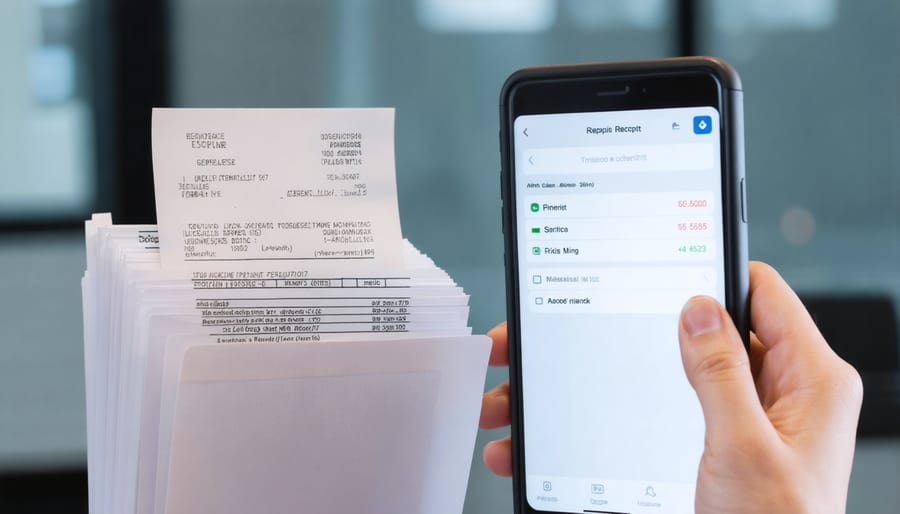
Consider using expense-tracking apps designed for freelancers – many offer features like receipt scanning and automatic expense categorization. Apps like Wave or FreshBooks can help you snap photos of receipts on the go, eliminating the need to keep paper copies.
Set up a simple spreadsheet to track your income and expenses monthly. Include columns for date, description, amount, and tax category. This makes it easier to spot patterns in your spending and identify potential deductions you might have missed.
Make it a habit to process receipts weekly rather than letting them pile up. Take 15 minutes every Friday to scan receipts, update your tracking spreadsheet, and file digital copies in your organized folder system. Remember to keep all tax-related documents for at least six years, as required by the CRA.
Consider using separate credit cards for personal and business expenses to simplify tracking and reduce the risk of missing deductible expenses.
As we’ve explored throughout this guide, maximizing your tax deductions as a Canadian freelance writer isn’t just about saving money – it’s about investing in your professional growth and financial security. Remember that every legitimate expense you track and claim helps build a stronger, more sustainable writing business.
Keep your receipts organized, maintain detailed records, and consider using accounting software to make tax season less stressful. Whether it’s your home office space, professional development courses, or that essential new laptop, these deductions can significantly reduce your taxable income and help you reinvest in your career.
Don’t let the complexity of tax regulations intimidate you. Start implementing good record-keeping habits today, and you’ll thank yourself when tax season arrives. Consider consulting with a tax professional who understands the unique needs of freelance writers – their expertise can often pay for itself through optimized deductions and peace of mind.
As your freelance writing business grows, your understanding of tax deductions should evolve too. Stay informed about changes in tax laws, network with other writers to share best practices, and regularly review your expense categories to ensure you’re not missing any legitimate deductions.
Remember, successful freelance writers aren’t just great at their craft – they’re also savvy business owners who understand the importance of proper tax planning. Here’s to your continued success in both your creative and financial endeavors!