

Yes, “eco-friendly” requires a hyphen when it appears before a noun as a compound modifier (like “eco-friendly practices”), but the hyphen disappears when it stands alone after a verb (as in “these practices are eco friendly”). This simple punctuation rule matters more than you might think for your freelance writing career. Getting it right signals professionalism to editors and clients, while mistakes can cost you assignments in competitive markets.
Understanding hyphenation rules protects your credibility as a Canadian freelance writer. When you consistently apply proper grammar, you build trust with clients who need writers they can rely on without heavy editing. This becomes especially important when pitching to environmentally conscious organizations and green businesses—a growing sector that values both linguistic precision and sustainability values.
The connection between correct grammar and environmental responsibility extends beyond word choice. Implementing eco-friendly editing techniques in your writing practice demonstrates attention to detail while reducing your environmental footprint. Writers who master these fundamentals position themselves as reliable professionals who understand both language mechanics and contemporary values.
Whether you’re crafting website copy for a solar company or writing blog posts about sustainable living, knowing when to hyphenate compound modifiers like “eco-friendly” separates amateur writers from professionals. This small detail can make the difference between landing a long-term client and watching opportunities go to writers who’ve mastered the fundamentals.
The Quick Answer: Is Eco-Friendly Hyphenated?
Here’s the good news: you’ve got this, and the rule is simpler than you might think. Yes, “eco-friendly” is typically hyphenated, but the context matters more than you’d expect.
When “eco-friendly” appears before a noun (as a compound adjective), you’ll want to use that hyphen. Think of phrases like “eco-friendly products,” “eco-friendly practices,” or “eco-friendly packaging.” The hyphen connects the two words, showing they work together as a single descriptive unit. This makes your writing clearer and more professional—something every client appreciates.
However, when “eco-friendly” comes after the verb “to be” or appears in a predicative position, the hyphen becomes optional. For example, “These products are eco-friendly” works just fine, though “eco friendly” without the hyphen is also grammatically acceptable in this position. Many style guides and professional writers still prefer keeping the hyphen for consistency, and that’s a smart choice for your freelance work.
Here’s a practical tip for your writing projects: when in doubt, use the hyphen. It’s never wrong, and it demonstrates attention to detail—a quality that sets successful freelance writers apart. Your clients will notice your consistency, even if they can’t articulate why your copy reads so smoothly.
Think of this as one of those small grammar choices that builds your professional credibility. Just like choosing Canadian spelling conventions for local clients or adjusting your tone for different audiences, knowing when to hyphenate compound adjectives shows you’re a careful, knowledgeable writer. This expertise helps you stand out in competitive job markets and command better rates for your services.
Why This Small Detail Can Make or Break Your Credibility
As a freelance writer or editor, you might wonder if something as small as a hyphen really matters. The honest answer? It absolutely does. When you consistently apply correct hyphenation rules like the one for “eco-friendly,” you’re demonstrating your command of professional writing standards. Clients notice these details, even if they can’t always articulate why your work feels more polished than another writer’s.
Think about it from a client’s perspective. They’re trusting you to represent their brand through words. If you’re inconsistent with basic punctuation rules, they’ll question what else might slip through the cracks. On the flip side, when you nail these details every single time, you’re building a reputation as someone who cares about quality.
One successful freelancer from Toronto shared that she landed a major sustainability consulting contract specifically because her writing samples showed meticulous attention to industry-specific terminology and proper hyphenation. The client mentioned it during their first meeting, noting that most applicants had been sloppy with compound modifiers throughout their portfolios.
This precision becomes especially important when you’re working in specialized niches like environmental writing, where terms like “eco-friendly” appear frequently. Your consistency signals expertise in the field. It shows you’re not just stringing words together but genuinely understand the conventions of professional communication.
The bottom line: these small details separate hobbyists from professionals. They’re your calling card, proving you’re worth every dollar of your freelance rate.
Eco-Friendly Editing Techniques That Freelance Writers Should Know
Digital-First Editing Tools
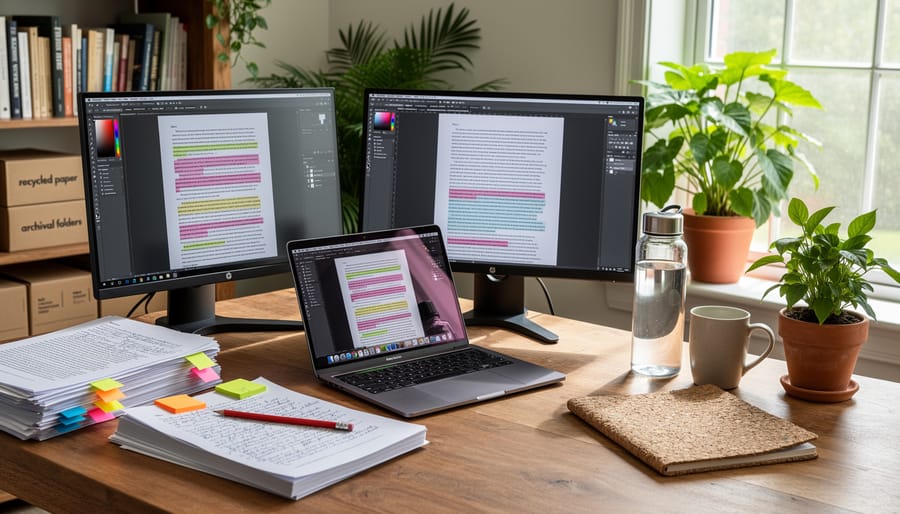
As a freelance writer, you’ve likely debated whether to print that manuscript for one final review. Here’s the good news: you can skip the printer entirely and embrace digital-first editing tools that are better for the planet and your productivity.
Cloud-based platforms like Google Docs, Microsoft 365, and Grammarly offer robust editing features that eliminate the need for paper. These tools provide real-time collaboration, allowing you to work seamlessly with clients and editors from anywhere in Canada. Track changes features let you see every revision, comment directly on specific passages, and maintain a complete editing history—all without a single printed page.
The collaborative benefits extend beyond environmental impact. Many Canadian freelancers report faster turnaround times and improved client relationships when using these digital tools. Toronto-based copywriter Sarah Chen shared that switching to cloud-based editing cut her revision time in half while saving approximately 5,000 sheets of paper annually. Vancouver’s Marcus Johnson noted that clients appreciate the transparency of seeing edits in real-time, which has helped him secure more long-term contracts.
These platforms also offer accessibility features that make your work more inclusive, from text-to-speech options to adjustable font sizes. Plus, automatic saving means you’ll never lose work to a coffee spill or power outage—a common hazard with paper drafts.
The best part? Most digital editing tools offer free versions that provide everything a freelance writer needs to get started. As you build your career, you’re simultaneously reducing your environmental footprint—a selling point that resonates with eco-conscious clients across Canada.

Reducing Your Digital Carbon Footprint
As freelance writers, we often focus on the environmental impact of physical materials while overlooking our digital carbon footprint. The good news? Small changes in how you manage your writing projects can make a meaningful difference while boosting your productivity.
Start by organizing your files efficiently. Instead of saving multiple draft versions that clog cloud storage and consume energy, use version control or track changes within a single document. Delete outdated files regularly—those forgotten drafts from 2019 are still drawing power in data centers somewhere.
Email can be surprisingly energy-intensive. Before sending that quick “thanks” message, consider if it’s necessary. Batch your communications when possible, and unsubscribe from newsletters you never read. When sharing large documents with clients, use file-sharing links that expire rather than keeping files permanently stored in multiple inboxes.
Optimize your workflow by closing unused browser tabs and applications. Each open program consumes energy, even when idle. Consider working offline when you don’t need internet access—your laptop battery will thank you, and you’ll reduce server load.
One inspiring success story comes from Toronto-based freelancer Maria Chen, who reduced her monthly cloud storage by 60 percent simply by implementing a quarterly file cleanup routine. She reports feeling more organized and knowing her streamlined digital workspace is lighter on the planet makes her daily work more rewarding.
These small steps add up, creating a more sustainable writing practice that benefits both your business and the environment.

When Print Is Necessary: Sustainable Choices
Even as we embrace digital workflows, some writing projects still require physical copies—client proofs, portfolio samples, or submissions to publications that prefer hard copies. When print is truly necessary, making thoughtful choices demonstrates your commitment to environmental responsibility while maintaining professional standards.
Start by selecting recycled paper with high post-consumer content. Many Canadian suppliers now offer 100% recycled options that look and feel just as professional as virgin paper. You’ll find these sustainable printing choices often cost the same or less than conventional alternatives, especially when purchased in reasonable quantities.
Seek out print shops that prioritize eco-conscious practices. Look for businesses using vegetable-based inks, energy-efficient equipment, and offering carbon-neutral printing services. Many local printers advertise their green certifications, making them easy to identify. Supporting these businesses strengthens your community while reducing environmental impact.
Before hitting print, take a moment to minimize waste. Print double-sided whenever possible, adjust margins to fit more content per page, and carefully proofread on screen first to avoid reprints. Consider printing drafts in “draft mode” to conserve ink, saving higher quality settings for final versions only.
One freelancer shared how switching to an eco-friendly print shop actually helped her land a major contract with an environmental nonprofit. The client noticed her recycled paper business cards and appreciated her authentic commitment to sustainability—it became a conversation starter that set her apart from other candidates.
These small adjustments add up over time, reducing both your environmental footprint and printing costs. You’re building a more sustainable writing practice while demonstrating the same attention to detail and professionalism that makes you successful in your craft.
Common Hyphenation Mistakes Freelance Writers Make
You’re not alone if you’ve second-guessed yourself while hyphenating compound modifiers. Even experienced writers sometimes pause before hitting that hyphen key. The good news? Once you understand the pattern, these decisions become second nature.
Beyond eco-friendly, here are other compound modifiers that frequently trip writers up:
Time-based terms often cause confusion. “Long-term investment” needs a hyphen when it comes before a noun, but “the investment is long term” doesn’t. Similarly, “full-time position” requires the hyphen, while “she works full time” stands alone. Canadian writers can feel confident applying this same rule consistently across their projects.
Colour-related compounds follow the pattern too. “Blue-green algae” uses a hyphen, but “the algae is blue green” doesn’t need one. This applies whether you’re writing “high-quality content” or “well-known author”—the hyphen appears before the noun.
Number combinations deserve attention as well. “Twenty-first century technology” needs that hyphen to show the numbers work together, and “client-focused approach” connects the modifier to what follows.
Here’s an encouraging tip: if you can insert “and” between the two words and it makes sense, you probably don’t need a hyphen. But if the words work as a single unit to describe what comes next, connect them.
Remember, making these mistakes is part of your growth journey as a writer. Every professional has been there. The writers who succeed aren’t the ones who never make errors—they’re the ones who learn the patterns and keep improving. Each article you write strengthens your instincts, making you more valuable to clients who appreciate precision and professionalism in their content.
How Mastering These Details Opens Doors
Getting these grammatical details right isn’t just about following rules—it genuinely impacts your freelance writing career. Writers who demonstrate consistent attention to style conventions like proper hyphenation often land higher-paying editing positions and attract clients who value quality. When you nail the small stuff, clients notice, and they come back.
Take Sarah Chen, a Toronto-based freelancer who built her entire niche around eco-conscious content. She started noticing that many sustainability-focused businesses needed writers who understood both environmental topics and proper style. “I made it a point to master the grammar and style conventions specific to environmental writing,” she explains. “Knowing when to hyphenate terms like eco-friendly became second nature, and clients started seeing me as the detail-oriented professional they needed.”
Within eighteen months, Sarah doubled her rates and now works exclusively with eco-conscious brands who appreciate her precision. Her attention to grammatical accuracy opened doors to corporate sustainability reports, green marketing campaigns, and educational content development—all premium-paying opportunities.
The reality is straightforward: clients investing in sustainability messaging want writers who reflect their commitment to excellence. When your writing shows care in every detail, from hyphenation to word choice, you signal that you’re someone who takes pride in their craft. This reputation becomes your competitive advantage, leading to steady work, referrals, and the freedom to be selective about projects. Mastering these seemingly small details creates big career opportunities.
Mastering grammatical precision—like knowing that “eco-friendly” takes a hyphen when used as an adjective before a noun—might seem like a small detail, but it’s these details that separate professional writers from amateurs. When you consistently apply proper hyphenation rules, you demonstrate the expertise and attention to detail that Canadian clients value and are willing to pay premium rates for.
But here’s the exciting part: you don’t have to choose between being a grammar expert and embracing sustainability. As we’ve explored throughout this article, eco-friendly editing techniques complement your grammatical skills beautifully. By reducing your digital footprint through mindful document management, using energy-efficient devices, and adopting paperless workflows, you’re building a writing career that’s both professionally excellent and environmentally responsible.
Think of it this way—every time you apply correct hyphenation to “eco-friendly” in your client work, you’re also reminding yourself of your commitment to sustainable practices. It’s a perfect synergy that positions you as a forward-thinking professional in Canada’s competitive freelance market.
Ready to take action? Start today by reviewing your style guide knowledge, optimizing your workspace for energy efficiency, and marketing yourself as a writer who values both precision and sustainability. These aren’t just buzzwords—they’re the foundation of a successful, meaningful freelance writing career. Your clients, your community, and our planet will thank you for it.