

Master Zotero’s annotated bibliography feature by installing the free software from zotero.org, then adding sources directly from your browser using the Zotero Connector extension. Create a new collection for your project, drag relevant sources into it, and right-click each entry to add notes that summarize key arguments, evaluate source credibility, and explain how the work relates to your research question. Generate your annotated bibliography automatically by selecting your preferred citation style (APA, MLA, Chicago) in Zotero’s settings, then use the “Create Bibliography from Collection” option to export perfectly formatted entries with your annotations intact.
This skill transforms you into a more efficient, professional writer who delivers accurate, well-researched work to clients. Canadian freelancers who master reference management tools like Zotero consistently land higher-paying academic writing contracts because they demonstrate attention to detail and scholarly rigor. The ethical advantage is clear: proper citation management prevents accidental plagiarism, protects your professional reputation, and builds trust with clients who value integrity. Whether you’re writing literature reviews, research reports, or academic articles, Zotero streamlines the tedious work of tracking sources while ensuring every borrowed idea receives proper credit.
What Makes an Annotated Bibliography Ethical?

The Three Pillars of Ethical Annotation
When you’re building annotated bibliographies in Zotero, three core principles keep your work ethically sound and professionally credible. Think of these as your foundation for success in academic and freelance writing projects.
Accuracy means representing sources truthfully. When you summarize an article or book in Zotero, capture what the author actually said, not what you wished they’d written. Double-check quotations, verify publication details, and ensure your annotations reflect the source’s genuine argument. This matters enormously for freelance writers because clients rely on your research integrity. One successful freelancer shared how her reputation grew simply by being known for meticulous, accurate citations that editors could trust without hesitation.
Honesty requires acknowledging the limitations of sources and your own understanding. If a study has methodological flaws, note them. If you’re uncertain about interpreting complex research, say so in your annotation rather than pretending expertise. This transparency actually strengthens your credibility with clients and colleagues who appreciate writers who know their boundaries.
Transparency involves clear attribution and avoiding any hint of plagiarism. When you craft annotations in Zotero, distinguish between the author’s ideas and your analysis. Use quotation marks for direct language from sources, and make your evaluative comments obviously yours. For freelancers building long-term client relationships, this honesty becomes your calling card. Academic institutions and publications remember writers who demonstrate consistent ethical practices, often leading to repeat contracts and referrals that sustain your freelance career.
Common Ethical Pitfalls Writers Face
Even with powerful tools like Zotero at your fingertips, it’s surprisingly easy to stumble into ethical mistakes that can harm your professional reputation. One common pitfall is misrepresenting what a source actually says. When you’re rushing through annotations, you might accidentally overstate a finding or twist an author’s argument to better fit your narrative. This happens more often than you’d think, especially when managing dozens of sources.
Another mistake involves copying annotations from existing bibliographies or online summaries instead of creating your own. While it might save time initially, this practice constitutes plagiarism and can seriously damage your credibility. Remember, your unique perspective and analytical voice are what make your work valuable to clients.
Some writers also fall into the trap of inflating source credibility, citing outdated studies or questionable websites as authoritative simply because they support their argument. These poor citation practices can undermine your entire project.
The good news? Awareness is your first defence. By recognizing these common pitfalls, you’re already taking important steps toward maintaining the high ethical standards that will set you apart in the competitive freelance writing market.
How Zotero Supports Ethical Bibliography Practices
Automatic Citation Accuracy
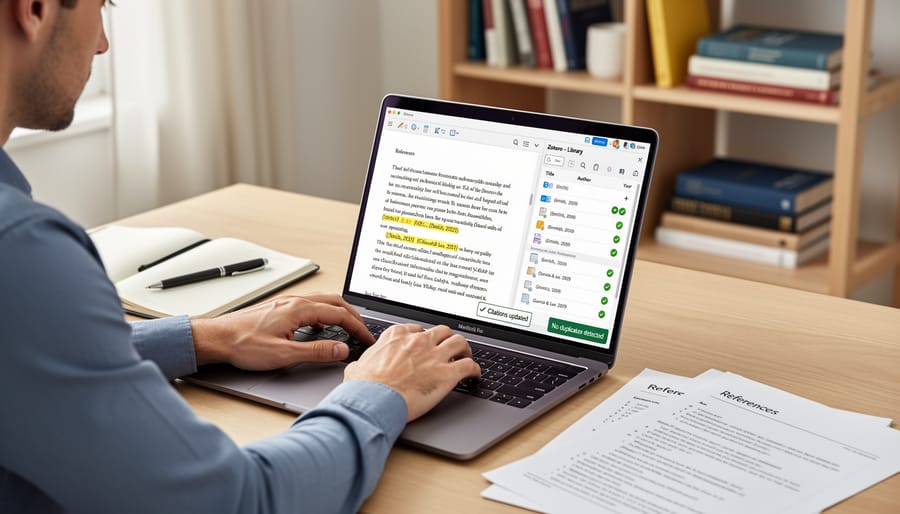
One of Zotero’s most valuable features for freelance writers is its ability to eliminate common citation mistakes that could harm your professional reputation. When you’re juggling multiple client projects or working on deadline, manual citation formatting becomes a recipe for errors. Zotero automatically generates accurate citations in over 10,000 different styles, from APA to Chicago to MLA, ensuring your references match your client’s or publication’s requirements perfectly every time.
This precision protects you from unintentional plagiarism and misattribution, both serious concerns that can damage your credibility as a writer. Even experienced freelancers can accidentally transpose a page number or forget a publisher’s name when citing sources manually. Zotero pulls this information directly from your saved sources, maintaining consistency throughout your document.
For writers building long-term client relationships, this reliability matters tremendously. Editors notice attention to detail, and consistently accurate citations demonstrate professionalism. Many successful freelancers report that their careful source management helped them secure ongoing contracts with academic publishers and research organizations. By letting Zotero handle the technical precision of citations, you free up mental energy to focus on crafting compelling content while maintaining the ethical standards that keep your writing career thriving.
Source Organization and Transparency
Maintaining transparency in your research isn’t just about academic integrity—it’s about building your reputation as a trustworthy freelance writer. Zotero makes this easier through its organizational features that create clear, traceable research paths.
Start by using Zotero’s folder system to organize sources by project or topic. This simple step helps you quickly locate materials and demonstrate where your information comes from. The tagging feature lets you label sources with keywords like “verified,” “needs checking,” or “primary source,” making it easy to track the reliability of each reference at a glance.
Zotero’s notes function is particularly valuable for honest scholarship. Attach notes to each source documenting where you found it, why it’s relevant, and any concerns about bias or credibility. This creates a transparent trail that protects you if questions arise about your research.
One freelance writer shared how this system saved her career when a client questioned a fact. She quickly pulled up her Zotero library, showing the original source, her verification notes, and cross-references—turning a potential problem into proof of her thoroughness.
By keeping detailed records in Zotero, you’re not just organizing sources—you’re building evidence of your professional standards, which clients increasingly value in today’s information-saturated market.
Version Control for Annotations
One of Zotero’s most valuable features for maintaining ethical research practices is its ability to preserve your intellectual journey. When you add annotations, notes, and summaries directly within Zotero, you’re creating a timestamped record of how your understanding evolved over time. This becomes especially important if questions arise about your work or if you need to revisit your research months later.
Think of your Zotero library as a professional research diary. Each note documents when you encountered a source, what you thought was significant, and how you interpreted the information. This transparency protects you from unintentional plagiarism because you can always trace back to see where specific ideas originated. For freelance writers juggling multiple projects, this organizational approach prevents the nightmare of mixing up sources between different assignments.
Your annotated bibliography becomes more than just a list—it’s proof of your due diligence and critical thinking process. This documentation can strengthen your credibility with clients and editors who value thorough research practices.
Creating Ethically Sound Annotations with Zotero
Evaluating Sources Honestly
When you’re building your annotated bibliography in Zotero, honest source evaluation protects your professional reputation. Start by asking yourself key questions: Is this source current and relevant? Who’s the author, and what are their credentials? Does the publication have editorial standards?
Record your honest assessment in Zotero’s notes field. If a source has limitations, acknowledge them. Maybe the study is from 2010 and newer research exists, or perhaps the author has a clear bias. Writing this down helps you use sources appropriately and shows clients or editors that you’re thorough.
Create a simple rating system that works for you. Some freelance writers use categories like “highly credible,” “useful but limited,” or “questionable—verify elsewhere.” This approach has helped countless writers avoid embarrassing mistakes in their work.
Remember, evaluating sources honestly isn’t about finding perfect materials. It’s about understanding what you’re working with and representing it accurately. Canadian freelancer Sarah M. shared that transparent source assessment actually won her more contracts because editors trusted her judgment. When you’re upfront about source quality in your annotations, you demonstrate the professional integrity that separates successful writers from the rest.
Writing Original Summaries
One of the most valuable skills for freelance writers is writing original summaries that demonstrate you’ve truly engaged with your sources. Zotero makes this easier by helping you organize your thoughts alongside your research materials.
When creating annotations in Zotero, resist the temptation to copy and paste chunks of text. Instead, read the source thoroughly, close it, and write what you understood in your own words. This approach not only keeps you ethical but also helps you internalize the information better.
Use Zotero’s note feature strategically by creating separate notes for different purposes. Keep one note for your original summary and another specifically labeled for direct quotes you might use later. This separation ensures you’ll never accidentally plagiarize by mixing up your words with the author’s.
Many successful freelance writers report that this practice of summarizing sources strengthens their writing portfolio. It shows clients you can synthesize complex information clearly, a skill that’s incredibly valuable in content writing, technical writing, and journalism. By developing strong summarizing habits now, you’re building a foundation for a trustworthy professional reputation.
Why Ethical Bibliographies Matter for Your Freelance Career
As a freelance writer, your reputation is everything. When you maintain strong ethical standards in your bibliographic work—whether you’re using Zotero or any other tool—you’re building something valuable that extends far beyond a single project.
Think of ethical bibliographies as your professional foundation. When clients see that you’re meticulous about attribution and honest about your sources, they trust you with bigger, more complex assignments. Academic institutions and educational publishers, in particular, need writers who understand proper citation practices. These opportunities often pay well and provide steady, long-term work. By demonstrating your commitment to research ethics, you position yourself as a reliable partner for these premium clients.
The writing world is surprisingly small, especially in Canada. Editors talk to each other, and clients share recommendations. One plagiarism incident or sloppy citation can follow you for years, closing doors you didn’t even know existed. Conversely, writers known for their ethical practices often receive referrals and repeat business.
Consider Sarah, a Toronto-based freelancer who built her entire academic writing business on her reputation for impeccable research standards. She started with small college blog assignments but consistently delivered properly cited, ethically sound work. Within two years, university presses were reaching out to her directly for textbook contributions—work that now forms the backbone of her income.
Your ethical practices also protect you legally. Proper attribution shields you from copyright issues and potential lawsuits. It shows clients that you understand professional standards and take your craft seriously.
Using Zotero to maintain organized, accurate bibliographies isn’t just about avoiding problems—it’s about opening opportunities. When you can confidently tell potential clients that you follow rigorous citation practices, you stand out in a crowded marketplace. You become the writer clients remember when important projects arise.

Embracing Zotero as part of your writing toolkit does more than streamline your research process—it demonstrates your commitment to professionalism and ethical practice. In today’s competitive freelance writing market, these qualities set you apart. When you cite sources accurately and maintain organized research, clients notice. They see someone who takes their craft seriously, someone they can trust with important projects.
Think of Zotero not just as software, but as your partner in building a sustainable writing career. The annotated bibliographies you create today become valuable resources for tomorrow’s assignments. The ethical habits you develop now protect your reputation for years to come. Many successful Canadian freelancers credit their attention to proper citation and research management as key factors in landing repeat clients and premium contracts.
Your investment in learning proper research tools pays dividends throughout your career. Whether you’re writing your first article or your thousandth, maintaining high ethical standards through organized citation practices builds the trust and credibility that transform occasional gigs into steady work. Start implementing these practices today, and watch your professional reputation grow alongside your skills.