

Fact-checking has transformed from simply verifying quotes and statistics into a comprehensive verification process that now includes scrutinizing AI-generated content, deepfakes, and synthetic media. For Canadian freelance writers navigating today’s information landscape, understanding this expanded definition isn’t just helpful—it’s essential for building credibility and securing quality assignments.
Think of fact-checking as your professional shield against misinformation. It means systematically verifying claims through primary sources, cross-referencing multiple reliable outlets, and now, identifying whether images, videos, or text have been artificially generated or manipulated. This process protects both your reputation and your readers from false information that spreads faster than ever in our digital age.
The stakes have never been higher. Editors increasingly expect writers to verify not just the facts within their articles, but also the authenticity of visual elements and sources themselves. Publications value writers who can confidently distinguish between human-created and AI-generated content, spot manipulated media, and document their verification process clearly.
For freelancers, mastering modern fact-checking opens doors to higher-paying assignments with reputable outlets. Clients trust writers who demonstrate rigorous verification skills, leading to repeat work and referrals. Whether you’re just starting your writing career or you’re a veteran adapting to new challenges, developing strong fact-checking habits positions you as a professional who delivers accuracy in an era when truth matters more than ever.
What Fact-Checking Actually Means in the Age of AI
Fact-checking has been the backbone of credible journalism and content creation for decades. Traditionally, it meant verifying claims, quotes, statistics, and sources to ensure accuracy before publication. You’d call experts, cross-reference documents, and consult reputable databases. It was straightforward: check if what’s written matches reality.
But here’s where things get interesting for us as writers in 2024. The definition of fact-checking has expanded dramatically with the rise of AI-generated content. Now, we’re not just verifying whether a statement is true, we’re also confirming whether the content itself is authentic.
Think about it. AI can now create realistic text, images that never existed, voice recordings of people saying things they never said, and videos showing events that never happened. This synthetic media revolution means fact-checking now includes two critical layers: verifying the accuracy of information AND verifying the authenticity of the content format itself.
For Canadian freelance writers, this evolution opens new opportunities rather than creating obstacles. When you pitch articles or work with clients, understanding this broader definition positions you as a modern, informed professional. You’re not just checking if a quote is accurate anymore. You’re also asking: Was this image AI-generated? Is this audio clip authentic? Has this video been manipulated?
The good news? You don’t need a technical background to adapt. Fact-checking in the AI age simply means adding verification steps to your existing workflow. It’s about developing a healthy skepticism toward all content formats, not just written claims. Many successful freelancers have already embraced this shift, incorporating AI detection tools and reverse image searches into their regular research process.
This expanded understanding of fact-checking isn’t just about protecting your credibility, though that’s certainly important. It’s about recognizing that as content creators, we’re guardians of truth in an increasingly complex media landscape. And that makes our work more valuable than ever.
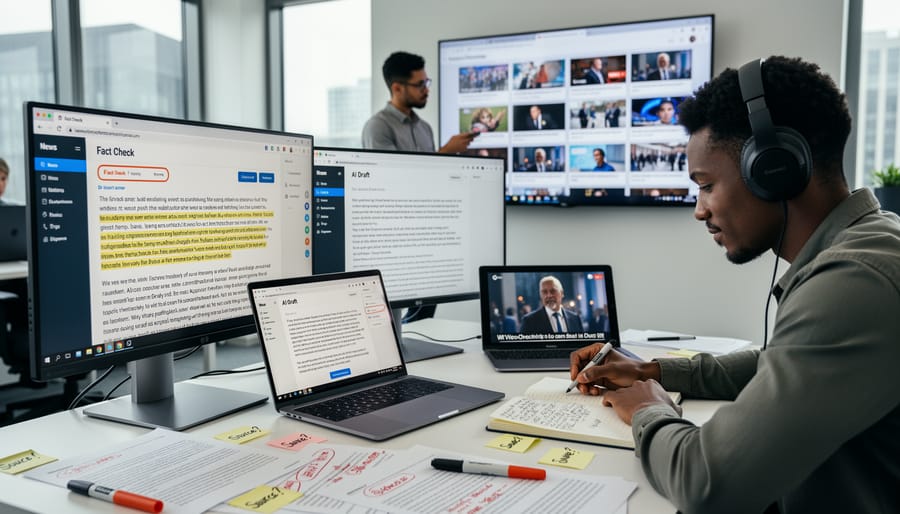
The New Reality: Synthetic Media Is Everywhere
We’re living in an age where seeing isn’t necessarily believing anymore. Synthetic media refers to content created or significantly altered using artificial intelligence—think deepfake videos, AI-generated photographs, chatbot-written articles, and computer-generated voices that sound remarkably human. As a freelance writer, you’re encountering this technology more often than you might realize.
Consider these everyday scenarios: You’re researching a story and come across a compelling expert quote on social media, only to discover it was generated by an AI chatbot. You find the perfect image to illustrate your article pitch, but it’s actually an AI creation that never existed in reality. Perhaps you’re fact-checking a viral news story that includes video footage, which turns out to be a sophisticated deepfake. These situations aren’t rare exceptions—they’re becoming standard challenges in our professional landscape.
For Canadian freelance writers, distinguishing authentic content from synthetic media isn’t just about accuracy; it’s about protecting your professional reputation and delivering value to editors and clients. When you pitch a story based on false information or unknowingly include AI-generated content without verification, you risk damaging relationships you’ve worked hard to build.
The good news? Recognizing that synthetic media exists is your first line of defense. Understanding this new reality transforms how you approach research, source verification, and content creation. Rather than feeling overwhelmed by these technological changes, view this knowledge as a competitive advantage. Writers who master fact-checking in the AI era position themselves as trustworthy professionals who deliver reliable, verified content—exactly what editors and clients desperately need in today’s information landscape.
Verification Workflows That Actually Work for Writers
Step One: Trust Your Writer’s Instinct
Before you even begin formal fact-checking, your gut feeling is often your best early warning system. As a freelance writer, you’ve likely read thousands of articles, watched countless videos, and reviewed various media. That experience matters. When something feels off—whether it’s a statistic that seems too perfect, a quote that sounds manufactured, or an image that looks slightly strange—pay attention to that instinct.
Common red flags include sources without clear attribution, emotional language designed to provoke rather than inform, and claims that align too neatly with a particular agenda. In the age of AI-generated content, watch for text that feels oddly generic or images with subtle distortions in hands, faces, or backgrounds. Videos showing people saying unlikely things without credible context deserve extra scrutiny.
Your editorial judgment isn’t just valuable—it’s essential to your reputation and career longevity. Canadian freelancers who consistently deliver accurate, verified content build trust with editors and clients, leading to better opportunities and higher rates. Think of your skepticism not as cynicism, but as professional due diligence. Every time you pause to question something, you’re protecting both your readers and your career. Trust that inner voice, then back it up with thorough verification.
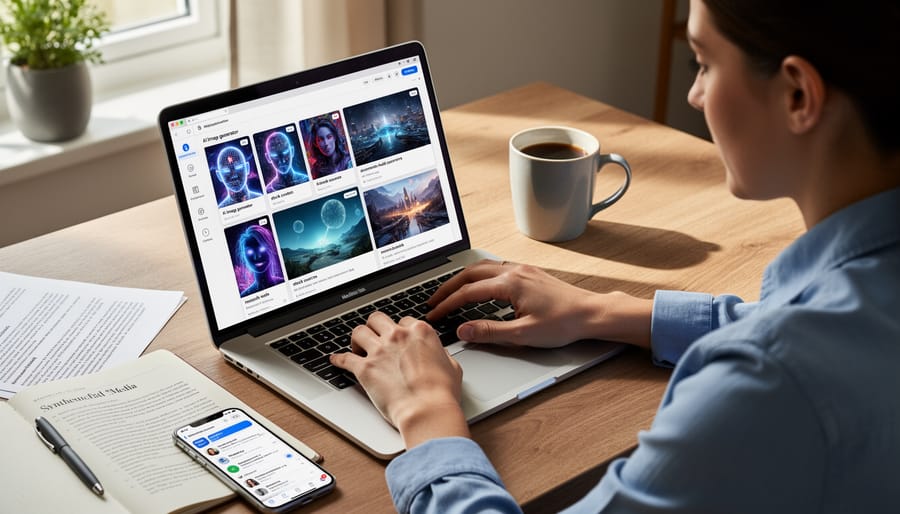
Step Two: Use Free Verification Tools
Good news: you don’t need expensive software subscriptions to verify content effectively. Several free and affordable tools can help you fact-check AI-generated text, images, and videos with confidence.
For text verification, start with Google’s Fact Check Explorer, a free database that searches fact-checks from publishers worldwide. Simply paste suspicious claims or quotes to see if they’ve been debunked. When checking AI-generated writing, copy passages into Grammarly’s free plagiarism detector or use Originality.ai’s limited free scans to identify computer-generated content patterns.
Image verification is straightforward with reverse image searching. Right-click any photo and select “Search image with Google” or upload it to TinEye.com. These tools show where else the image appears online and when it was first published, helping you spot recycled or misrepresented photos. For Canadian writers covering local stories, this proves invaluable when clients send stock images claiming they’re original photography.
To detect manipulated media, try Forensically, a free browser-based tool that analyzes images for editing signs. Upload a photo and use features like clone detection or error level analysis to spot alterations. For video deepfakes, Sensity.ai offers limited free scans.
Start by bookmarking these tools and practicing with known fake content. Many successful freelance writers spend just 10 minutes weekly familiarizing themselves with one new verification tool, building a powerful fact-checking arsenal over time without financial investment.
Step Three: Cross-Reference Your Sources
In the AI era, cross-referencing remains one of your strongest fact-checking tools. When you encounter information or images generated by AI, take time to verify it against multiple reputable sources. This traditional journalism technique is more valuable than ever.
Start by identifying the original creator or source of the content. AI-generated material often lacks clear attribution, so search for watermarks, reverse-image search results, or metadata that reveals its origin. When dealing with news stories or claims, check at least three independent, credible sources before accepting information as fact. Look for established news organizations, academic institutions, or verified experts in the relevant field.
Pay special attention to the context surrounding any claim. AI tools can pull information from outdated sources or mix accurate data with fabricated details. By comparing multiple sources, you’ll spot inconsistencies that signal potential problems. If sources contradict each other or you can’t find corroboration, that’s your cue to dig deeper or flag the information as unverified.
This cross-referencing habit strengthens your credibility as a writer and protects you from inadvertently spreading misinformation. Canadian freelancers who consistently demonstrate this attention to detail often build stronger client relationships and command higher rates for their reliable work.
Step Four: Document Your Verification Process
Creating a clear paper trail of your fact-checking work isn’t just good practice—it’s essential protection for your freelance writing career. Think of documentation as your professional safety net. When you keep detailed records of how you verified information, you’re building credibility with editors and protecting yourself if questions arise later about your sources or methods.
Your documentation doesn’t need to be complicated. Start by creating a simple spreadsheet or document for each major project. Note the claim you’re checking, the original source, what verification steps you took, and what you discovered. Include URLs, dates you accessed websites, names of experts you contacted, and screenshots of key information. This becomes especially valuable when working with AI-generated content, where you’ll want to record which AI tool produced the content and how you independently verified its claims.
This record-keeping offers real benefits beyond protection. Many successful freelancers report that sharing their thorough verification process with clients has led to higher-paying assignments and long-term contracts. Editors appreciate writers who can demonstrate their diligence, and during revisions or legal reviews, having clear documentation saves everyone time and stress.
Remember, your documentation also serves as a learning tool. Reviewing past fact-checking records helps you identify patterns, refine your process, and build a personal database of reliable sources. You’re not just covering yourself—you’re investing in your professional development and reputation as a trustworthy, detail-oriented writer.
How This Skill Opens Doors for Freelancers
The demand for skilled fact-checkers has never been stronger, and Canadian freelance writers who master this skill are finding themselves in an excellent position to secure rewarding opportunities. As publications, brands, and platforms grapple with AI-generated content flooding the internet, they’re actively seeking writers who can verify information and ensure accuracy.
Major news outlets and digital magazines are expanding their fact-checking departments specifically to handle AI content. These roles often offer steady contract work or retainer agreements, providing the income stability many freelancers desire. Beyond traditional media, marketing agencies and corporate communications teams need writers who can verify claims in white papers, case studies, and thought leadership pieces, especially as they experiment with AI writing tools.
The beauty of this skill is how it complements your existing writing abilities. When you pitch to clients, being able to say you’re experienced in fact-checking immediately sets you apart from other candidates. Editors know they can trust your work, which means fewer revisions and stronger long-term relationships. Many freelancers report negotiating higher rates once they demonstrate this expertise, with some seeing increases of 20 to 30 percent.
Consider Sarah, a Toronto-based freelance writer who added fact-checking to her service offerings. Within six months, she landed a recurring contract with a health and wellness publication specifically because she could verify medical claims in AI-assisted articles. Her income increased significantly, and she built valuable relationships with editors who now refer her to other publications.
You can also position yourself as a specialist in fact-checking AI-generated content, a niche that’s growing rapidly. Companies using AI tools need human experts to review output before publication, creating a steady stream of project-based work. This specialized knowledge makes you indispensable in an era where content creation is evolving faster than ever, giving you career security and exciting growth potential as the industry continues to transform.

Real Writers Making It Work
Toronto-based freelance journalist Maya Chen started incorporating synthetic media verification into her workflow last year, and it transformed her client roster. After taking a short online course on deepfake detection and AI-generated content verification, she began pitching herself as a specialist who could fact-check both traditional sources and emerging digital content formats. Within three months, she landed a contract with a major Canadian news outlet that specifically needed someone comfortable navigating AI-related verification challenges. “Editors are genuinely worried about publishing AI-generated images or quotes without knowing it,” Maya explains. “Being able to say I had a system for checking these things made me stand out from dozens of other applicants.”
Vancouver writer James Park had a similar experience. When a corporate client asked him to verify testimonials and case studies for their website, he used reverse image searches and metadata analysis tools to confirm authenticity. His thorough approach caught the attention of the company’s marketing director, who then referred him to two other businesses looking for content creators who understood synthetic media risks. “It’s become part of my standard process now,” James says. “Clients appreciate that I’m protecting their reputation, and I can charge a bit more because I’m offering that extra layer of quality assurance.”
Both writers emphasize that you don’t need to become a technical expert. Learning a few reliable verification tools and building them into your regular fact-checking routine can genuinely set you apart in today’s competitive freelance market.
Mastering fact-checking in the age of synthetic media isn’t just about protecting yourself and your readers—it’s about building a valuable professional skill set that sets you apart in today’s competitive writing market. As AI-generated content becomes more prevalent, writers who can confidently verify sources, detect synthetic media, and maintain editorial integrity will find themselves in high demand. The good news? You can start developing these skills right now, today, with the workflows we’ve explored together.
Think of fact-checking as your professional safety net and your competitive advantage rolled into one. Every time you pause to verify an AI-generated image, cross-reference a suspicious quote, or trace information back to its original source, you’re strengthening your reputation as a trustworthy writer. Editors and clients notice this attention to detail, and it often translates into better opportunities and higher rates.
The transition to AI-aware fact-checking might feel overwhelming at first, but remember that every experienced writer was once a beginner learning new skills. Start small—perhaps by implementing just one verification step in your next article—and gradually build these practices into your natural workflow. The investment you make in learning these techniques now will pay dividends throughout your entire writing career.