

Submit your Access to Information and Privacy (ATIP) request through the federal government’s online portal at open.canada.ca, where you’ll find department-specific contact information and standardized request forms that streamline the entire process. Start by identifying the exact records you need—be specific about dates, subjects, and document types rather than making broad requests, as focused queries receive faster responses and better results. Master the 30-day response timeline by marking your calendar and preparing follow-up emails, knowing that extensions are common but shouldn’t discourage you from pursuing valuable information that can elevate your journalism.
Understanding FOI requests transforms how Canadian freelance writers approach fact-checking methods and investigative reporting. These government transparency tools unlock official documents, data sets, and correspondence that add credibility and depth to your articles—exactly what editors seek when reviewing pitches. While the process might seem intimidating at first, thousands of Canadian journalists and researchers successfully file FOI requests every year, uncovering stories that would otherwise remain hidden.
Provincial governments maintain separate FOI systems with their own portals and timelines, so research your province’s specific requirements before submitting requests to ministries or departments. The information you obtain through these channels becomes exclusively yours to use, giving you competitive advantages in pitching unique angles to publications. Many award-winning Canadian journalists credit FOI requests as the foundation of their most impactful stories, proving that patience with bureaucratic processes pays substantial dividends for your writing career.
Track your requests using spreadsheets that note submission dates, expected response deadlines, and follow-up actions, ensuring nothing falls through the cracks during the weeks-long waiting periods. This systematic approach turns FOI requests from overwhelming tasks into manageable research tools that consistently strengthen your fact-based reporting.
What Are FOI and ATIP Requests?
If you’re a freelance writer in Canada looking to fact-check information or dig deeper into a story, understanding FOI and ATIP requests is like having a master key to government records. Let’s break down what these terms mean and how they can strengthen your writing.
Freedom of Information, or FOI, is your legal right to access records held by provincial and municipal governments across Canada. Each province has its own legislation with slightly different names. In Ontario, it’s called the Freedom of Information and Protection of Privacy Act, while British Columbia uses the Freedom of Information and Protection of Privacy Act. The good news? They all serve the same purpose: giving you access to government documents that can help verify facts, uncover stories, and add credibility to your work.
At the federal level, things work a bit differently. Here, you’ll use ATIP, which stands for Access to Information and Privacy. This covers federal departments, agencies, and Crown corporations. Think of ATIP as the federal version of provincial FOI requests.
Here’s the practical difference: if you’re researching local municipal spending or a provincial health initiative, you’d file an FOI request with that specific province or municipality. But if you need information from a federal department like Immigration, Refugees and Citizenship Canada or Environment and Climate Change Canada, you’d submit an ATIP request instead.
Both processes give you legal access to government records, with some reasonable exceptions for privacy and security. As a freelance writer, these tools let you verify claims, access primary sources, and add depth to your articles that sets your work apart. Success stories abound of writers who’ve used FOI and ATIP requests to break important stories, fact-check government statements, and build their reputation as thorough, reliable journalists. The best part? Any Canadian can make these requests, and you don’t need special credentials or a journalism degree to get started.
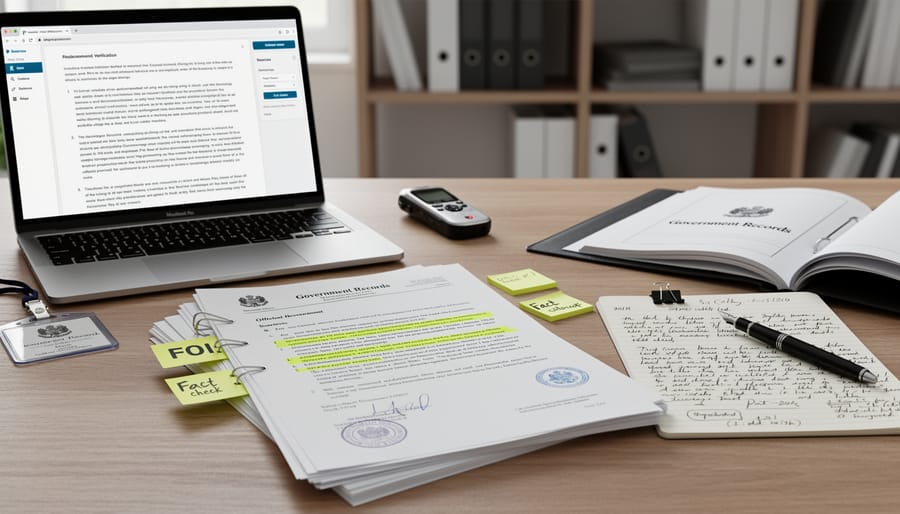
Why Freelance Writers Should Care About FOI/ATIP
Building Your Reputation as a Thorough Researcher
In a competitive marketplace, your commitment to thorough fact-checking sets you apart. When you cite information obtained through FOI requests in your work, you’re showing editors and clients that you go the extra mile. This isn’t just about finding facts—it’s about demonstrating your dedication to accuracy and original research.
Toronto-based freelancer Maria Chen landed a recurring contract with a national magazine after her investigative piece included original documents obtained through Access to Information requests. “Editors noticed I wasn’t just rehashing press releases,” she explains. “I was bringing fresh, verified information to the table.”
Using FOI requests signals to potential clients that you’re a serious professional who invests time in quality journalism. It shows you understand the importance of primary sources and aren’t afraid to dig deeper. This reputation can lead to higher-paying assignments, regular clients, and opportunities in investigative journalism. Plus, you’ll build a portfolio that showcases genuine research skills—something that’s increasingly valuable as AI-generated content floods the market. Your human ability to navigate government systems and verify information becomes your competitive advantage.

Uncovering Stories Others Miss
FOI requests have opened doors to amazing stories that might have remained hidden forever. Take the case of Toronto freelance journalist who used an Access to Information request to uncover how millions in government pandemic relief funds were distributed. The documents revealed fascinating patterns and led to a series of articles published in major outlets, establishing her as an expert in the field.
Another inspiring success came from a Vancouver-based writer who requested records about urban development projects. The files exposed questionable approval processes for waterfront condos, resulting in a feature story that won regional journalism awards. What started as curiosity about changing neighborhood landscapes turned into career-defining work.
A Montreal freelancer successfully used FOI to obtain safety inspection reports for public infrastructure, revealing maintenance gaps in bridges and overpasses. His investigation caught the attention of national media and led to policy discussions at the municipal level.
These examples show that FOI requests aren’t just for investigative reporters at big newspapers. Freelance writers at any stage can use these tools to find unique angles on local issues, from school board decisions to municipal spending. The key is thinking creatively about what information exists and who holds it.
Starting small works beautifully too. One beginner requested her city’s park maintenance schedules and turned it into a helpful community guide that attracted paying assignments. Your FOI-sourced story could be the one that transforms your freelance career and serves your community.
How to Submit an FOI/ATIP Request: Step-by-Step
Identifying the Right Government Body
Finding the right government body might feel like detective work at first, but it gets easier with practice. Start by thinking about which level of government—federal, provincial, or municipal—would logically handle the information you need. Health care data usually sits with provinces, while immigration records belong to federal departments.
The Government of Canada website offers a helpful institutional directory that lists all federal departments and their responsibilities. Provincial governments have similar resources. When you’re uncertain, don’t hesitate to call the department’s general inquiry line and ask which office manages the records you’re seeking. Staff are typically helpful in pointing you toward the correct body.
Many successful writers recommend casting a slightly wider net initially. If you’re researching environmental regulations, for example, both Environment and Climate Change Canada and Natural Resources Canada might hold relevant information. Submitting requests to multiple departments can actually speed up your research process.
Remember, choosing the wrong department isn’t a disaster. Government bodies will often transfer your request to the appropriate office or let you know where to redirect it. This is all part of building your research skills as a professional writer.
Crafting Your Request for Success
The key to a successful FOI request is clarity and specificity. Think of it as pitching a story to an editor—you need to be direct about what you want and why it matters.
Start by clearly defining your search parameters. Instead of requesting “all documents about healthcare funding,” narrow it down: “all correspondence between the Minister of Health and regional health authorities regarding emergency department wait times between January 1, 2023 and December 31, 2023.” The more precise you are, the faster you’ll get results and the lower your fees will be.
Use simple, direct language in your request. Government processors aren’t mind readers, so avoid vague phrases like “relevant information” or “related materials.” Specify document types: emails, memos, briefing notes, or reports. If you’re investigating a specific incident or policy, include dates, names of involved officials, and file numbers if you have them.
A common mistake is making your request too broad. One freelance writer shared how her first FOI request for “environmental assessments” resulted in thousands of pages and a hefty fee estimate. She refined it to target one specific pipeline project and received exactly what she needed within weeks.
Don’t be afraid to contact the FOI office before submitting. Most coordinators are happy to help you refine your request. They want to help you succeed—it makes their job easier too. This collaborative approach has helped many writers uncover stories that strengthened their portfolios and opened doors to new opportunities.
Understanding Timelines and Fees
Canadian government institutions typically have 30 days to respond to your FOI request, though extensions are common when records are complex or voluminous. Don’t be discouraged if your request takes longer—patience pays off when you’re uncovering valuable information for your writing projects.
Most federal requests under the Access to Information Act cost just $5, making this an affordable research tool for freelance writers on any budget. However, additional fees may apply for searching, preparing, and copying extensive records. Provincial fees vary, so check your specific jurisdiction’s guidelines.
Here’s an encouraging tip: you can request a fee waiver or reduction by explaining how your work serves the public interest. Many writers successfully obtain waivers by demonstrating their story benefits Canadians broadly. Frame your request around transparency, accountability, or public education rather than purely commercial purposes.
If fees seem prohibitive, narrow your request’s scope to reduce processing costs. Being specific about date ranges and document types helps institutions locate records more efficiently, potentially lowering your final bill. Some writers have turned initial denials into approved fee waivers simply by rephrasing their public interest justification. Remember, government officials want to support legitimate research—your work as a writer contributes to informed public discourse.
Using FOI Documents to Verify Facts
Reading Between the Redactions
Receiving a heavily redacted document can feel discouraging at first, but don’t lose heart. Each black bar tells a story about privacy laws, national security considerations, or ongoing investigations. Understanding these exemptions actually helps you become a sharper researcher. Government institutions must cite specific sections of the Access to Information Act when redacting content, and these citations appear right on your documents. Look for patterns in what gets revealed versus what stays hidden.
The information that remains visible often provides valuable context and leads. You might spot dates, department names, email chains, or references to related documents that point you toward new research directions. Sometimes the structure of a redacted paragraph reveals its general content. A success story: one freelance investigative writer used partially redacted meeting minutes to identify key stakeholders, then interviewed them directly to fill in the gaps. The redactions actually guided her reporting strategy.
Keep copies of heavily redacted responses because you can file complaints with the Information Commissioner if exemptions seem unreasonable. You can also request the same information again after time passes, as circumstances change and previously withheld details become releasable. Treat redactions as clues rather than roadblocks in your fact-checking journey.

Cross-Referencing Multiple Sources
FOI requests become even more powerful when you combine them with other research methods. Think of FOI data as one piece of your fact-checking puzzle—valuable on its own, but most effective when you layer it with additional sources.
Start by using traditional journalism methods alongside your FOI requests. Interview subject matter experts who can provide context to the documents you receive. Their insights often help you understand technical details or identify which aspects of your FOI response deserve deeper investigation. Similarly, academic research and published reports can validate patterns you’re seeing in government data.
Public records available online complement FOI requests beautifully. Court documents, corporate registries, and municipal council minutes are often accessible without formal requests. Use these to build your initial understanding, then target your FOI requests to fill specific gaps. This approach saves time and helps you ask more focused questions.
Social media and crowd-sourced information can also support your fact-checking efforts. If your FOI response reveals a policy change, check how affected communities discussed it online. Real-world experiences often highlight impacts that bureaucratic language obscures.
Canadian writer Sarah Chen used this multi-source approach for a health policy investigation. She combined ATIP responses about hospital funding with Statistics Canada data, expert interviews, and patient advocacy group reports. The result? A comprehensive story that major publications couldn’t ignore, landing her a contract with a national magazine.
Remember, your goal is to verify information from multiple angles. When government documents align with expert testimony and public data, you’ve built a solid foundation for your story. This thorough approach builds your reputation as a reliable, detail-oriented writer—qualities that lead to better assignments and higher rates.
Common Challenges and How to Overcome Them
While FOI requests are powerful research tools, you’ll likely encounter some bumps along the way. Understanding these common challenges helps you navigate them confidently and keep your projects moving forward.
Delays are perhaps the most frequent obstacle. Government departments have 30 days to respond under federal law, but extensions are common. If you’re facing a long wait, stay proactive. Send polite follow-up emails, reference your request number, and ask for status updates. Consider submitting your FOI request early in your research process rather than waiting until deadline pressure builds. Many successful freelancers treat FOI requests as long-term investments in their knowledge base rather than quick-turnaround sources.
Denials and heavy redactions can feel discouraging, but they’re not always the end of the road. When information gets blacked out, carefully review the exemption codes cited in the response letter. Sometimes departments apply exemptions too broadly. You have the right to appeal through the Office of the Information Commissioner, and many appeals succeed in releasing additional information. The appeal process is free and straightforward.
Consider rewording and resubmitting your request with more specific language if your initial attempt yielded poor results. Toronto-based investigative journalist Maya Chen shared how her third reformulated request finally unlocked the immigration statistics she needed for a compelling feature story that later won a national award.
When you hit roadblocks, get creative. If federal departments won’t release certain information, try provincial or municipal governments who might hold similar data. Connect with other writers who’ve successfully navigated FOI processes—the freelance writing community is remarkably generous with advice. Document your challenges and persistence; these experiences become compelling story elements themselves and demonstrate your commitment to thorough, verified reporting that editors value.

Success Story: How One Writer Used FOI to Land a Major Assignment
When Toronto-based freelance writer Sarah Chen noticed a pattern of complaints about delayed passport processing on social media, she saw an opportunity. Rather than relying solely on anecdotal evidence, she decided to file an Access to Information request with Immigration, Refugees and Citizenship Canada to get the complete picture.
Sarah’s ATIP request asked for internal communications about processing delays, statistics on average wait times broken down by region, and any policy changes implemented during the previous 18 months. The process took about six weeks, but the documents she received were goldmine material. They revealed that certain processing centers were experiencing backlogs three times worse than publicly reported, and internal emails showed officials were aware of the problem months before it made headlines.
Armed with hard data and government documents, Sarah pitched her story to a major national publication. The editor was immediately interested because she had verifiable facts that went beyond what other journalists were reporting. Her article ran as a front-page feature, exposing the scope of the delays and holding officials accountable with their own words.
The assignment paid $2,500, significantly more than her usual rates, and led to ongoing work with the publication. Even better, Sarah established herself as a writer who goes deeper than surface-level reporting. She’s since filed FOI requests for multiple assignments, and editors now come to her specifically for data-driven investigative pieces.
Sarah’s advice to other freelance writers? Start small, be patient with the process, and remember that the documents you receive are exclusive material that sets your work apart from the competition.
Resources and Tools for Canadian Freelancers
Getting started with FOI requests becomes much easier when you know where to find the right support and resources. Here’s a curated collection of tools to help you navigate the process with confidence.
The federal government’s Access to Information and Privacy Online Request Service is your starting point for ATIP requests. This portal lets you submit requests electronically and track their progress. Each provincial government also maintains its own FOI portal, so bookmark the one for your region.
For tracking and managing multiple requests, consider using spreadsheet templates specifically designed for FOI work. Many journalist associations offer these free to members, along with sample request letters that you can adapt for your needs.
The Canadian Association of Journalists provides excellent FOI resources, including workshops, webinars, and a mentorship program connecting newcomers with experienced investigative reporters. Their FOI Friday initiative shares successful requests and tips from the community.
Provincial press councils and writer organizations often maintain FOI resource libraries. The National NewsMedia Council and regional journalism associations frequently host training sessions on access to information laws.
Connect with other freelancers through online communities focused on investigative journalism. These networks are goldmines for practical advice, template sharing, and moral support when requests hit roadblocks.
Many journalism schools offer free online modules about FOI processes. These courses provide structured learning without the commitment of full programs, perfect for busy freelancers building their skills.
Remember, using these resources isn’t just about getting answers faster—it’s about joining a community of writers committed to transparency and accountability in their work.
Adding FOI and ATIP requests to your writing toolkit isn’t just about accessing documents—it’s about transforming yourself into a more resourceful, independent journalist. These tools help you strengthen their credibility, uncover stories your competitors miss, and deliver work that editors genuinely value.
Yes, the process takes patience. You’ll wait weeks or months for responses, and some requests won’t yield gold. But the skills you develop—crafting precise questions, understanding government structures, analyzing official records—will serve you throughout your career. Writers who master FOI requests often find themselves landing higher-paying assignments because they bring investigative depth that sets them apart.
Start small. File one request this month about a topic you’re already covering. Learn the rhythm of the process. Build relationships with access-to-information coordinators. Over time, this practice will become second nature, opening doors to exclusive stories and establishing you as a writer who goes beyond surface-level reporting. Your freelance career deserves this competitive edge.