

Verify your email marketing practices comply with Canada’s Anti-Spam Legislation by obtaining explicit consent before sending commercial electronic messages to clients or prospects. This means getting a clear “yes” – through a sign-up form, checkbox, or written agreement – that specifically states recipients agree to receive emails from you. Implied consent from existing business relationships works temporarily, but explicit consent protects you long-term.
Document every consent you receive, including the date, method, and what subscribers agreed to receive. Store these records for at least three years, as CASL enforcement can result in penalties up to $10 million for businesses. Even as a solo freelancer, you’re not exempt – individual violations can cost up to $1 million.
Include clear identification and unsubscribe mechanisms in every commercial email you send. Your messages must display your name or business name, physical mailing address, and a working unsubscribe link that processes requests within 10 business days. These requirements apply to newsletters, promotional emails, and even one-off pitches to potential clients you haven’t worked with before.
Understand that CASL covers more than traditional marketing emails. If you’re sending messages that encourage participation in commercial activity – including pitching your services, promoting your blog, or sharing affiliate links – you need consent. Family and friends you contact personally are exempt, but professional networking often falls into the regulated category.
The good news? Compliance actually strengthens your freelance writing business. When clients and subscribers actively choose to hear from you, they’re more engaged, responsive, and likely to hire you. CASL isn’t just about avoiding penalties – it’s about building genuine relationships with people who value your expertise and want to support your success.

What CASL Actually Means for Your Freelance Business
Here’s the truth: CASL applies to you as a freelance writer, even if you’re working solo from your home office. Canada’s Anti-Spam Legislation isn’t just for big corporations with massive email lists. If you send commercial electronic messages to Canadian recipients, you need to understand these rules.
CASL came into effect in 2014 to protect Canadians from unwanted emails, texts, and social media messages. The government created this law because spam had gotten out of control, filling inboxes with irrelevant marketing messages and scams. While the intention is positive, many freelancers mistakenly believe it doesn’t apply to them.
Let’s clear up the biggest misconception: you don’t need thousands of subscribers to fall under CASL’s scope. Sending a single promotional email about your writing services to a potential client counts as a commercial electronic message. Whether you’re reaching out to prospects, following up with past clients, or maintaining a small newsletter, CASL applies.
The legislation covers any electronic message that encourages participation in commercial activity. This includes emails pitching your services, newsletters showcasing your portfolio, or messages promoting your latest blog post. Even friendly check-ins can qualify if they mention your availability for new projects.
Here’s the good news: CASL works alongside Canadian privacy laws to create a framework that actually benefits your business. When you follow CASL properly, you build trust with clients and prospects. You’re showing professionalism and respect for their inbox.
Many successful freelance writers have embraced CASL compliance as a competitive advantage. Instead of seeing it as a burden, they use it to stand out as credible, trustworthy professionals who respect boundaries. The key is understanding that compliance doesn’t limit your marketing; it simply ensures your messages reach people who genuinely want to hear from you.
The Real Penalties That Should Keep You Up at Night
Let’s talk about the financial reality of CASL violations, not to frighten you, but to help you understand why compliance matters for your freelance business.
The numbers are significant: businesses can face penalties up to $10 million per violation, while individuals (yes, that includes freelancers) can be fined up to $1 million. Before you panic, know that these are maximum amounts reserved for serious, intentional violations. The Competition Bureau and CRTC consider many factors when determining actual penalties, including whether you attempted to comply and the severity of the violation.
Here’s what real enforcement looks like. In 2017, a company called Compu-Finder received a $1.1 million penalty for sending commercial emails without proper consent. Another business faced $200,000 in fines for missing unsubscribe mechanisms. These weren’t accidental slip-ups; they were ongoing violations after warnings.
You might think, “I’m just a small freelancer; they won’t come after me.” While it’s true that enforcement agencies typically focus on larger violators, here’s the thing: CASL also allows private lawsuits. That means a frustrated recipient could potentially take legal action against you directly, regardless of your business size.
The good news? Enforcement agencies have shown they’re reasonable with businesses making genuine compliance efforts. They often issue warnings first, giving violators a chance to correct their practices. The key is demonstrating good faith and taking action when issues arise.
Think of CASL compliance as professional insurance. By following the rules from the start, you protect your freelance income, your reputation, and your peace of mind. The investment in doing things right is minimal compared to the potential consequences of ignoring these requirements.
When Do You Need to Worry About CASL?
Emailing Potential Clients
When you’re reaching out to potential clients via email, CASL has important rules you need to follow. The good news? Once you understand them, compliance becomes straightforward.
You can only send commercial electronic messages to prospects if you have their consent or an existing business relationship. For freelance writers, this means you cannot simply purchase email lists or send mass cold emails to companies you’ve never contacted before. However, there are practical exceptions that help you grow your business.
If someone has publicly listed their email address and hasn’t included a “do not contact” notice, you may reach out if your message is relevant to their business role. For example, contacting an editor whose email appears on a publication’s website about your writing services is generally acceptable.
When working with clients, always include clear identification information in your emails and provide an easy unsubscribe option. Your emails should state your name, business name (if applicable), and contact information.
The simplest approach? Build your client list organically through networking, referrals, and inbound inquiries. When someone expresses interest in your services or requests information, you’ve established implied consent. Keep records of how you obtained each contact’s information, as this protects you if questions arise later.
Newsletters and Updates to Your Network
If you send a regular newsletter to fellow writers, clients, or your professional network, you need express or implied consent from your subscribers. The good news? This is easier than it sounds! When someone signs up for your newsletter through a signup form, that’s express consent. Just ensure your signup form clearly states what they’re subscribing to and includes your contact information.
Keep records of when and how people subscribed—a simple spreadsheet works perfectly. Many email platforms like MailChimp automatically track this for you. Your newsletter should include an easy unsubscribe option in every email, which most email services add automatically.
Remember, your newsletters are professional email communications, so they represent your brand. Following CASL guidelines shows clients you’re a professional who takes your business seriously. Bonus tip: Some writers have grown their freelance businesses significantly through newsletters, building trust and landing repeat clients. Stay compliant, stay connected, and watch your network grow!
Following Up with Past Clients
Good news: you’re generally allowed to email past clients without obtaining new consent! CASL recognizes existing business relationships, which means if someone has hired you within the past two years, you have implied consent to contact them. This is perfect for sending updates about your services, sharing your latest portfolio pieces, or checking in about future projects.
However, there’s an important catch: the client must not have unsubscribed from your emails. Always respect their preferences and include a clear unsubscribe option in every message. If a client hasn’t worked with you in over two years, you’ll need to obtain their express consent before reaching out with commercial messages.
Keep simple records of when clients last hired you. A basic spreadsheet works perfectly for tracking these relationships. This practice not only keeps you CASL-compliant but also helps you nurture valuable professional connections that can lead to repeat work and referrals.
The Three Non-Negotiable Requirements Every Email Must Have
Getting Proper Consent (And What Counts)
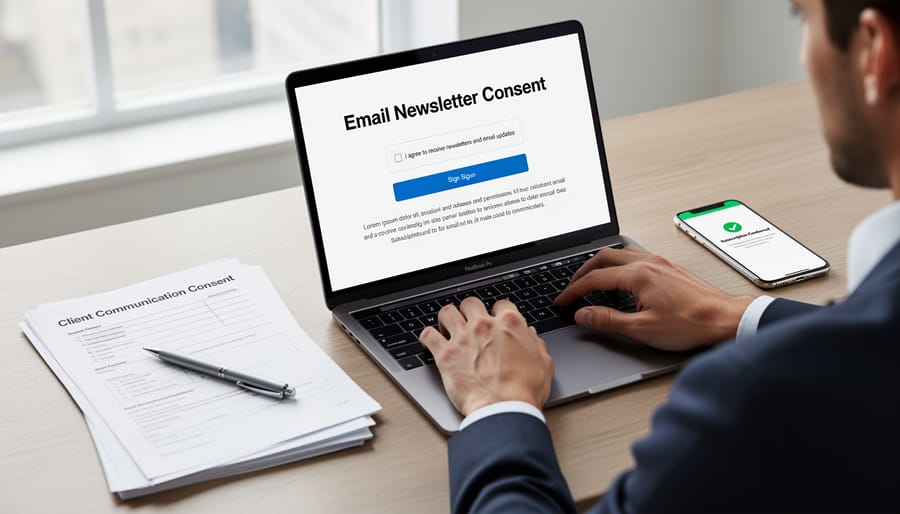
CASL recognizes two types of consent: express and implied. Express consent is the gold standard—it’s when someone clearly agrees to receive your emails, like checking a box on your website signup form or responding “yes” to your request. This type of consent doesn’t expire unless the person withdraws it, making it your best long-term option.
Implied consent is temporary and based on existing relationships. You have implied consent for two years if someone has purchased from you, inquired about your services, or shared their business card. If you’re a member of the same professional association, you also have implied consent. However, this expires after the time limits, so it’s smart to convert implied consent to express consent whenever possible.
Getting proper consent is easier than you might think. When setting up your email list, include a clear checkbox (not pre-checked) that explains what subscribers will receive. Use straightforward language like “Yes, I’d like to receive writing tips and updates from you.” Keep records of when and how people consented—many email platforms do this automatically.
Here’s an encouraging tip that’s helped many successful freelance writers: turn your consent request into a value proposition. Instead of just asking for permission, explain what subscribers gain—exclusive writing opportunities, industry insights, or helpful resources. This approach not only keeps you compliant but also builds a more engaged audience who genuinely wants to hear from you. When people understand the value you offer, getting their express consent becomes a natural part of building meaningful professional relationships.
Identifying Yourself Clearly
Every commercial email you send must clearly identify who you are and who’s sending the message. This transparency builds trust with your recipients and keeps you compliant with CASL.
You need to include three key pieces of information in each email. First, provide your name or the name of your freelance business. Second, include your mailing address where you can be contacted. This doesn’t have to be your home address if you have privacy concerns—a post office box works perfectly fine. Third, add either your phone number or email address so recipients can reach you.
Here’s the good news: this requirement actually helps your freelance writing career. When potential clients see your clear contact information, it demonstrates professionalism and legitimacy. You’re not hiding behind anonymity—you’re a real, accessible professional.
Many email marketing platforms automatically include this information in their templates, making compliance simple. Just set it up once in your email signature or footer, and you’re done. Think of it as your professional calling card that happens to meet legal requirements while building credibility with every message you send.
The Unsubscribe Option That Actually Works
Here’s the good news: making your unsubscribe option CASL-compliant is actually pretty straightforward. Every commercial email you send must include a clear, working unsubscribe mechanism that’s free and simple to use. That means your readers shouldn’t need to log into an account, solve a puzzle, or jump through hoops to opt out.
The easiest approach? Use a reputable email service provider like Mailchimp, ConvertKit, or MailerLite. These platforms automatically include compliant unsubscribe links in every message, and they handle the technical side for you. When someone clicks “unsubscribe,” the system removes them from your list immediately—no manual work required on your end.
You must process unsubscribe requests within 10 business days, though most email platforms do this instantly. Keep the process to one or two clicks maximum. Requiring readers to confirm their unsubscribe request is acceptable, but asking them to provide reasons or fill out surveys isn’t mandatory and could frustrate people.
Remember to actually honor these requests. Your email platform should prevent you from re-adding people who’ve unsubscribed, but double-check your processes. Many successful freelance writers find that respecting boundaries actually builds trust with their remaining subscribers, leading to better engagement and more opportunities in the long run.
Simple Steps to Make Your Freelance Business CASL-Compliant Today
Audit Your Current Email List
Start by gathering all your contact lists from every platform you use—email service providers, spreadsheets, business cards, or social media connections. Create a simple spreadsheet to track each contact’s information and consent status. For each person, ask yourself: Did they explicitly agree to receive emails from me? Do I have documented proof of their consent? When and how did they give permission?
Look for clear indicators of express consent, such as newsletter sign-ups, completed contact forms, or written agreements from client contracts. If you’ve been emailing people without their explicit permission, these contacts need special attention under CASL.
Don’t panic if you discover gaps in your records—many freelance writers face this challenge. The important thing is taking action now. For contacts without clear consent, you have options: reach out to request permission, remove them from your list, or in some cases, rely on implied consent if you have an existing business relationship within the past two years.
Document everything as you go. Note the date of consent, how it was obtained, and save copies of sign-up forms or emails. This organized approach protects you and makes ongoing compliance much easier.

Set Up Simple Consent Systems
Good news: you don’t need expensive software to manage consent properly. Many free and affordable tools can help you stay CASL-compliant without breaking the bank.
Start with your email marketing platform. Most reputable services like Mailchimp, MailerLite, or Sendinblue include built-in consent features. They automatically add unsubscribe links, timestamp opt-ins, and store subscription data for you. Many offer free plans for smaller lists, perfect when you’re building your freelance business.
For contact forms on your website, use simple plugins like WPForms or Contact Form 7 (both free for WordPress). Add a checkbox where visitors can opt into your mailing list, and include clear language about what they’re signing up for.
Keep a basic spreadsheet as backup documentation. Record the date, method of consent (like “subscribed via website form”), and the person’s email address. This simple system creates an audit trail if you ever need to prove consent.
Consider using a free CRM like HubSpot’s basic plan to organize your contacts and track communication preferences. It helps you segment your list and ensure you’re only contacting people who’ve given permission.
Remember, simple systems work best when you’re starting out. You can always upgrade as your freelance writing business grows. The key is having something in place today that protects both you and your subscribers.
Create Your Email Templates
Creating compliant email templates now will save you time and stress later. Start by building a simple template that includes all necessary CASL elements. At the top, add a clear identification section with your name or business name, plus your physical mailing address. This builds trust and meets legal requirements.
Next, craft your email content in your authentic voice while ensuring it relates to why the recipient subscribed. Include a prominent unsubscribe link in every message—typically at the bottom works best. Make the opt-out process simple and immediate; recipients shouldn’t need to log in or jump through hoops.
Consider creating two or three template variations for different purposes: promotional emails, newsletters, and follow-ups. This keeps you organized while maintaining compliance across all communications. Add a small footer noting when and how the recipient consented to receive your emails.
Many email marketing platforms like MailChimp or ConvertKit automatically include required elements, making compliance easier. Whatever tool you choose, test your template by sending yourself a sample email to ensure everything displays correctly and all links work properly.
Common Mistakes Canadian Freelancers Make (And How to Avoid Them)
Even experienced freelancers sometimes stumble when it comes to CASL compliance. The good news? Most violations happen by accident, and they’re easy to prevent once you know what to watch for.
One of the most common mistakes happens when you’re building your client list. Sarah, a Toronto-based content writer, used to add every potential client she met at networking events to her monthly newsletter. She thought she was being proactive, but without explicit consent, those emails violated CASL. The solution is simple: always ask permission first. Send a personal follow-up email after networking events and invite people to subscribe if they’re interested in your updates.
Another frequent misstep involves outdated contact lists. Many freelancers send promotional emails to clients they haven’t worked with in years, assuming past business relationships give them ongoing permission. Under CASL, implied consent from existing business relationships expires after two years of inactivity. Review your email list regularly and remove contacts you haven’t engaged with recently, or reach out to renew their consent.
Forgetting to include proper identification is surprisingly common too. Every commercial email needs your name or business name and a valid physical mailing address. Some freelancers use generic signatures that leave these details out. Take five minutes to update your email signature with complete contact information, and you’ll stay compliant effortlessly.
The missing unsubscribe link catches many people off guard. Some freelancers think that because they’re sending personalized pitches rather than mass newsletters, they don’t need an opt-out mechanism. However, CASL requires an easy unsubscribe option in every commercial electronic message. Most email platforms include this feature automatically, so use them to your advantage.
Remember, staying on top of Canadian business compliance doesn’t have to be overwhelming. These simple adjustments protect both you and your growing freelance business while maintaining the professional relationships that matter most.
Success Story: How Sarah Built Her Client List the Right Way
Sarah Thompson started her freelance writing career three years ago from her home in Vancouver. Like many beginners, she worried that CASL would make it impossible to find clients. Today, she has a thriving business with over 40 regular clients, and she credits her CASL-compliant approach for much of her success.
From day one, Sarah made consent her priority. Instead of buying email lists or cold-emailing businesses, she focused on building genuine connections. She attended networking events, joined professional groups, and always asked for permission before adding anyone to her newsletter. Her signup form clearly explained what subscribers would receive and how often.
The results surprised her. Sarah discovered that people who opted in were actually more engaged and more likely to hire her. Her open rates averaged 45 percent, well above industry standards, because her list contained people genuinely interested in her services.
Sarah also added a professional touch by including proper identification in every email. Her footer listed her business name, mailing address, and an easy unsubscribe link. Rather than seeming impersonal, clients told her it made her look legitimate and trustworthy.
Her favorite success came when a potential client mentioned choosing her over a competitor specifically because her professional, compliant emails stood out. The competitor’s aggressive marketing tactics had raised red flags.
Sarah’s advice to other freelancers? Embrace CASL as a business advantage. Building your client list the right way takes longer initially, but the relationships you create are stronger, more profitable, and built on mutual respect.

You’ve made it this far, and that’s something to celebrate! Understanding CASL might have seemed daunting at first, but as you can see, compliance is completely manageable for freelancers like you. The truth is, following CASL isn’t just about avoiding penalties—it’s about building a professional reputation and earning the trust of your clients and subscribers.
Think of CASL compliance as an investment in your freelance writing business. When you obtain proper consent, keep clear records, and respect unsubscribe requests, you’re showing clients and readers that you’re a professional who takes your business seriously. This attention to detail sets you apart in a competitive marketplace and creates lasting relationships based on respect and transparency.
The best part? You don’t need to implement everything overnight. Start with one simple step today. Maybe that’s adding a clear opt-in checkbox to your newsletter signup form, or perhaps it’s creating a simple spreadsheet to track your consent records. Every small action moves you closer to full compliance and a more professional operation.
Remember, successful freelance writers across Canada are managing CASL compliance while growing thriving businesses. You can too. The path forward is clear, the requirements are straightforward, and the benefits extend far beyond just following the law. Take that first step today—your future self will thank you for building a compliant, trustworthy, and professional freelance writing business.