

Imagine selling your digital products, writing services, or self-published books without paying hefty platform fees or worrying about sudden algorithm changes tanking your visibility. Decentralized e-commerce makes this possible by removing corporate middlemen from online transactions, putting you in direct control of your storefront, pricing, and customer relationships.
Unlike traditional platforms like Amazon or Etsy that take 15-40% commissions and can suspend your account without warning, decentralized marketplaces operate on blockchain technology where no single company holds power over your business. You own your customer data, set your own terms, and keep significantly more of what you earn—a game-changer for freelance writers selling courses, templates, ghostwriting packages, or exclusive content subscriptions.
This shift mirrors what’s happening with decentralized content platforms, where creators are reclaiming ownership of their work and audience relationships. The same principles apply to commerce: transparency replaces hidden algorithms, smart contracts ensure automatic payments, and you decide how your creative business operates.
For Canadian writers exploring income diversification, decentralized e-commerce opens doors to global markets without currency conversion headaches or international banking fees. Whether you’re a beginner testing your first digital product or a veteran writer expanding your service offerings, understanding this technology helps you make informed decisions about where to build your online presence.
The landscape can seem technical at first, but the core concept is straightforward: peer-to-peer transactions that protect your creative work and maximize your earnings. This guide breaks down exactly how decentralized e-commerce works, what opportunities it creates for writers, and practical steps to get started without needing a computer science degree.
What Makes E-Commerce ‘Decentralized’ (And Why It Matters to Writers)

The Problems Writers Face with Traditional Platforms
If you’ve been writing on traditional content platforms, you’ve likely felt the sting of their limitations. Many freelance writers discover that while these centralized marketplaces promise opportunity, they often take more than they give.
Commission fees are typically the first hurdle. Popular platforms routinely charge between 20-50% of your earnings, meaning nearly half your hard-earned money disappears before it reaches your account. For writers just starting out or those building their client base, these fees can make the difference between financial stability and struggle.
Payment delays add another layer of frustration. Most centralized platforms hold your funds for weeks, sometimes requiring you to reach minimum thresholds before you can withdraw. When you need to pay bills or buy groceries, waiting 14-30 days for money you’ve already earned feels unfair.
Perhaps most concerning is the constant threat of account suspension. Writers frequently report having their accounts frozen without warning or clear explanation. One policy violation—sometimes unintentional—can lock you out of your income stream and client relationships overnight. You have no recourse, no appeal process that truly works in your favor.
This lack of control extends to pricing too. Many platforms dictate what you can charge, limit how you communicate with clients, and own the relationship entirely. You’re building their business, not yours.
These challenges aren’t just inconvenient—they prevent talented Canadian writers from reaching their full potential and earning what they deserve.
How Decentralized Platforms Change the Game
Decentralized e-commerce puts you in the driver’s seat of your writing business. Unlike traditional platforms that take hefty cuts from your earnings, truly decentralized platforms enable direct transactions between you and your clients. This means more money stays in your pocket—often saving you 15-30% in platform fees.
You also gain ownership of your reputation data. Your reviews, ratings, and portfolio belong to you, not locked inside one company’s system. This gives you the freedom to move between platforms while keeping your hard-earned credibility intact.
Control over pricing becomes genuinely yours too. Set your rates without algorithms pushing you to compete in race-to-the-bottom pricing wars. You build direct relationships with clients, opening doors for repeat work and referrals that happen outside platform walls.
For Canadian writers tired of platforms dictating terms, this shift represents real opportunity. You maintain creative control while building a sustainable freelance business on your own terms.
Real Ways Freelance Writers Can Use Decentralized E-Commerce Today
Selling Your Writing Directly to Readers
Imagine keeping 95% of your earnings instead of watching platforms take 30-50% of every sale. That’s the power of selling directly to your readers through decentralized platforms. These systems let you publish and sell your work—whether it’s in-depth articles, short stories, or industry reports—without traditional middlemen eating into your profits.
Platforms like Mirror and Paragraph allow you to tokenize your writing, meaning readers purchase access directly from you using cryptocurrency. You set your own prices and retain control over your content. Some writers are already earning steady income by building subscriber bases who pay monthly for exclusive access to their work.
Getting started is simpler than you might think. Most platforms offer user-friendly interfaces that don’t require technical expertise. You create an account, upload your writing, set your price, and share the link with your audience. Payment processing happens automatically through blockchain technology.
The best part? You own your relationship with readers. Unlike traditional platforms that can change their algorithms or terms overnight, decentralized systems give you direct connections to the people who value your work. Canadian writer Sarah Chen recently shared how she tripled her income by moving her newsletter to a decentralized platform, keeping the profits that previously went to intermediaries.
Building Your Own Digital Storefront
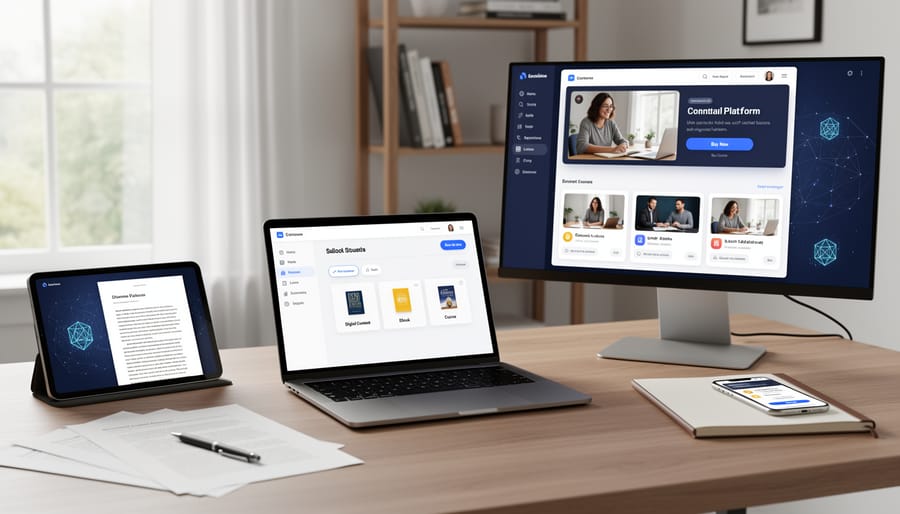
Getting started with your own digital storefront on decentralized platforms is more straightforward than you might think. Several user-friendly marketplaces let you list and sell your writing products directly to buyers without traditional middlemen taking hefty cuts.
Platforms like OpenBazaar and Rarible allow you to create digital storefronts where you can sell e-books, writing templates, style guides, or exclusive content collections. For example, you might package your best blog post templates into a downloadable guide, or compile a collection of query letter examples that helped you land clients. The beauty of these platforms is that you maintain control over pricing and keep a larger portion of your earnings.
Mirror.xyz has become popular among writers for publishing subscription-based content and selling writing as NFTs, while platforms like Audius (primarily for audio) demonstrate how decentralized marketplaces work across different media types.
Start small by choosing one platform and listing a single product, perhaps an e-book you’ve already written or a template pack you use regularly. Many Canadian writers have found success by testing these waters gradually, learning the platform’s features while building their presence. Remember, you don’t need to abandon traditional selling methods entirely. Think of decentralized marketplaces as an additional revenue stream that gives you more independence and creative control over your work.
Getting Paid in New Ways
One of the most exciting (and admittedly, most intimidating) aspects of decentralized e-commerce is getting paid in cryptocurrency. But don’t worry—it’s more straightforward than you might think, and you have options that make it work for your comfort level.
When you sell on decentralized platforms, you’ll typically receive payment in cryptocurrency. Some platforms use their own tokens, while others work with popular cryptocurrencies like Ethereum. The good news? You don’t need to become a crypto expert to make this work.
For writers worried about cryptocurrency’s price swings, stablecoins offer a practical solution. These are cryptocurrencies designed to maintain a stable value, usually pegged to the Canadian or US dollar. Think of them as a bridge between the crypto world and traditional money—you get the benefits of fast, borderless payments without watching the value fluctuate wildly.
Converting your crypto earnings to Canadian dollars is surprisingly simple. Several Canadian cryptocurrency exchanges let you sell your crypto and transfer funds directly to your bank account. The process typically takes just a few days, and many writers find it becomes routine after doing it once or twice. Start small, learn as you go, and you’ll build confidence quickly.
The Benefits That Could Boost Your Writing Income
Let’s talk about what decentralized e-commerce could mean for your wallet and your writing career. If you’re like most Canadian freelance writers, you’ve probably watched platforms take a substantial cut of your hard-earned income. Traditional marketplaces often charge 15-20% in fees, which adds up quickly when you’re building your business. Decentralized platforms typically operate with much lower overhead, meaning those savings can flow directly to you. Imagine keeping 90-95% of what clients pay instead of 80-85%. Over a year, that difference could cover your professional development courses or that new laptop you’ve been eyeing.
Payment speed is another game-changer. Many freelancers have experienced the frustration of waiting weeks for funds to clear through traditional payment processors. The decentralized internet enables near-instant transactions, putting money in your account within hours instead of weeks. This improved cash flow means you can manage your finances more effectively and worry less about bridging gaps between projects.
The global reach these platforms offer is genuinely exciting. Without geographic restrictions or complex international payment hurdles, you can work with clients from Vancouver to Vienna without the usual headaches. Currency conversion happens automatically, and you’re not losing chunks of money to international wire fees.
Perhaps most importantly, you own your professional reputation. Your reviews, portfolio, and credentials belong to you, not locked inside a platform’s proprietary system. If you decide to move to a different marketplace or build your independent presence, your hard-earned credibility travels with you. Think of it as building equity in your professional brand rather than renting space in someone else’s store.
These aren’t just theoretical benefits. Early adopters are already seeing real results, positioning themselves ahead of the curve while the technology matures.
What to Watch Out For (The Honest Reality Check)
Like any emerging opportunity, decentralized e-commerce comes with challenges you should understand before diving in. Think of this as your reality check, not to discourage you, but to help you make smart decisions for your writing career.
First, there’s a learning curve. You’ll need to get comfortable with new concepts like cryptocurrency wallets, blockchain basics, and how transactions work without traditional payment processors. The good news? You don’t need to become a tech expert. Most platforms are becoming more user-friendly, and there are plenty of beginner resources available. Give yourself time to learn gradually, just as you would with any new platform.
The client pool is currently smaller compared to traditional marketplaces. Not every business has embraced decentralized platforms yet, which means fewer job postings right now. However, early adopters often find less competition and can establish themselves as go-to writers in this space. Consider balancing your work between traditional and decentralized platforms while the market develops.
You’ll also need to think about cryptocurrency volatility. If you accept payment in digital currency, its value might fluctuate before you convert it to Canadian dollars. Some writers address this by converting payments quickly or negotiating payment in stablecoins, which maintain consistent value.
Technical requirements matter too. You’ll need reliable internet, basic understanding of digital wallets, and attention to protecting your digital content and private keys. Losing access to your wallet means losing your earnings, so security becomes your responsibility.
Finally, remember that regulations around cryptocurrency and decentralized platforms are still evolving in Canada. Stay informed about tax obligations and reporting requirements for cryptocurrency income.
These challenges aren’t dealbreakers—they’re simply factors to consider. Many writers successfully navigate these waters by starting small, learning continuously, and keeping diverse income streams. Your awareness of these realities positions you for smarter, more sustainable success.

Getting Started: Your First Steps into Decentralized E-Commerce
Ready to dip your toes into decentralized e-commerce? The good news is you don’t need to dive in headfirst or risk significant money to start exploring. Here are some practical, low-risk steps you can take today.
Your first move is setting up a digital wallet. Think of this as your passport to the decentralized world. MetaMask is a popular, user-friendly option that works as a browser extension. The setup process takes about 10 minutes, and you’ll create a secure password along with a recovery phrase. Write down that recovery phrase and store it somewhere safe—this is crucial for accessing your wallet if you ever forget your password.
Once your wallet is ready, start small. Consider purchasing a minimal amount of cryptocurrency through a Canadian exchange like Newton or Shakepay. You might begin with just 20 or 30 dollars worth of Ethereum, which is commonly used on decentralized platforms. This gives you real experience without major financial exposure.
Next, explore platforms designed for creators and freelancers. Mirror is a decentralized publishing platform where writers can share content and build an audience. Lens Protocol offers a decentralized social networking experience. Browse these platforms to understand how they function differently from traditional sites. You don’t need to spend money—just observe how creators interact with their audiences and how transactions work.
Join online communities where other writers discuss their experiences. Reddit groups focused on Web3 and writing, or Discord servers for decentralized platforms, offer valuable insights from people already navigating this space. Canadian freelancers in these communities often share tips specific to our regulatory environment.
Remember, this is an exploratory phase. Your goal isn’t to become an expert overnight but to gain practical familiarity with the technology. Many successful freelancers started exactly where you are now—curious and willing to learn something new that could expand their career opportunities.
Decentralized e-commerce represents an exciting frontier for freelance writers seeking greater control over their careers and income streams. While this technology is still in its early stages, the potential benefits are worth your attention. Platforms built on blockchain and decentralized principles could offer you lower fees, more transparent payment systems, and direct connections with clients without intermediaries taking a cut of your earnings.
That said, it’s important to approach this space thoughtfully. The technology is evolving, and not every platform will succeed. Start by educating yourself about how these systems work, and consider experimenting with small projects on established decentralized platforms to get a feel for the experience. Keep your main income sources stable while you explore these new opportunities.
The beauty of being a freelance writer is the freedom to adapt and grow with emerging trends. Decentralized e-commerce aligns perfectly with the values many writers cherish: independence, fair compensation, and flexibility. By staying informed and open to innovation, you’re positioning yourself to take advantage of opportunities that could improve your work-life balance and financial security. Your career is yours to shape, and exploring new platforms and technologies is just another way to invest in your professional future.