

Picture your story as a tapestry, woven with multiple threads that twist, intersect, and create a rich, compelling narrative. Narrative threads – those distinct storylines that run through your writing – transform simple tales into layered masterpieces that keep readers turning pages well past midnight.
Every successful story weaves together multiple narrative threads, from the main plot driving your protagonist forward to the subtle emotional arcs that make characters feel real. Think of bestsellers like “The Handmaid’s Tale,” where Margaret Atwood masterfully braids together personal survival, political resistance, and human connection into one unforgettable story.
As a writer, your ability to craft and control these narrative threads determines whether your story soars or stumbles. Whether you’re working on your first novel or your fifth, understanding how to identify, develop, and intertwine these story elements will elevate your writing from good to exceptional.
Ready to transform your storytelling? Let’s explore how to weave these narrative threads into a tapestry that captivates readers and brings your unique vision to life. With the right techniques and a bit of practice, you’ll create stories that resonate long after the final page.

Understanding Narrative Threads
Character-Driven Threads
Characters are the heart of any compelling story, and their journeys often create the most memorable narrative threads. When you focus on character development, you weave intricate storylines that keep readers invested in your work. These character-driven threads can emerge from personal growth arcs, relationship dynamics, or internal conflicts that evolve throughout your story.
Think of each character as a thread in a tapestry, with their actions, decisions, and relationships interweaving to create a rich narrative fabric. For instance, a character’s struggle with trust might influence their interactions with other characters, creating ripple effects that span multiple chapters or even entire series.
To craft effective character-driven threads, focus on consistent motivations and authentic reactions. Let your characters’ personalities guide their choices, and allow their relationships to develop naturally. This approach not only makes your story more believable but also creates opportunities for subplots and emotional depth that resonate with readers.
Remember that character-driven threads don’t exist in isolation. They should connect with your main plot while revealing deeper layers of your characters’ personalities and experiences.
Plot-Based Threads
Plot-based threads are the storylines that keep readers turning pages and form the backbone of your narrative. Think of them as the roads your characters travel throughout their journey. Your main plot thread is like a highway – it’s the primary path that leads to your story’s ultimate destination. This central thread typically follows your protagonist’s main conflict and goal.
Supporting plot threads branch off like side streets, enriching your story with additional depth and complexity. These smaller narratives might explore a secondary character’s journey, a subplot that impacts the main story, or thematic elements that reinforce your core message.
When weaving plot threads, remember to:
– Keep them connected to your main narrative
– Ensure each thread serves a purpose
– Resolve them satisfyingly by the story’s end
– Balance their complexity with your story’s scope
Successful plot threads build tension, create suspense, and maintain reader engagement. They can intersect at crucial moments, creating dramatic peaks in your story. For beginning writers, start with one main thread and two or three supporting threads. As you gain confidence, you can experiment with more complex narrative structures.
Remember that even minor plot threads should contribute meaningfully to your story’s overall impact and resolution.
Weaving Your Narrative Web
Starting Strong
The success of your story often hinges on how well you introduce your narrative threads in those crucial opening chapters. Think of it like weaving a tapestry – you want to lay down those initial threads carefully and deliberately, giving readers just enough to grab their attention without overwhelming them.
Start by introducing your primary narrative thread within the first few pages. This is typically your main storyline, the one that drives your plot forward. But don’t stop there – layer in your secondary threads naturally as your opening scenes unfold. For example, if your story includes a romantic subplot, plant those early seeds through meaningful character interactions or subtle hints that suggest future developments.
A helpful technique is to use the “rule of three” – introduce at least three distinct narrative threads in your opening chapter. This gives readers multiple entry points into your story while creating a rich, multidimensional narrative. However, make sure each thread serves a purpose and connects to your main story in some way.
Remember to balance subtlety with clarity. While you don’t want to be too obvious about your narrative threads, readers should be able to follow them without getting lost. Use specific details, meaningful dialogue, and carefully crafted scenes to establish these threads naturally within your story’s flow.
Most importantly, make sure your initial threads create questions in readers’ minds – questions they’ll want answered as they continue reading. This curiosity is what will keep them turning pages long after those first crucial chapters.

Maintaining Momentum
Once you’ve established your narrative threads, maintaining their momentum requires consistent attention and skillful development. Think of each thread as a musical instrument in an orchestra – they need to play in harmony while maintaining their distinct voices. To keep readers engaged, try creating a tracking system that monitors each thread’s progression throughout your story.
One effective approach is to create a simple spreadsheet or outline that maps out where each thread appears and how it develops. This visual aid helps you maintain balance and ensures no thread gets dropped or becomes overwhelming. Remember to weave your threads naturally into scenes rather than forcing them – readers can tell when plot points feel contrived.
Regular story milestones are another valuable tool for maintaining momentum. Plan key moments where your threads intersect or influence each other, creating compelling tension and forward movement. These intersections often provide perfect opportunities for plot twists or character development.
Don’t forget to periodically remind readers of ongoing threads through subtle callbacks or references. This keeps each element fresh in their minds without becoming repetitive. When a thread reaches its resolution, ensure it feels earned and meaningful rather than rushed or anticlimactic. The most satisfying narratives are those where every thread contributes to the overall tapestry of the story.
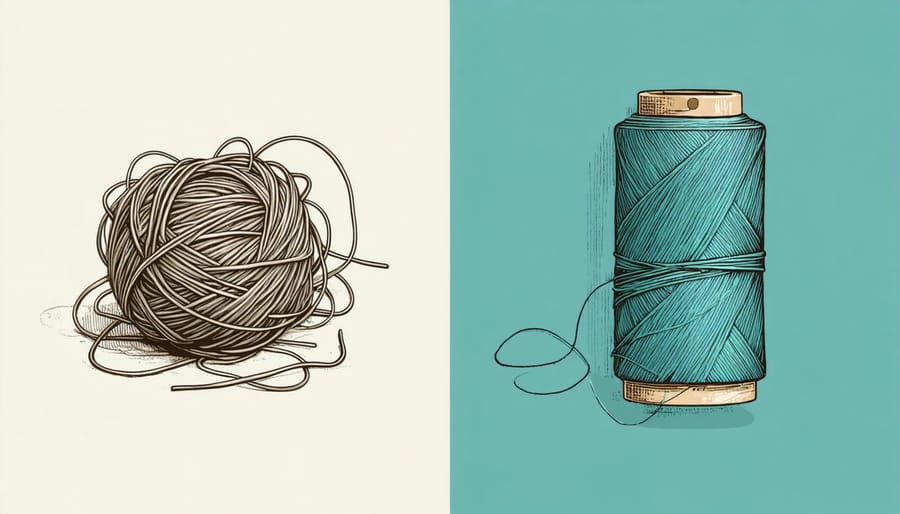
Common Threading Mistakes
Loose Ends
Keeping track of your narrative threads is crucial for delivering a satisfying story to your readers. Start by creating a simple spreadsheet or checklist of all the threads you introduce in your story. Review this list regularly as you write, ensuring each thread moves toward resolution.
If you find yourself with too many loose ends, consider combining related threads or removing less essential ones that don’t significantly impact the main story. Remember, not every thread needs a dramatic conclusion, but each should reach a logical endpoint that gives readers closure.
Before submitting your final draft, do a “thread audit.” Read through your work specifically looking for abandoned plotlines or unresolved questions. Ask yourself: “If I were the reader, would I feel satisfied with how each story element concludes?”
A helpful practice is to have beta readers specifically look for unresolved threads. They can spot loose ends you might have missed since they’re experiencing the story fresh. Their feedback can be invaluable in identifying which threads need tying up and which conclusions feel natural versus forced.
Keep in mind that intentionally leaving some threads open can work for sequels or creating mystery, but ensure this serves your story’s purpose rather than resulting from oversight.
Thread Overload
Balancing narrative threads is like juggling – too many balls in the air, and you risk dropping them all. While multiple storylines can enrich your work, overwhelming your readers with too many plot points can lead to confusion and frustration.
Start by evaluating each thread’s importance to your main story. Ask yourself: Does this subplot enhance the central narrative? Does it develop crucial character relationships? If a thread doesn’t serve a clear purpose, consider trimming it.
A good rule of thumb is to limit yourself to three major threads and two to three minor ones in a novel-length work. For shorter pieces, reduce accordingly. Remember that each thread needs proper development and resolution – leaving too many loose ends will disappoint your readers.
Pay attention to how your threads interact. They should complement rather than compete with each other. Think of them as instruments in an orchestra – while each plays its own part, they must harmonize to create a compelling symphony.
If you find yourself struggling to keep track of your threads, that’s a clear sign your readers might too. Consider using a story mapping tool or outline to visualize how your threads weave together.
Bringing It All Together
Thread Resolution
Bringing your narrative threads to a satisfying conclusion is like orchestrating a beautiful finale where all the musical elements harmonize perfectly. Start by creating a checklist of your active threads – this helps ensure you don’t leave any storylines dangling. Remember, readers invest emotionally in these threads, so each deserves thoughtful resolution.
Consider the timing of your resolutions. While some threads might conclude early in your story, major ones typically converge near the climax. Think of it as serving a multi-course meal – you want each dish to complement the others and contribute to a memorable overall experience.
A powerful technique is the “domino effect” resolution, where resolving one thread naturally leads to the resolution of others. This creates a smooth, logical flow that readers find deeply satisfying. For example, if your character overcomes their fear of public speaking, this might simultaneously resolve their career advancement thread and their personal growth arc.
Don’t feel pressured to tie everything up with a neat bow. Sometimes, leaving minor threads with subtle implications or room for interpretation can make your story feel more authentic. The key is ensuring that major plot threads receive clear, meaningful resolutions while supporting threads enhance rather than distract from the main narrative.
Keep your resolutions true to your story’s tone and themes. A light-hearted story shouldn’t suddenly turn dramatic just to resolve a thread, and vice versa. Trust your instincts – if a resolution feels forced, it probably needs reworking.
Creating Harmony
When juggling multiple narrative threads, think of yourself as a conductor leading an orchestra. Each thread represents a distinct instrument, and your job is to ensure they work together harmoniously. Start by identifying the core purpose of each thread and how it contributes to your overall story. Just as with creating resonant story elements, balance is key.
One effective approach is to map out your threads visually. Use different colors to track each storyline and see where they intersect. This helps you spot potential areas of conflict or confusion before they become problems in your draft. Consider the pacing of each thread – when one reaches a high point, another might need to simmer in the background.
Think about timing and transitions. Like a well-choreographed dance, your threads should flow naturally from one to another. Create clear connections between threads using shared themes, locations, or characters. This helps readers follow along without feeling lost or overwhelmed.
Remember that not all threads need equal attention. Some might serve as supporting elements to enhance your main narrative. Watch for redundancy between threads – if two storylines are making the same point, consider combining them or removing one entirely. The goal is to create a rich, layered story where each thread adds value without overshadowing the others.
Keep your audience in mind throughout this process. Test your narrative structure with beta readers to ensure the threads remain clear and engaging from start to finish.
As we’ve explored throughout this article, narrative threads are more than just storytelling elements – they’re the vital connectors that transform good writing into compelling narratives. By mastering these techniques, you can create stories that resonate deeply with your readers and set your work apart in Canada’s competitive writing market.
Remember, successful narrative threads don’t happen by accident. They require careful planning, consistent development, and thoughtful execution. Whether you’re crafting a personal essay, writing marketing content, or developing a novel, these skills will serve you well in your freelance career.
Start small by practicing with one or two narrative threads in your next piece. Pay attention to how they weave through your story, support your main theme, and enhance your reader’s experience. As you gain confidence, experiment with more complex thread combinations and innovative storytelling approaches.
Many successful Canadian writers have built thriving careers by mastering these storytelling techniques. Their success stories prove that investing time in understanding and implementing narrative threads pays off, both creatively and professionally.
Take what you’ve learned here and apply it to your next writing project. Your unique voice, combined with well-crafted narrative threads, will help you create engaging content that captures readers’ attention and keeps them coming back for more. Remember, every great story starts with a single thread – it’s time to start weaving yours.