

Natural language processing has quietly revolutionized how writers work, from autocomplete suggestions finishing your sentences to grammar checkers catching mistakes you’ve read past a dozen times. As a freelance writer, you’re already using NLP tools daily—perhaps without realizing the sophisticated technology powering them.
Consider how your smartphone predicts your next word, how voice assistants understand your questions, or how translation apps convert your English content into French for Quebec-based clients. These are all NLP applications that have become second nature in our writing workflows.
For Canadian freelance writers, understanding NLP examples means recognizing opportunities to enhance productivity and expand service offerings. Voice-to-text transcription software uses NLP to convert interviews into written drafts. Content optimization tools analyze readability and suggest improvements. Sentiment analysis applications help marketing writers gauge audience reactions before publishing.
The practical applications extend further: chatbots that handle client inquiries, plagiarism detectors that protect your original work, and AI writing assistants that help overcome creative blocks. Each tool represents a practical example of how machines process human language to support your craft.
This technology isn’t replacing writers—it’s empowering them. Writers who understand these NLP applications can position themselves strategically in the marketplace, offering services that combine human creativity with technological efficiency. Whether you’re drafting blog posts, creating technical documentation, or developing marketing copy, NLP tools can streamline your workflow while you maintain the authentic voice that makes your writing valuable.
The following examples demonstrate how NLP transforms everyday writing tasks into opportunities for growth and innovation in your freelance career.
What Natural Language Processing Actually Means for Writers
If you’ve been hearing about natural language processing and wondering what it actually means for your writing career, here’s the good news: you’re already familiar with it, even if you don’t realize it yet.
Natural language processing, or NLP, is simply technology that helps computers understand and work with human language—the way we actually speak and write. Think of it as teaching machines to read, comprehend, and even generate text the way people do. Every time you use spell-check, ask Siri a question, or get autocomplete suggestions while typing an email, you’re experiencing NLP in action.
For writers, this technology has become a quiet partner in your daily work. When you paste your draft into a grammar checker and it suggests rewording an awkward sentence, that’s NLP analyzing your writing style. When you search for synonyms and get contextually appropriate options, NLP is understanding what you’re trying to say. When AI writing assistants help you brainstorm headlines or overcome writer’s block, they’re using NLP to process your instructions and generate relevant suggestions.
The real value for freelance writers isn’t about replacing your creativity or expertise. Instead, NLP tools handle time-consuming tasks like catching typos, suggesting better word choices, or organizing research—freeing you up to focus on what you do best: crafting compelling stories and connecting with readers.
You don’t need to understand the complex algorithms behind NLP to benefit from it. What matters is recognizing how these tools can support your writing process, help you work more efficiently, and potentially take on more projects. As the technology continues improving, writers who embrace these practical applications will find themselves better equipped to thrive in today’s competitive freelance market.
Real-World NLP Examples Changing Creative Writing Today
Grammar and Style Enhancement Tools
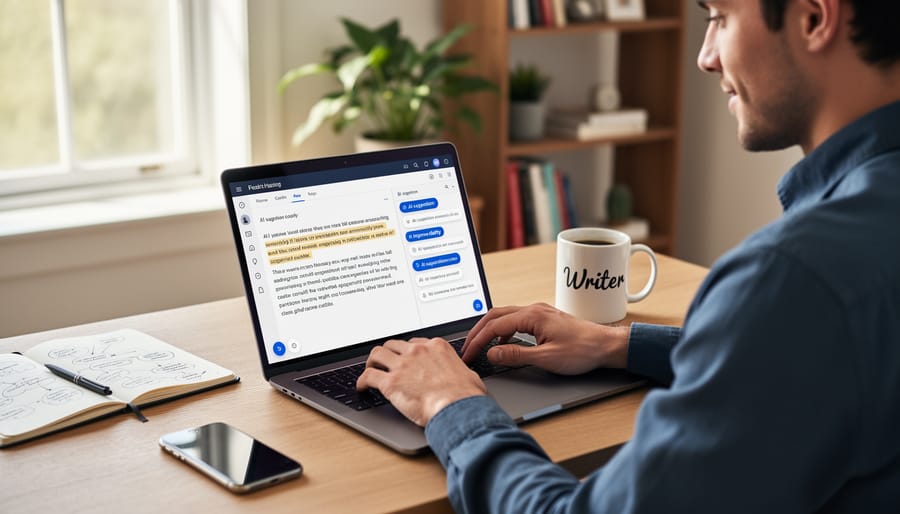
If you’ve ever used Grammarly or ProWritingAid, you’ve experienced natural language processing in action. These AI-powered writing tools are far more sophisticated than simple spellcheckers—they actually understand the context and meaning behind your words.
Here’s what makes them remarkable: when you write “Their going to the store,” these tools don’t just flag the spelling (since “their” is spelled correctly). They recognize that based on the sentence structure and context, you meant “They’re” instead. That’s NLP analyzing grammar patterns and sentence relationships in real-time.
These platforms go even further by evaluating your tone and style. Writing a formal proposal? Grammarly will suggest removing casual phrases like “kind of” or “basically.” Crafting a friendly blog post? It might recommend warmer, more conversational language. ProWritingAid analyzes your writing against specific style guides, helping you maintain consistency throughout longer projects.
For Canadian freelance writers, this technology is genuinely transformative. You can produce cleaner first drafts, reduce editing time, and learn from the corrections these tools suggest. Many writers report that using these editors has actually improved their fundamental writing skills over time—they start naturally avoiding common mistakes they previously made repeatedly.
The best part? Most offer free versions that provide substantial value, making professional-level editing assistance accessible whether you’re just starting out or managing multiple client projects.
Character Dialogue and Voice Consistency
One of the most exciting NLP applications for fiction writers is maintaining consistent character voices throughout your manuscript. Think about it: when you’re writing a novel with multiple viewpoints or a complex cast, keeping each character’s speech patterns distinct and consistent can feel overwhelming. That’s where NLP-powered tools step in to help.
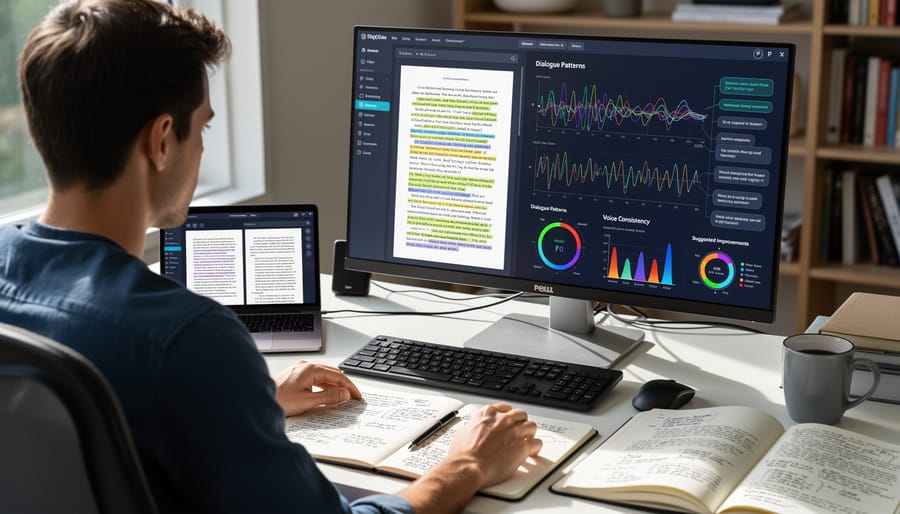
Tools like ProWritingAid and Autocrit now include dialogue analysis features that track how each character speaks. These programs examine word choice, sentence length, formality levels, and even punctuation patterns in your characters’ dialogue. For example, if your teenage protagonist suddenly starts using vocabulary more suited to a professor, the software will flag it for review. Similarly, if a character who typically speaks in short, clipped sentences suddenly delivers a lengthy monologue with complex clauses, you’ll get an alert.
Marlene, a Toronto-based novelist, shared how these tools transformed her revision process: “I was working on a mystery with five main characters, and their voices kept bleeding into each other during rewrites. An NLP-based editor highlighted inconsistencies I’d completely missed. One character who was supposed to use contractions stopped using them halfway through. Catching those details made my characters feel authentic.”
These tools don’t just identify problems—they often suggest improvements based on patterns they’ve learned from published literature. While you maintain complete creative control, having an extra set of algorithmic eyes examining your dialogue patterns can save countless revision hours and strengthen your manuscript’s overall coherence.
Plot Structure and Story Analysis
Understanding how stories work has always been essential for writers, and now NLP tools can help you analyze your narratives with remarkable precision. These technologies examine your manuscript’s plot structure, identifying patterns that might be invisible to the human eye during the writing process.
Tools like Atticus and Sudowrite use NLP to map out your story’s narrative arc, showing you where tension builds and where it might sag. They can detect pacing issues by analyzing sentence length, dialogue frequency, and scene transitions throughout your manuscript. For freelance writers working on tight deadlines, this kind of feedback can be invaluable for quick revisions.
Some NLP applications spot potential plot holes by tracking character appearances, location consistency, and timeline logic. If your protagonist mentions an event that hasn’t happened yet in your story’s chronology, these tools can flag the inconsistency. They can also analyze whether your story follows traditional structures like the three-act format or the hero’s journey, giving you objective data about your storytelling approach.
One Canadian romance writer shared her success story after using an NLP-powered editor that identified a fifteen-page lull in her manuscript’s middle section. By recognizing this pacing issue early, she restructured those chapters before submission, ultimately landing her first publishing contract.
These tools don’t replace your creative instincts, but they provide a supportive second set of eyes that helps you deliver stronger, more polished work to clients and publishers.
Automated Research and Content Generation Assistants
NLP-powered content generation assistants have become valuable teammates for freelance writers tackling research-heavy projects. These tools can quickly analyze dozens of sources and generate concise summaries, saving hours of reading time. For example, when assigned a technical article about renewable energy, you can use an NLP assistant to digest research papers and extract key statistics, allowing you to focus your energy on crafting compelling narratives rather than wading through dense academic language.
Many writers use these assistants for brainstorming sessions too. Feeling stuck on how to angle a client’s blog post? NLP tools can suggest multiple approaches based on trending topics and audience interests. They’re particularly helpful for generating first drafts when you’re working under tight deadlines. The technology produces rough content that you then refine, fact-check, and infuse with your unique voice and style.
The key to success is maintaining creative control. Think of NLP assistants as research interns, not replacements. They handle the grunt work while you bring expertise, originality, and human connection to the final piece. Toronto-based freelancer Maria Chen shares that using research assistants has allowed her to take on 30 percent more assignments monthly while maintaining quality. She emphasizes always verifying AI-generated facts and rewriting content in her own voice before submitting to clients, ensuring her work remains authentic and trustworthy.

Success Stories: Canadian Freelancers Using NLP Innovations
Meet Sarah Thompson from Vancouver, who discovered NLP tools could do more than just check her spelling. As a freelance blog writer struggling to meet tight deadlines, she started using grammar enhancement tools powered by natural language processing. Within three months, her revision time dropped by 40%, allowing her to take on two additional clients per month. The real game-changer? Her clients noticed the improvement too, with one remarking that her content felt more polished and professional than ever before.
Then there’s Marcus Chen in Toronto, who specializes in technical writing for startups. He was initially skeptical about AI-powered writing assistants, worried they might make his work feel robotic. Instead, he found that tone-adjustment tools helped him adapt his naturally formal style for different audiences. When pitching to a casual lifestyle brand, he used NLP software to shift his sample pieces toward a friendlier voice. He landed the contract and has since expanded his client roster to include industries he never thought he could write for.
Montreal-based freelancer Amélie Dubois faced a different challenge: breaking into the English-language market while maintaining her French client base. Translation and language-learning NLP tools became her secret weapon. These platforms didn’t just translate words, they helped her understand nuanced expressions and cultural references. Today, she confidently writes in both languages, effectively doubling her potential client pool and transforming your freelance career trajectory.
Finally, consider James Patterson from Halifax, a newcomer to freelancing who felt overwhelmed by the competition. He turned to content optimization tools that analyze readability and SEO performance. By understanding what made content rank well, he could pitch better ideas and deliver articles that consistently performed above client expectations. Six months in, he’s earning 60% more than his initial target income.
These stories share a common thread: NLP tools aren’t replacing these writers, they’re empowering them to work smarter, expand their capabilities, and compete more effectively in the freelance marketplace.
Making NLP Work for Your Writing Business
Choosing the Right Tools for Your Niche
Finding the right NLP tool depends on your writing specialty and what you’re hoping to achieve. If you’re a copywriter focused on marketing content, tools like Grammarly Business or Copy.ai can help you craft compelling headlines and optimize your messaging for engagement. Fiction writers often benefit from tools like ProWritingAid or AutoCrit, which analyze narrative flow, dialogue, and pacing without compromising your creative voice.
For technical writers, consider tools that excel at clarity and consistency checks, such as Acrolinx or Writer. These platforms ensure your documentation maintains professional standards while staying accessible to readers. Bloggers and content creators might prefer all-in-one solutions like Jasper or Hemingway Editor, which balance creativity with readability optimization.
The key is starting with one tool that addresses your biggest challenge, whether that’s grammar, tone, or idea generation. Most platforms offer free trials, so you can explore without commitment. Remember, these tools work best as writing partners, not replacements. Your unique perspective and creativity remain your most valuable assets. As you grow more comfortable, you can expand your toolkit to match your evolving needs and take on diverse projects with confidence.
Maintaining Your Unique Voice While Using AI
Think of NLP tools as your writing assistant, not your replacement. The key is maintaining your unique voice while letting technology handle the heavy lifting. Start by using NLP tools for specific tasks like grammar checking or research, then add your personal perspective and style to the content. Your experiences, insights, and storytelling ability are what clients value most.
Try this approach: draft your work first, then use NLP tools to refine it. This ensures your authentic voice leads the way. When using AI-generated suggestions, ask yourself if they sound like you. If not, rewrite them in your own words. Remember, successful freelance writers use these tools to work faster and smarter, not to remove themselves from the creative process.
Many Canadian writers have found success by treating NLP as a collaborator that handles routine tasks, freeing up energy for the creative work only you can do. Your unique perspective, cultural insights, and personal writing style remain irreplaceable assets in your freelance career.
Here’s the exciting truth: natural language processing isn’t here to replace you—it’s here to make your writing life easier. Think of NLP tools as your personal assistant, handling the repetitive tasks that drain your creative energy so you can focus on what you do best: crafting compelling stories and connecting with readers through authentic human experiences.
The freelance writing landscape is evolving, and those who embrace these innovations are finding themselves with more time, better productivity, and happier clients. Grammar checkers catch typos during late-night writing sessions. Content optimization tools help your work reach wider audiences. Translation software opens doors to international markets. These aren’t threats—they’re opportunities to elevate your career and take on more challenging, rewarding projects.
What machines can’t replicate is your unique voice, your emotional intelligence, and your ability to understand nuance and cultural context. They can’t interview a source and pick up on unspoken emotions. They can’t craft a metaphor that resonates deeply with Canadian readers or tell a story that moves people to tears or action. That’s your superpower, and technology only amplifies it.
So why not experiment? Try a grammar assistant on your next article. Test a content optimization tool. Play with AI brainstorming for your upcoming project. You might discover these tools free up hours each week—time you can invest in pitching better clients, developing your niche, or finally writing that passion project you’ve been postponing.
The future of freelance writing belongs to those who blend human creativity with smart technology. That future is yours to shape.